What Is on These Garages
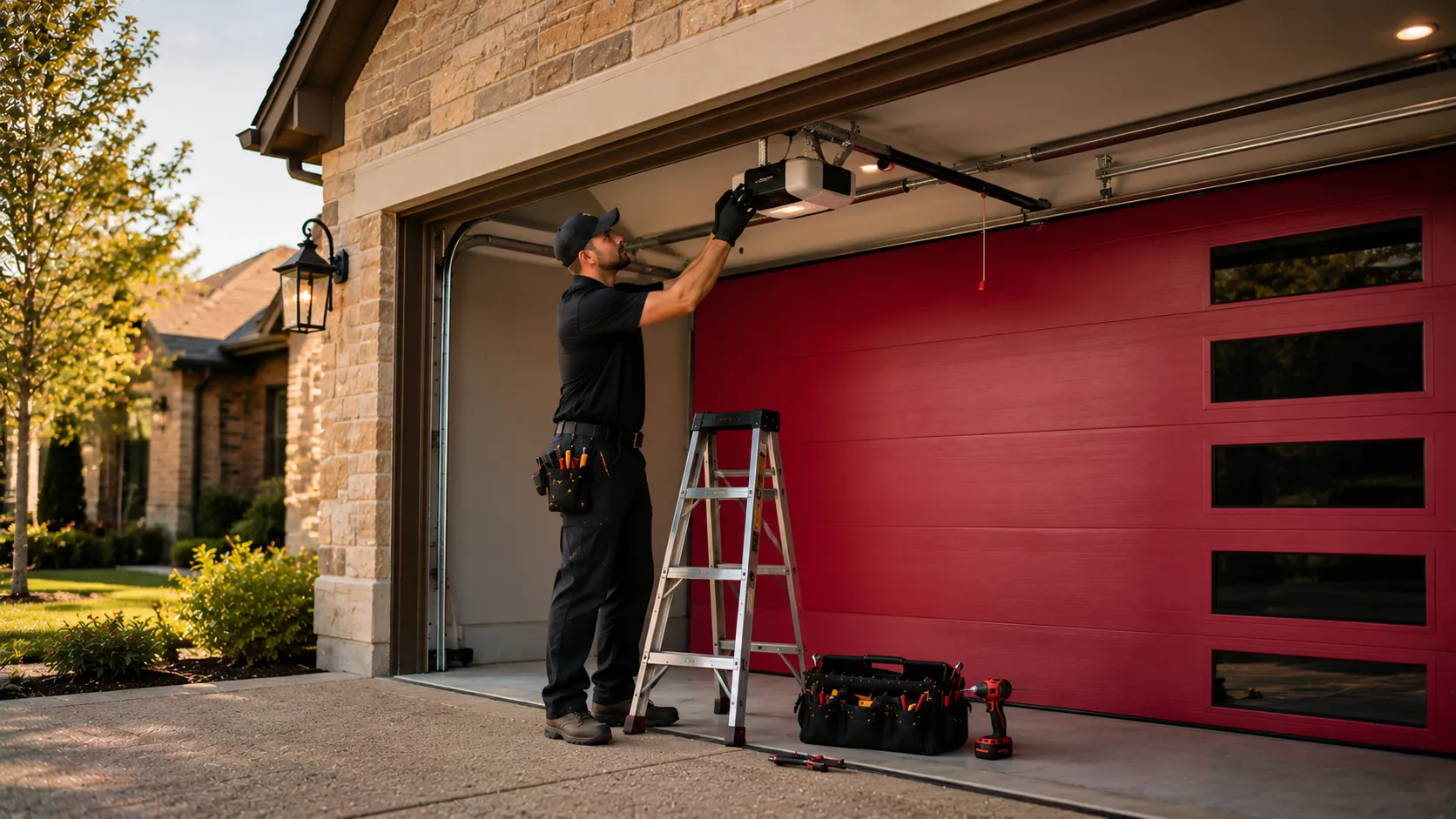
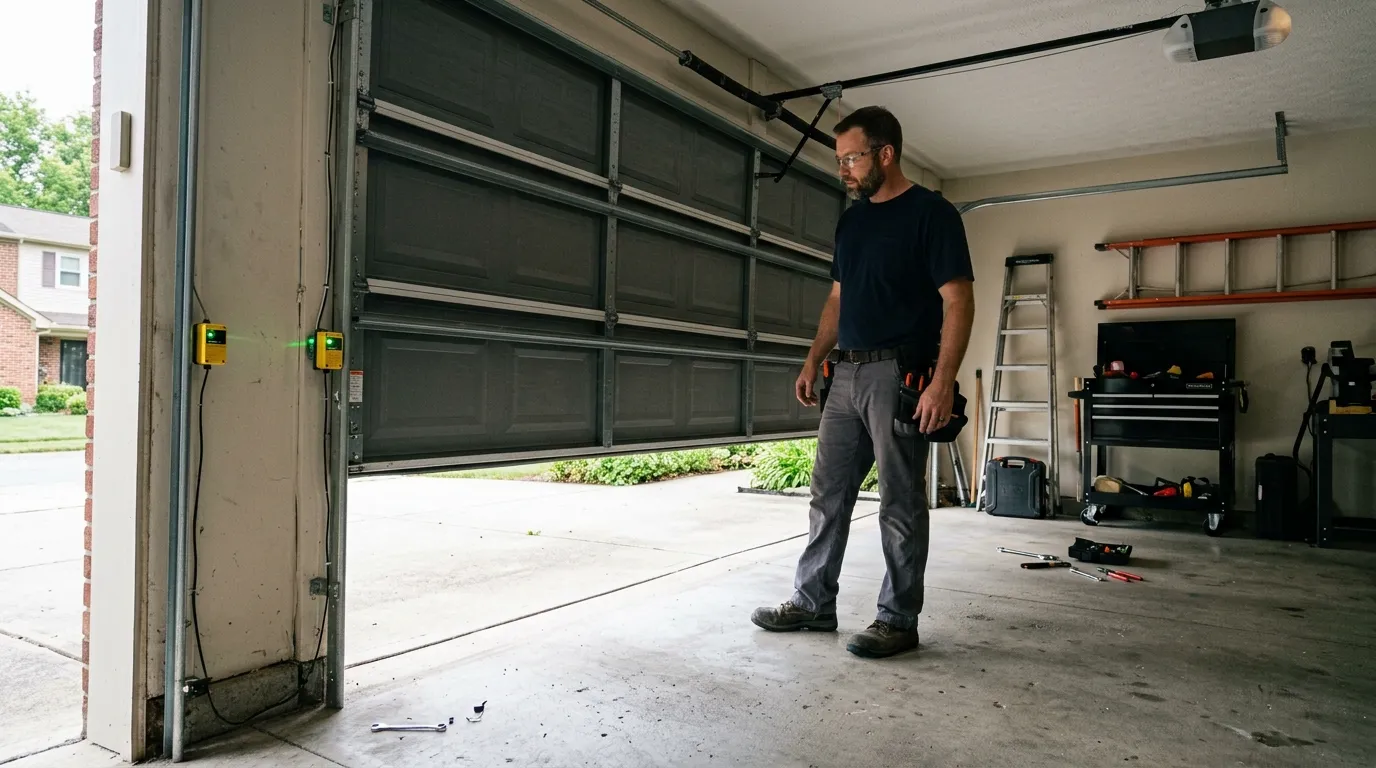
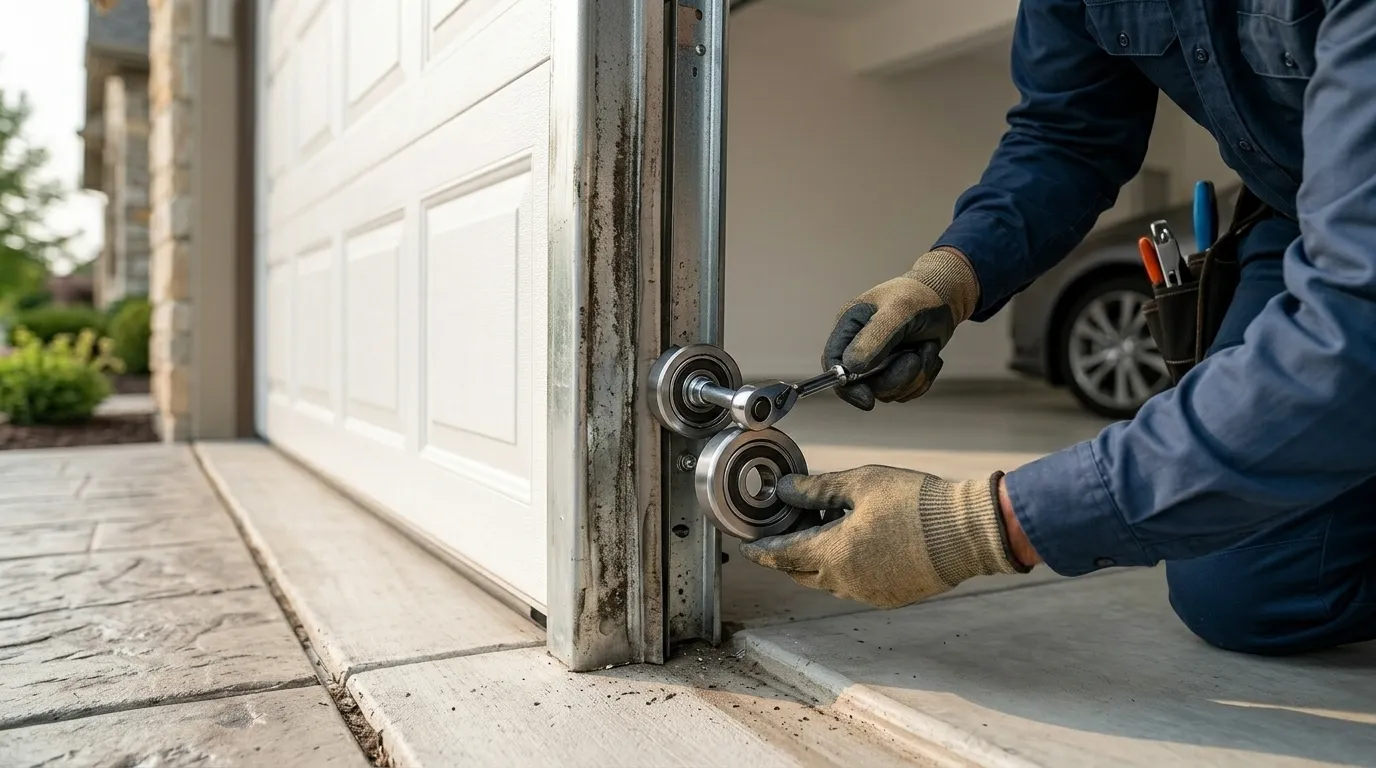
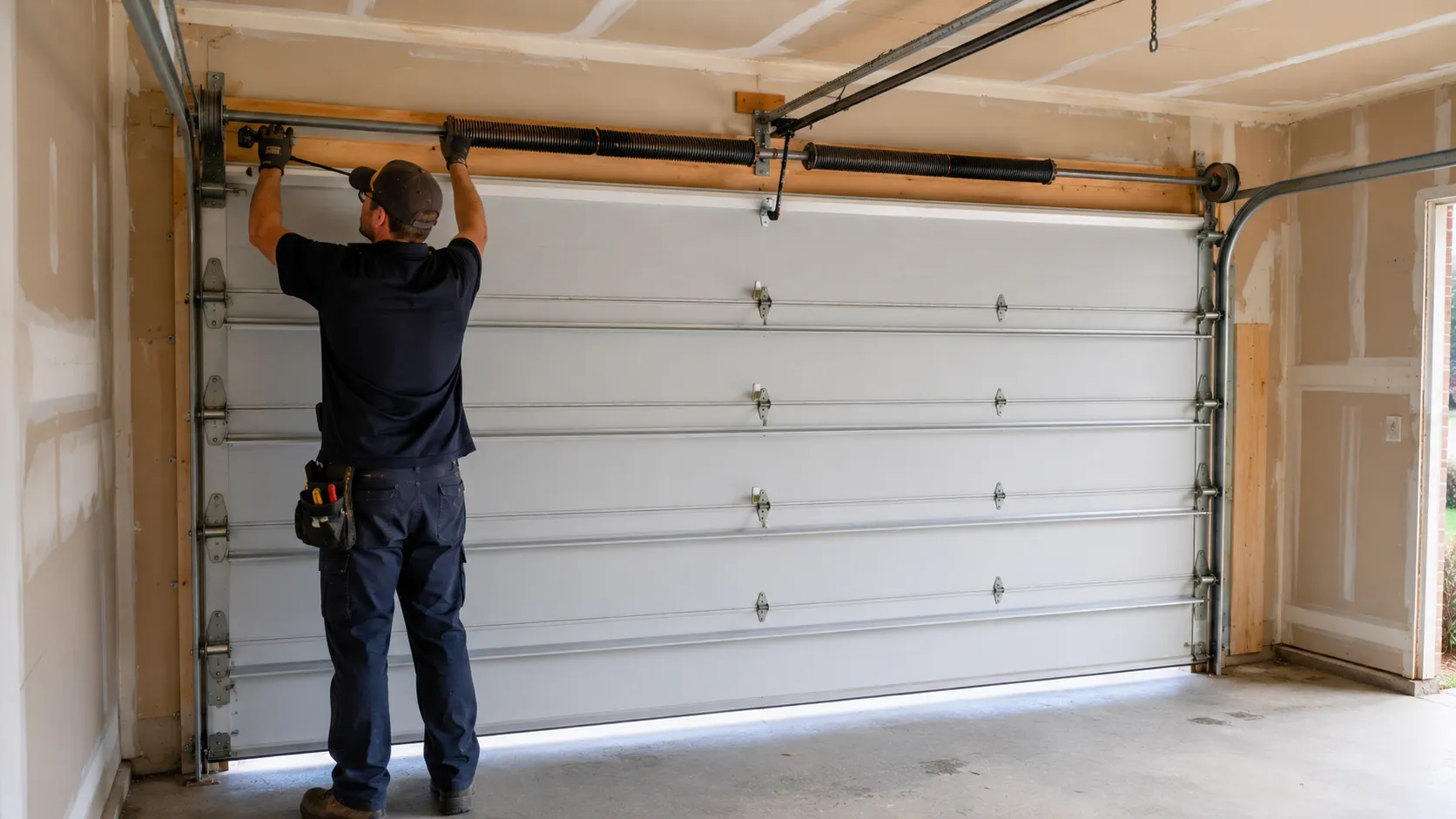
Most houses in this part of Jacksonville went up between 1973 and 2007, with the typical build year landing around 1985. That puts a lot of Woodland Acres garages on original steel sectional doors, either single-panel or two-car, hung on torsion springs that have had thirty-plus years of cycles by now. We don't have street-level records for this neighborhood, so we won't pretend to know which block has which door - but the age band tells us what shows up on the truck: worn torsion springs, dry-rotted rollers, and openers from the chain-drive era that are due for a swap rather than a fix.
Jacksonville's mild temperate climate helps some of this hardware last longer than it would up north - no hard freeze cracking seals, no deep frost heaving slab foundations under the track. But mild doesn't mean maintenance-free. Humidity and salt air off the coast still eat at unprotected steel and unlubricated hinges over three decades. If your door is original to a house built in the 1980s, the spring and the opener motor are both well past their expected working life, even if the panel itself still looks fine from the driveway.
Houses on These Streets
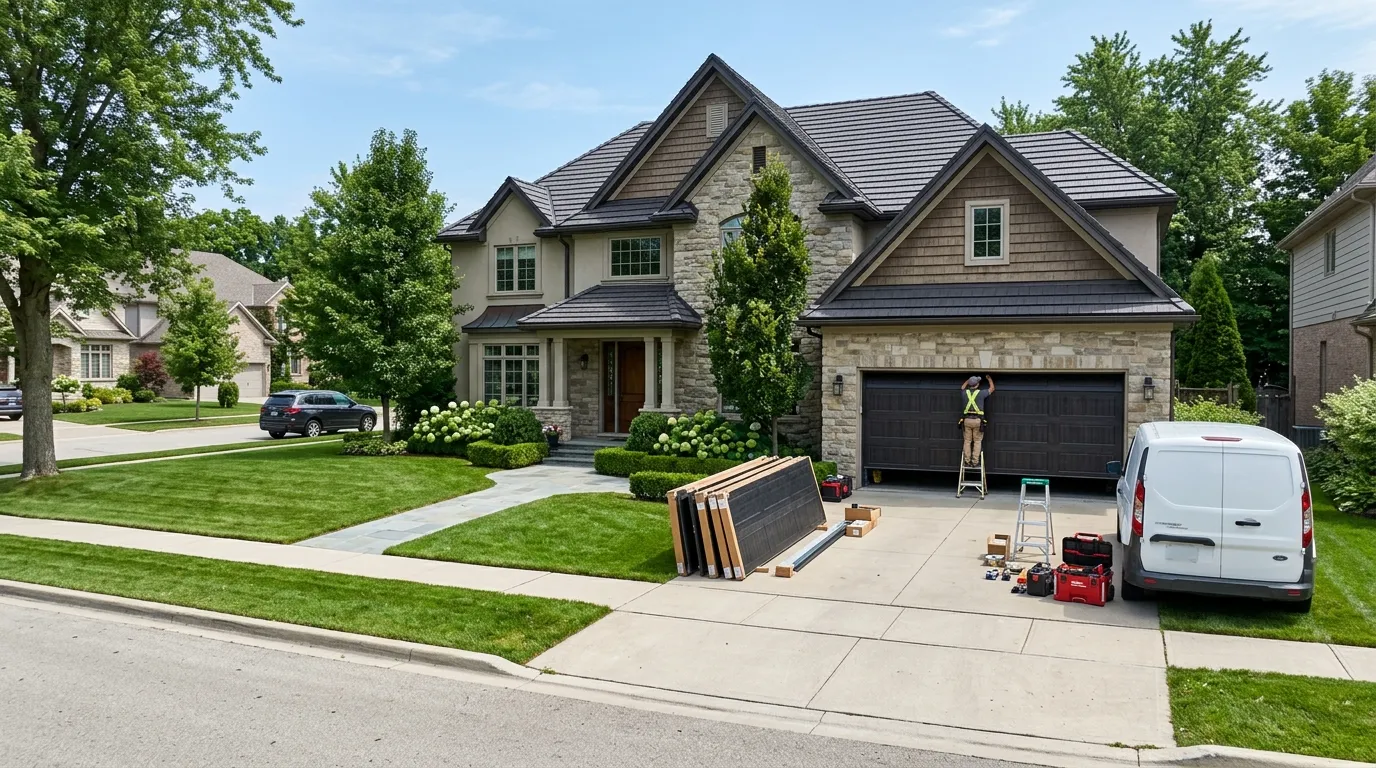
We don't have addresses or landmark names for Woodland Acres, so this section stays at the level of what the housing stock tells us. Homes built in this build window - 1973 to 2007 - were mostly framed for single or double garages with the door opening sized to standard steel sectional stock, not the wider custom widths you see in newer subdivisions. That matters when you're pricing a full replacement: a standard-width door on 1980s framing is usually the cheaper job, not because the work is easier but because the part is common.
Across the wider Jacksonville service area, median household income sits near $103,288, and 48,862 of 86,151 households own the house they live in rather than renting. That income level and ownership rate usually means people replace a failing door with an insulated steel or composite unit rather than patch an old one with mismatched parts - the insulation also does real work against the humidity we get here. We can't tell you what's actually on your street without seeing it, but the era of construction narrows the likely hardware down to a short list before we ever pull into the driveway.
Where This Is
Woodland Acres sits about five miles east of downtown Jacksonville. We don't have named landmarks or cross streets for the neighborhood itself, but for orientation: Downtown Jacksonville sits roughly a mile to the southeast of the city's core reference point, Springfield about a mile northeast of it, and Duval sits about four miles east-northeast. Woodland Acres falls further out along that same eastward line from the center.
We're not going to invent a shopping center or a cross street to make this section sound more local than it is. What we can say with confidence is the build era and the climate band, and both of those hold for houses in this stretch of the city regardless of which exact block you're on.