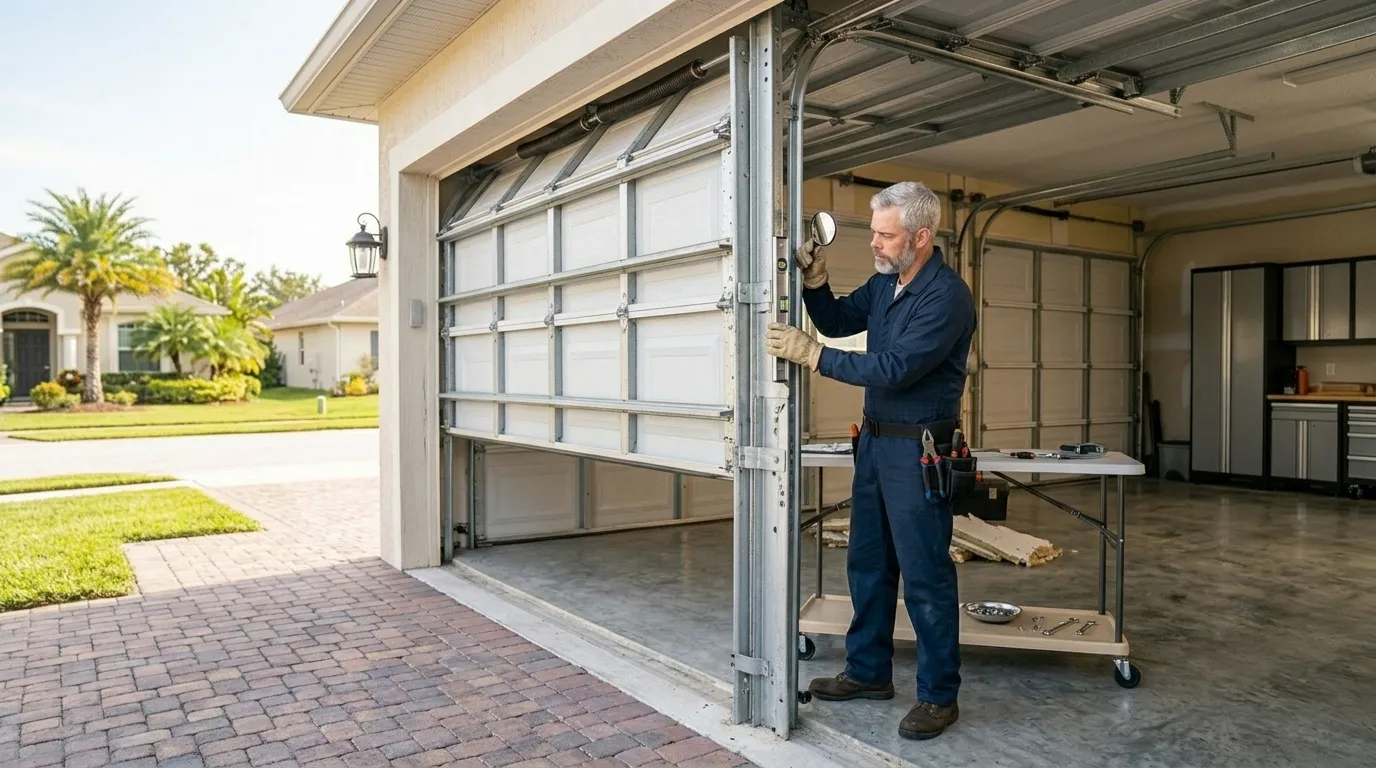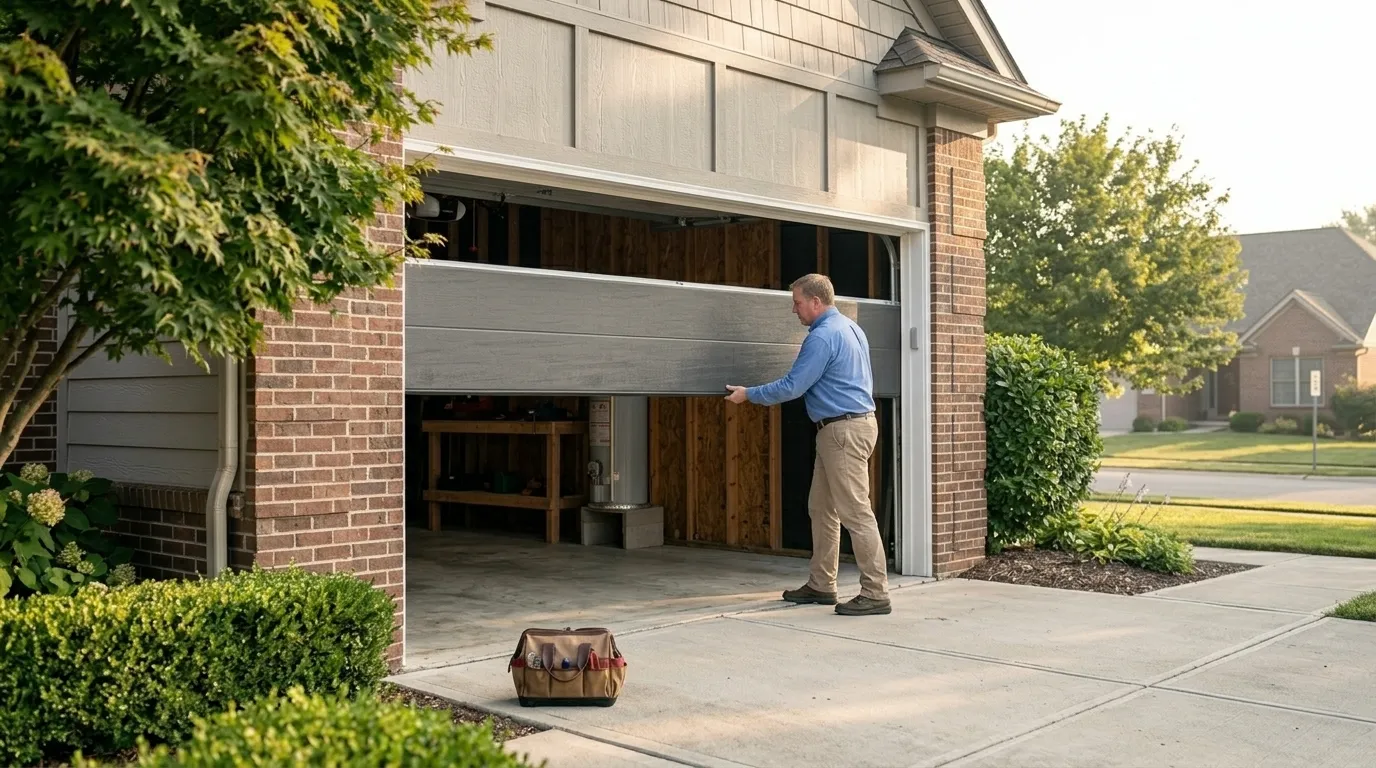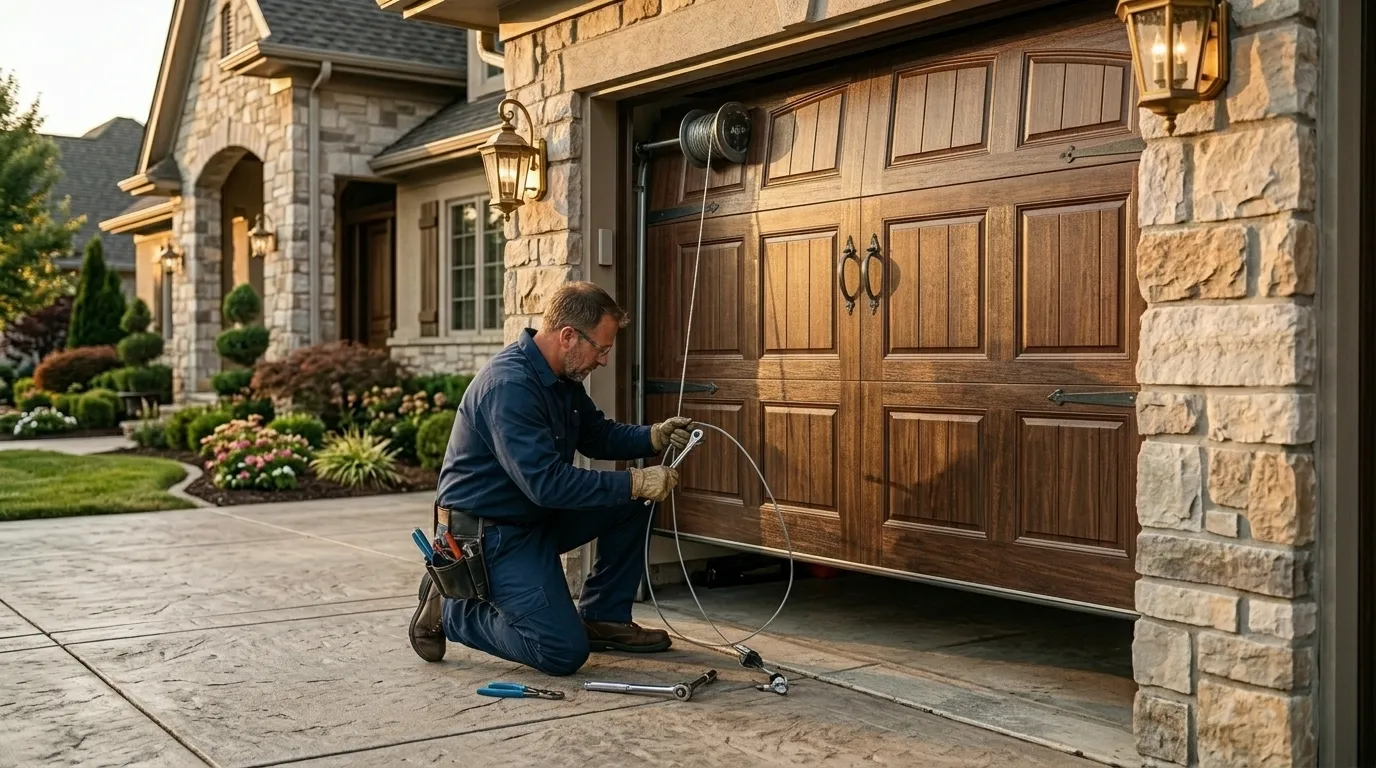
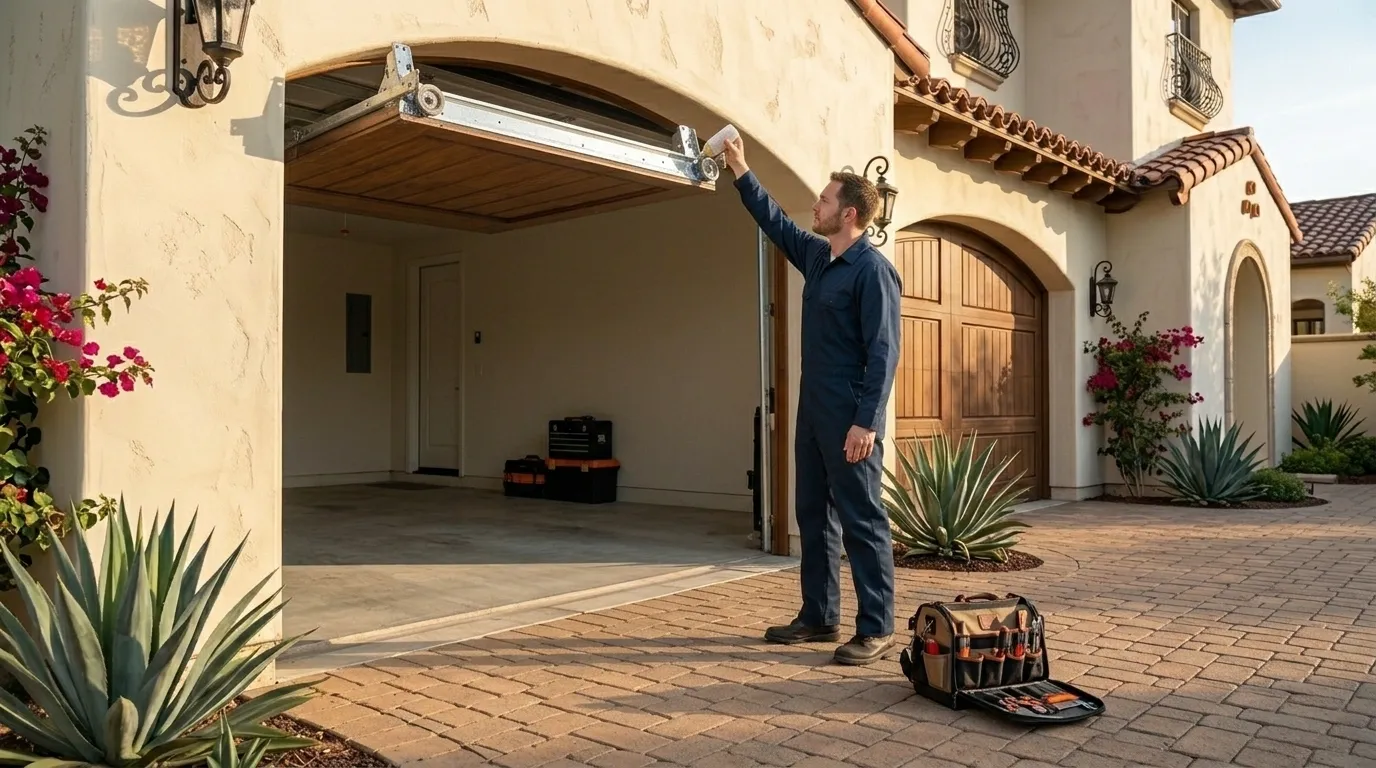
What Is Going On
Most of the housing across this service area went up between 1973 and 2007, with the median landing right around 1985. That means a huge share of the openers bolted to the ceiling in garages here are the same age as the house - chain-drive units from the 1980s and 90s with a light bulb, a wall button, and nothing else. No battery backup, no smartphone app, no way to open the door if the power goes out except the manual release cord.
Across the 13 named areas that make up most of this stock - older neighborhoods close to downtown and newer subdivisions further out toward places like Oakleaf Plantation or Fleming Island - the pattern repeats. A power cut, whether it's a blown transformer or a breaker tripped by something else in the house, kills the opener instantly. The door itself is fine. The motor just has no power to run it, and if nobody in the house knows where the release cord is or how to pull it, the car stays parked until the lights come back on.
The Common Mistake
The mistake we see over and over is homeowners assuming the opener will just pick back up where it left off once power returns, no different from a microwave resetting its clock. Sometimes it does. Sometimes the travel limits get scrambled, or the safety sensors lose their alignment during the outage, and the door won't close all the way afterward, sitting open a few inches with the light blinking.
The other mistake is not knowing where the manual release is until the power's already out and someone needs to get a car to work in the morning. It's a red cord hanging from the trolley on the track - pull it, and the door disengages from the opener so you can lift it by hand. Test it once when nothing's wrong. Trying to find it for the first time in the dark, in a hurry, is how people yank the wrong thing or bend a track arm.
How Local Conditions Play In
The climate here sits in the mild temperate band, which means openers in this area aren't getting cooked by extreme heat swings or cracked by hard freezes the way they would somewhere with real winters. That's one thing working in your favor - the mechanical wear on gears and belts tends to be gradual rather than driven by weather stress.
Power cuts aren't a climate problem, they're an electrical one, and they don't care what band the local weather sits in. What the mild climate does mean is that when we're out at a house in Riverside or Murray Hill or further out near Baldwin, the opener failures we're diagnosing are almost always age and wiring related rather than a motor that's been baked or frozen. That narrows down the fix, which is useful information, not just weather trivia.