What Is on These Garages
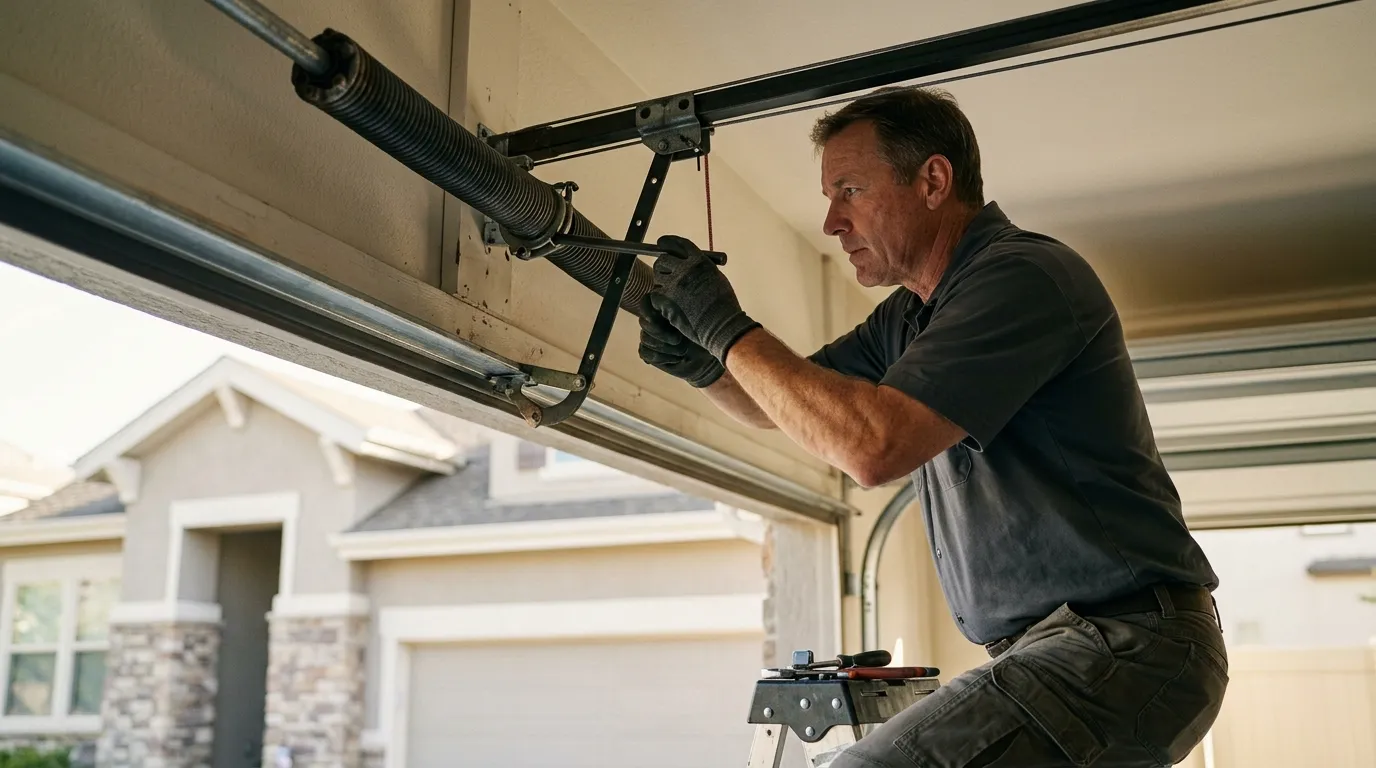
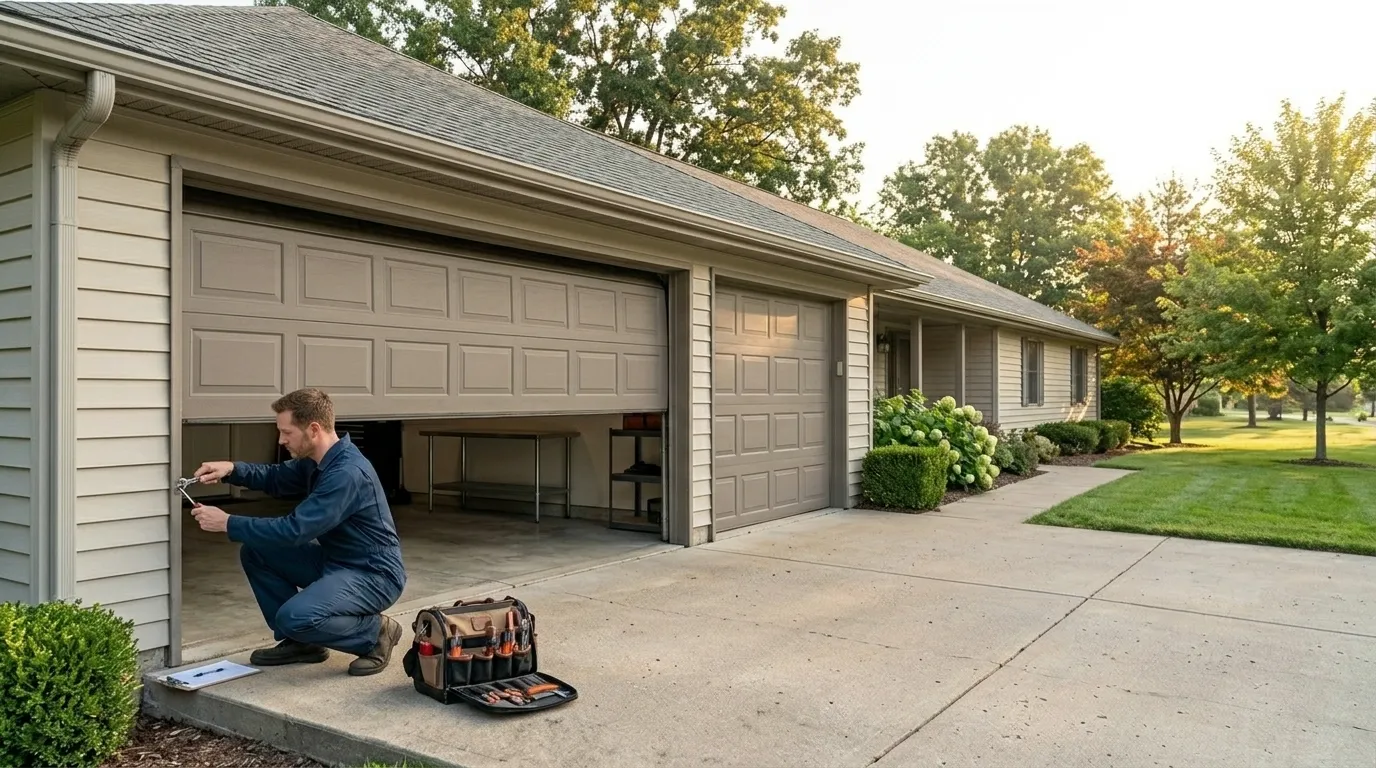
Most of the housing stock in this part of Jacksonville went up between 1973 and 2007, with the heaviest concentration built during the 1980s and 90s. That's a build window that predates a lot of what's standard on doors today. A door hung in 1985 is pushing forty years on its original torsion or extension spring setup if nobody's replaced it since, and the opener - if it's still the one that came with the house - was almost certainly a chain-drive unit sized for a lighter door than what's likely on the track now after a panel swap or two over the decades.
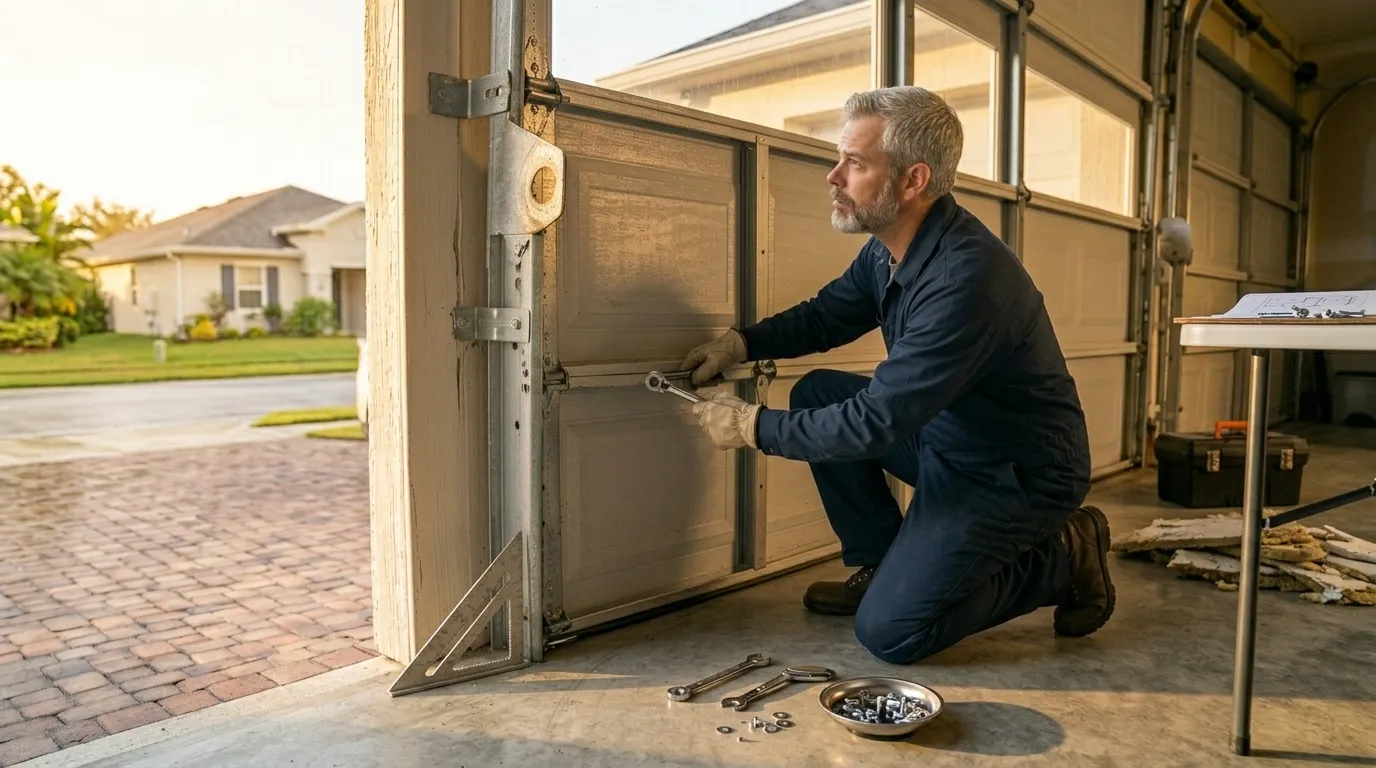
We see a lot of undersized springs from this era, rated for fewer cycles than what a household actually puts on a door over thirty-plus years. Rollers are usually the original steel or nylon, worn oval instead of round, which shows up as noise before it shows up as failure. Safety-reversal sensors, if the opener predates the mid-90s federal requirement for photo-eyes, may not be there at all - that's worth checking before anything else on a house this age.
We don't do cosmetic refacing or custom wood doors. If the door itself is original steel and the panels are dented but sound, replacing springs and hardware is usually the better call than a full swap.
Houses on These Streets
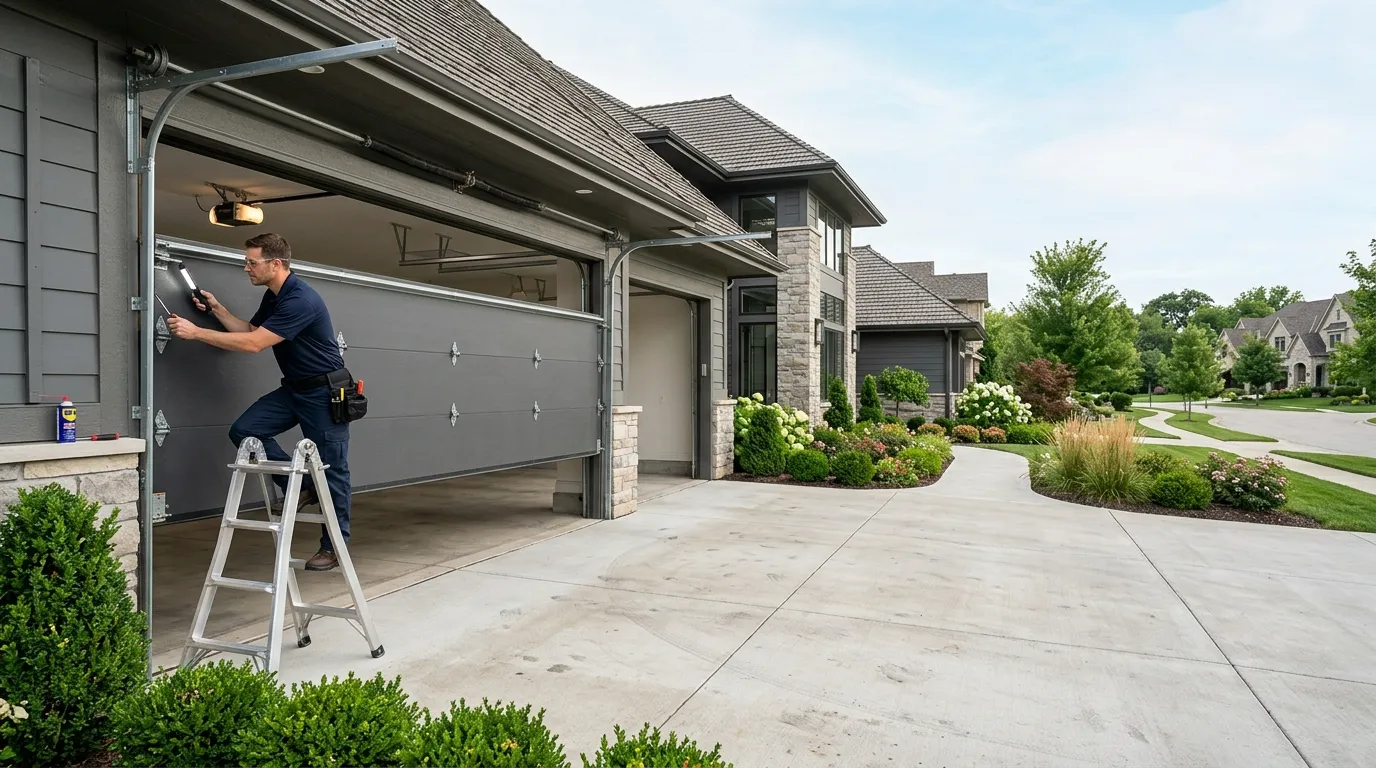
This is a mild temperate climate, which is easier on garage door hardware than a lot of the country - no deep freeze-thaw cycling to work springs and seals apart, no snow load bending track brackets. That said, mild doesn't mean maintenance-free. Humidity and heat cycles still dry out old lubrication and swell wood jambs on houses from the 1980s-90s stock that makes up most of this side of town.
Across the wider service area, median household income runs $103,288, and the housing mix leans heavily owner-occupied - about 48,862 owner-occupied houses against 86,151 households total. That tends to mean homeowners who've had the same door and opener since they bought the place, rather than a rental turnover cycle that would've forced replacements sooner. Practically, it means when we get a call from this stretch, we're often looking at original hardware from the build era rather than a mix-and-match repair history.
We don't guess at what's on the door before we see it. A 1978 build and a 2005 build in the same subdivision can have completely different opener generations, and we'd rather quote the actual part than the average one.
Where This Is
Beacon Hills & Harbour sits roughly 9 miles east-northeast of downtown Jacksonville. That distance puts it well outside the older urban core neighborhoods closer to the center, and closer to the newer end of the build spectrum for this side of the city - consistent with the 1973-2007 construction window that defines most of the housing here.
We work this stretch as part of our regular route, not as a special trip. The mild temperate climate that covers this whole service area means we're not adjusting parts recommendations by season the way a shop up north would - a spring rated for this climate works the same in July as it does in January.
If you're outside this specific pocket, our main service area covers a wide stretch of Jacksonville and the surrounding towns; check our home page for the full rundown of where we run trucks.