24/7 Emergency Service Open 7 days · 7am–8pm Serving Jacksonville, FL & nearby
(904) 920-0032
Jacksonville, FL

What Actually Happens When We Come Out

A look at what actually happens on a Jacksonville service call, tied to the 1973-2007 housing stock and mild coastal climate that shape most local jobs.

What Actually Happens When We Come Out

What Is Going On

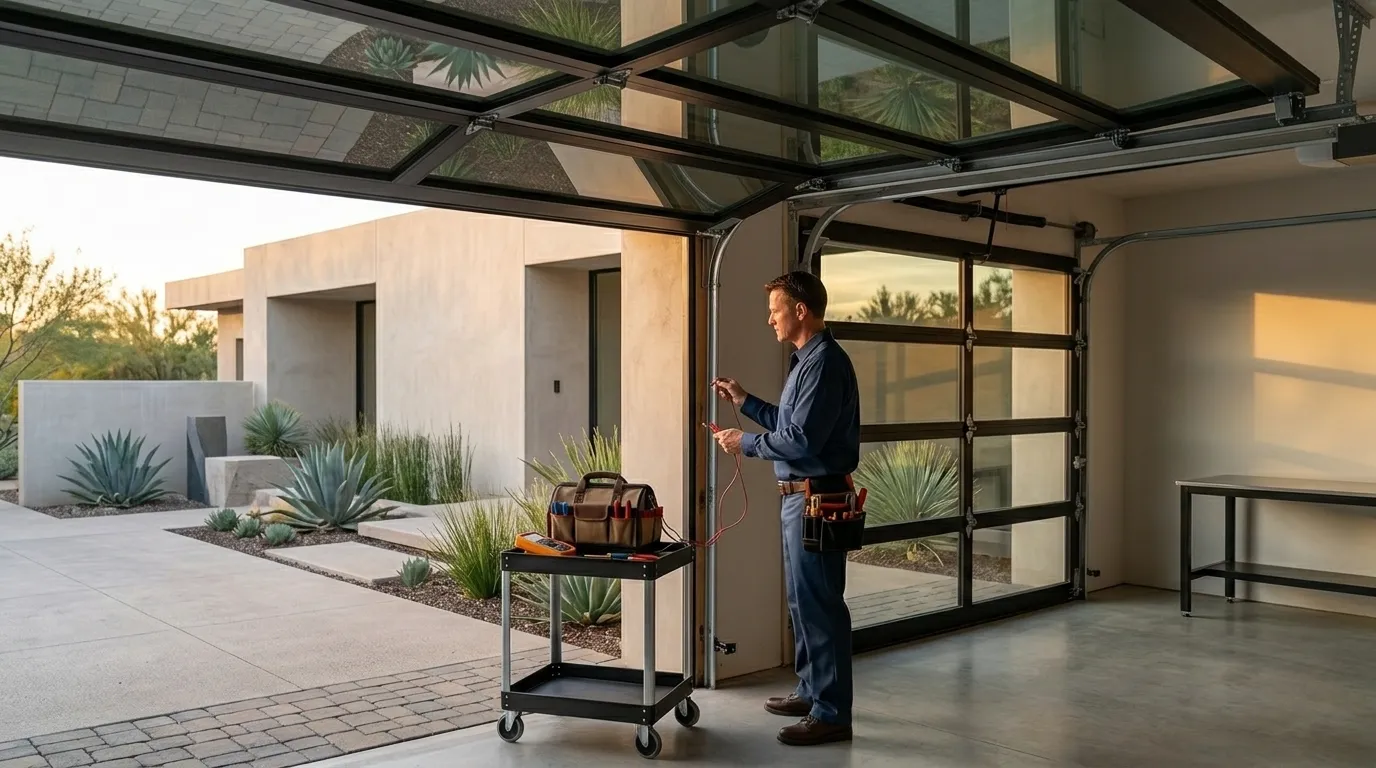
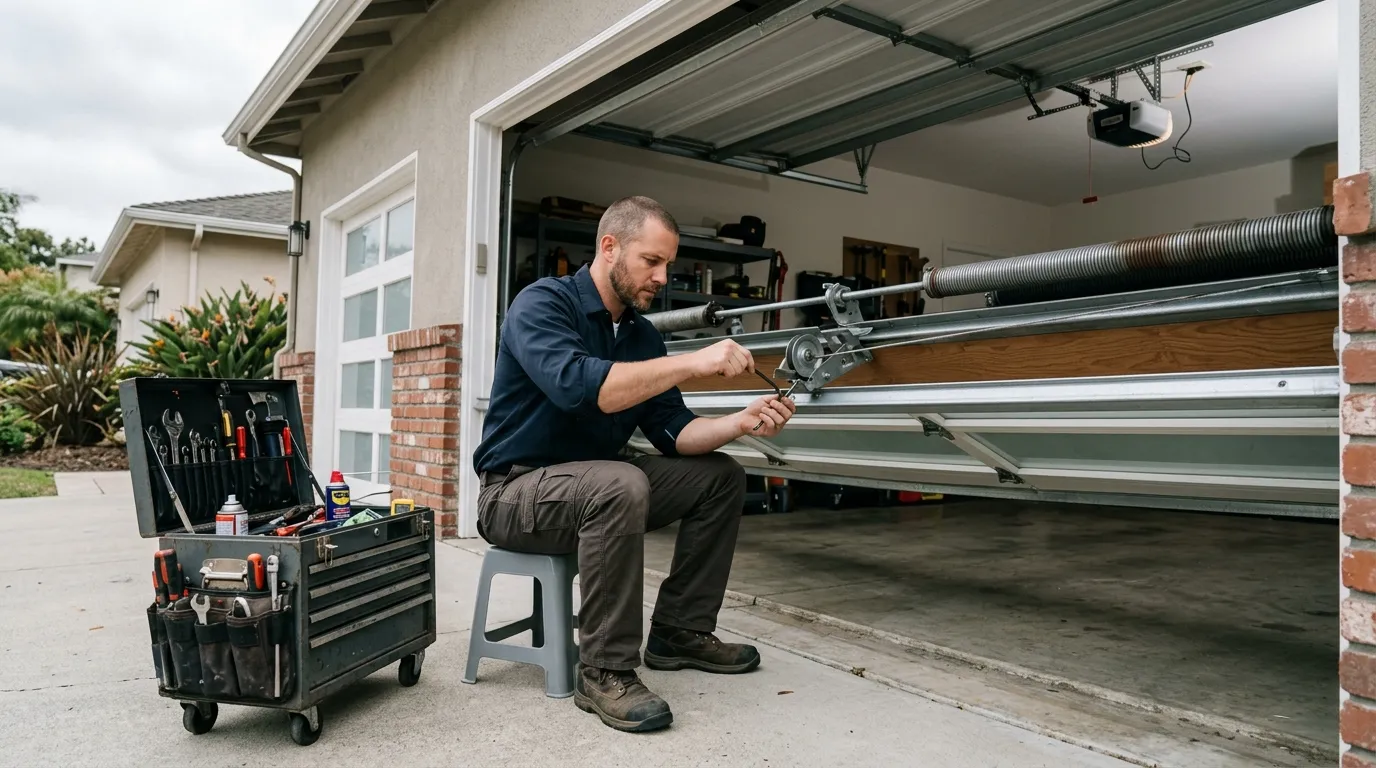
When you call for a service visit, you're not paying for a stranger to show up and guess. You're paying for someone to look at a door that was likely installed sometime between 1973 and 2007 - the range that covers most of the housing stock across the 13 named areas we work in, from Riverside and Murray Hill out to Fleming Island and Oakleaf Plantation. The median build year lands around 1985, which matters because a door and opener from that era were built to a different spec than what's sold today. A service call starts with figuring out what generation of hardware you actually have: torsion or extension springs, the drum size, whether the opener is a chain-drive unit that's outlived two or three remotes already. That diagnosis is most of the job. Once we know the door's age and how it's held together, the repair itself is usually fast - a spring swap, a cable re-seat, a sensor realignment. What takes the time is confirming which parts fit a door built decades before the current stock at any hardware store. Neighborhoods with older builds tend to need more of this matching work than newer ones like Oakleaf Plantation or Fleming Island, where doors are closer to current spec.

The Common Mistake

The mistake we see most is someone ordering a universal spring or opener kit online because it looked close enough, then finding out it doesn't match the drum size or mounting bracket their 1980s or 1990s door actually uses. With most of the local stock built between 1973 and 2007, there's a wide spread of hardware generations even within the same neighborhood - a house in Springfield or Brooklyn might have been re-fitted once already, while one in Murray Hill or Woodstock could still have the original torsion setup. Guessing at a part before someone measures the door costs more in the long run than the service call would have. The other version of this mistake is waiting. A spring that's making noise on a door this age is usually near the end of its cycle count, not at the start of a new problem. Letting it go another few months doesn't save money - it just moves the failure point from a scheduled repair to a door stuck shut on a Saturday. We'd rather look at it once, tell you honestly whether it's a spring, a cable, or a track out of alignment, and fix the actual thing instead of the thing that seemed obvious from the driveway.

What You Pay

We're not going to put a number here that isn't grounded in your door, because two houses on the same street can need completely different work depending on when the door was last replaced. What we can tell you is what drives the cost: spring size and type, whether the opener motor or just the logic board failed, and how much of the track or hardware has to come out to get at the problem. Median household income across the service area runs a little over $103,000, and we price jobs the same regardless of which of the 13 areas you're in - a repair on a door in Southbank costs what the parts and labor cost, not what the zip code suggests. The honest limitation here: we can't give you a firm number over the phone. A spring job and a full opener replacement look similar from the driveway but aren't close in price, and quoting blind does nobody any favors. What we can do is walk you through the range once we've seen the door, and tell you plainly when a repair isn't worth it compared to replacing the unit outright.

How Local Conditions Play In

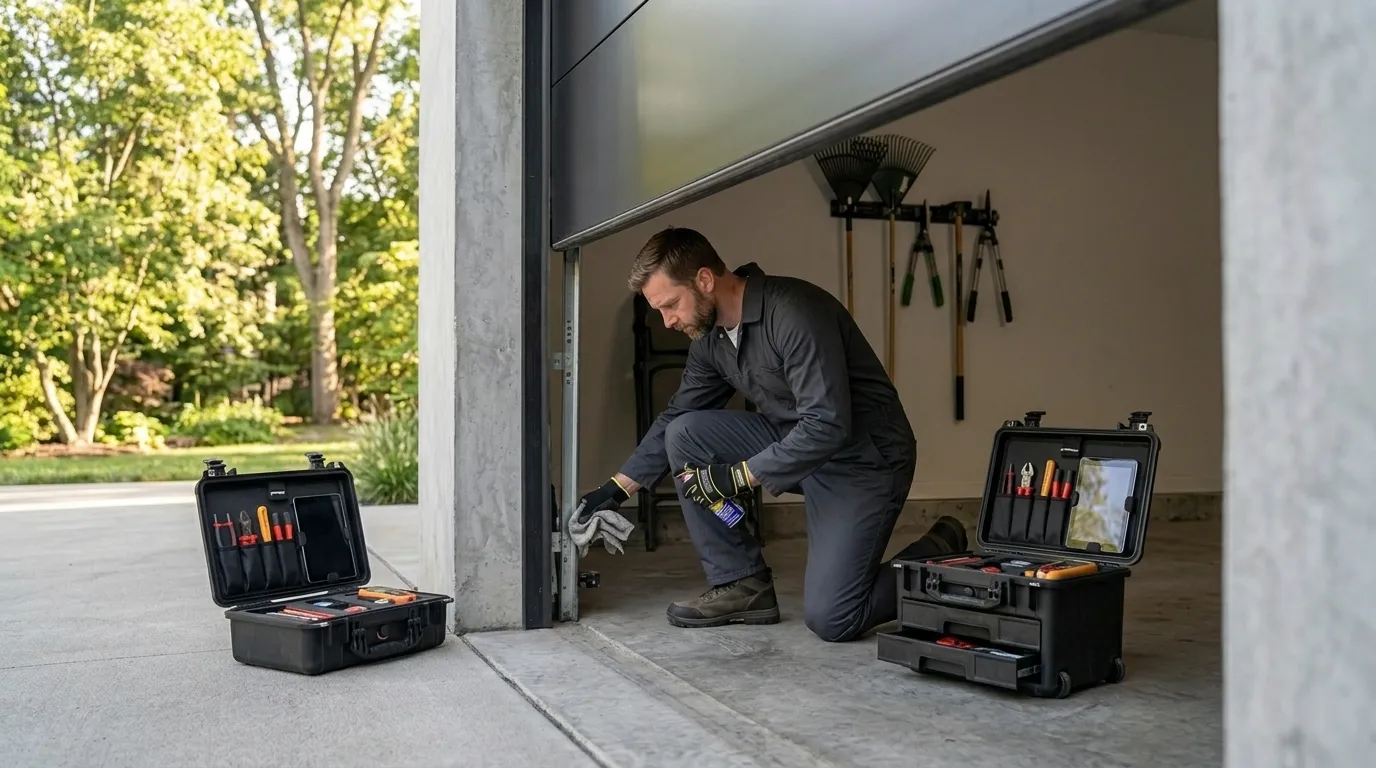
Jacksonville sits in a mild temperate band, which is easier on garage door hardware than a lot of the country - no hard freeze cycles snapping springs from cold contraction, no deep winter that keeps a door parked shut for months. That's the good news. The trade-off is humidity and salt air, especially the closer you get to the coastal side of the service area near Atlantic Beach or Jacksonville Beach, which speeds up corrosion on tracks, hinges, and exposed spring coils faster than a dry climate would. On a door built in the 1980s or 90s, thirty-plus years of that slow corrosion is often what we're actually diagnosing, more than any single event. Regular lubrication and keeping the track clear of salt residue matters more here than in a drier region, and it's cheap insurance against the kind of seized roller or frozen hinge that turns a five-minute fix into a full spring replacement. None of this means the door needs babying - it means the maintenance interval that works in a dry climate runs shorter here.
How it works

From “it’s stuck” to “it’s fixed”

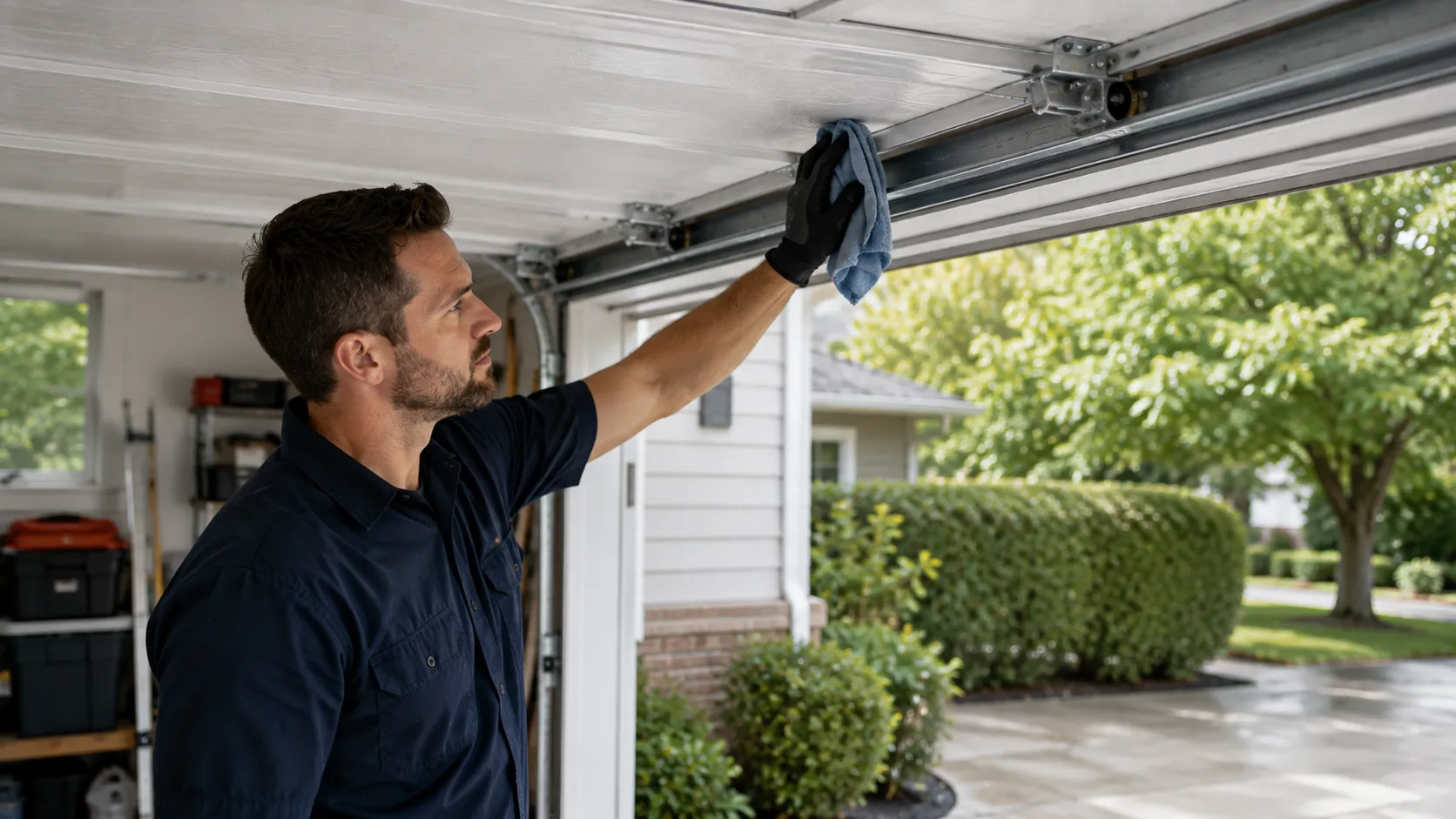
Tell us what’s wrong - Jacksonville garage door service

Tell us what’s wrong

Describe the symptom - won’t open, loud bang, opener runs but the door won’t move.

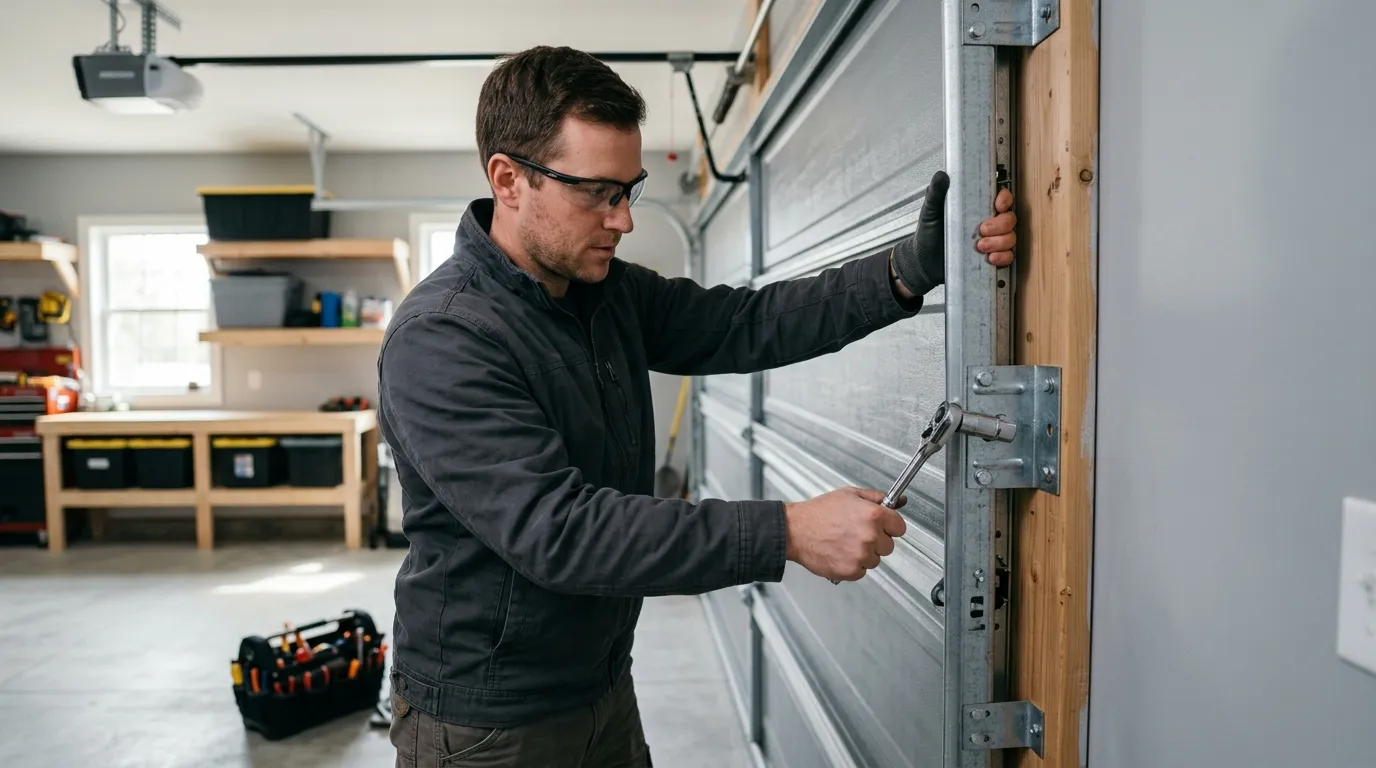
On-site diagnosis - Jacksonville garage door service

On-site diagnosis

A technician tests the door under power and by hand and finds what actually failed.

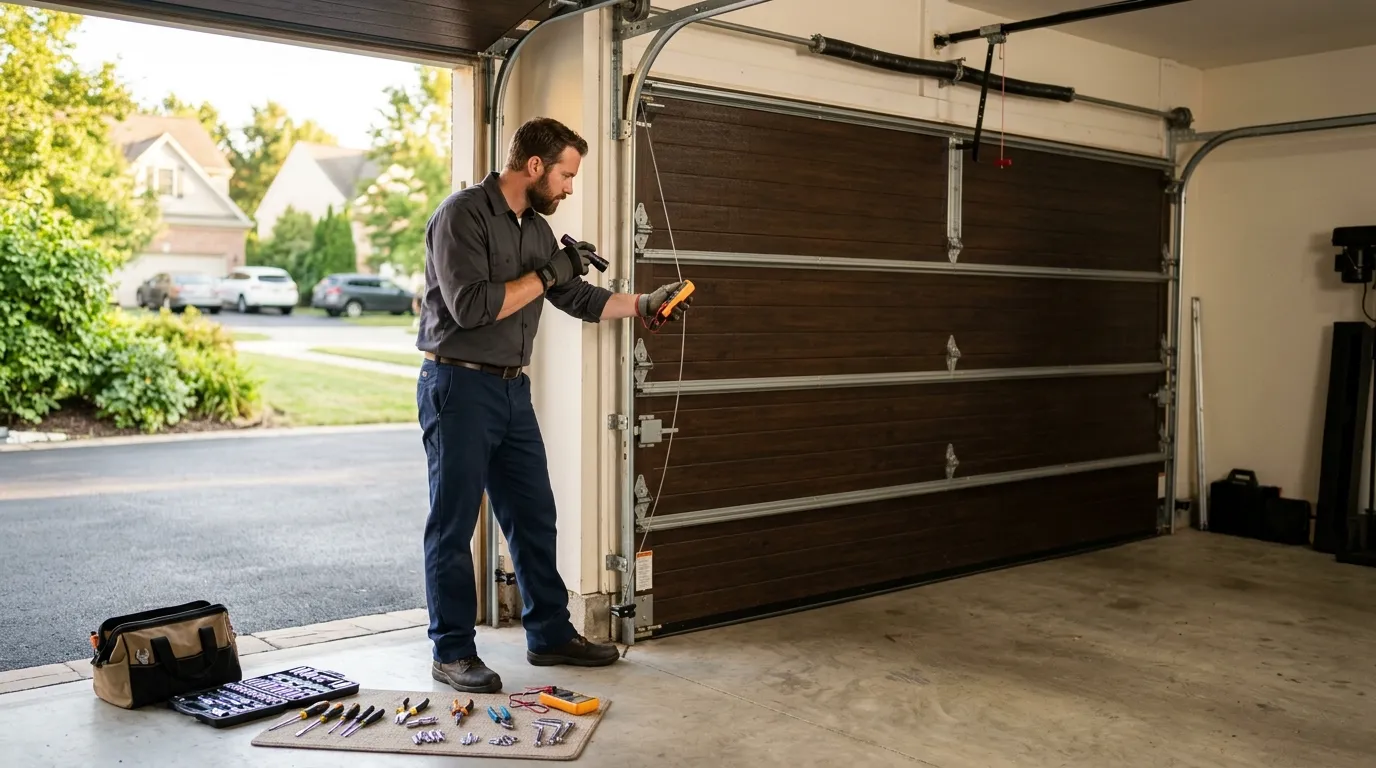
Clear, up-front plan - Jacksonville garage door service

Clear, up-front plan

You get the fix that’s needed and what drives the cost - before any work starts.

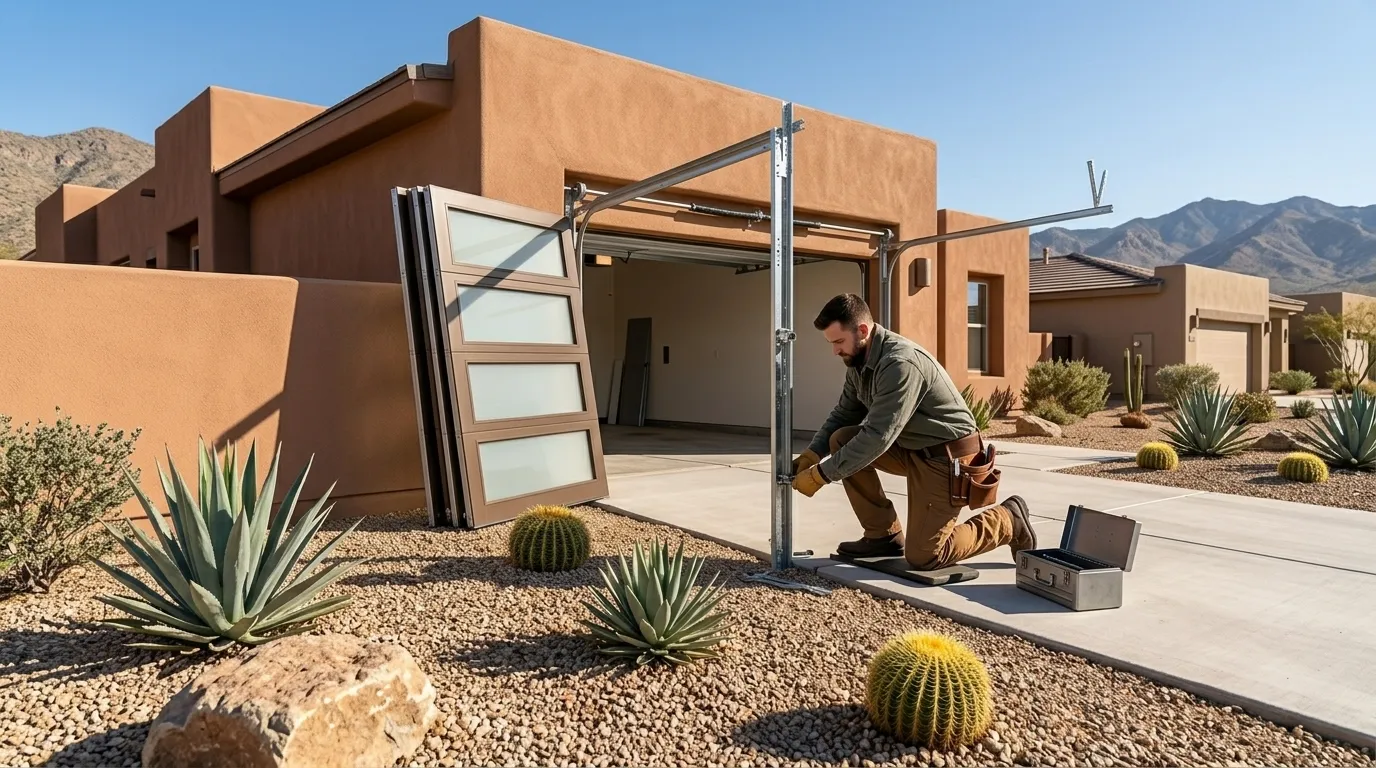
Repaired & tested - Jacksonville garage door service

Repaired & tested

The repair is done, the door is set true and tested, and the work area left clean.

Serving Jacksonville, FL - tell us what your door’s doing and we’ll take it from there.

How we work

What to expect

A straight, honest approach on every Jacksonville job - diagnosis first, the right parts, and clean work.

01

Diagnosis first

Every visit starts by finding what actually failed - not a pre-written parts list.

02

The right part for the door

Springs and openers matched to the door’s weight and age, so the fix holds up.

03

Straight answers

When a repair makes more sense than a replacement - or the reverse - you hear it plainly.

04

Clean, careful work

Tension released safely, hardware set true, the door tested under power before we leave.

Questions

Frequently asked

Straight answers about garage door repair in Jacksonville. Still unsure? Ask us directly.

How old is a typical garage door in Jacksonville that you're called out to fix?

Most of the doors we service are on homes built between 1973 and 2007, with the bulk of the local housing stock dating to the 1980s and 90s. That means original torsion or extension hardware is common, and matching replacement parts to that generation of equipment is usually the first step in any repair.

Does Jacksonville's climate affect how often a garage door needs service?

Yes. The mild temperate climate here means less cold-weather spring failure than colder regions, but humidity and salt air, especially nearer the coast, speed up corrosion on tracks and hinges. Doors here often need lubrication on a shorter interval than the same door would in a drier climate.

Can you tell me the price of a repair before you come out?

Not accurately. Two doors built the same year can need very different repairs depending on hardware condition, so we don't quote a firm number over the phone. We'll walk you through what's driving the cost - spring type, opener condition, track wear - once we've actually looked at the door.

Do older doors in this area ever need full replacement instead of repair?

Sometimes. On a door from the 1970s or 80s with a worn-out opener and corroded track, patching each failure separately can cost more over time than replacing the unit. We'll tell you honestly when that math tips toward replacement instead of another repair.

Ready to get your garage door sorted?

Tell us what it’s doing and where you are in Jacksonville - we’ll take it from there.

4Services offered
89Areas covered
Diagnosisfirst, then the fix
Request a QuoteCall