What the Fix Involves
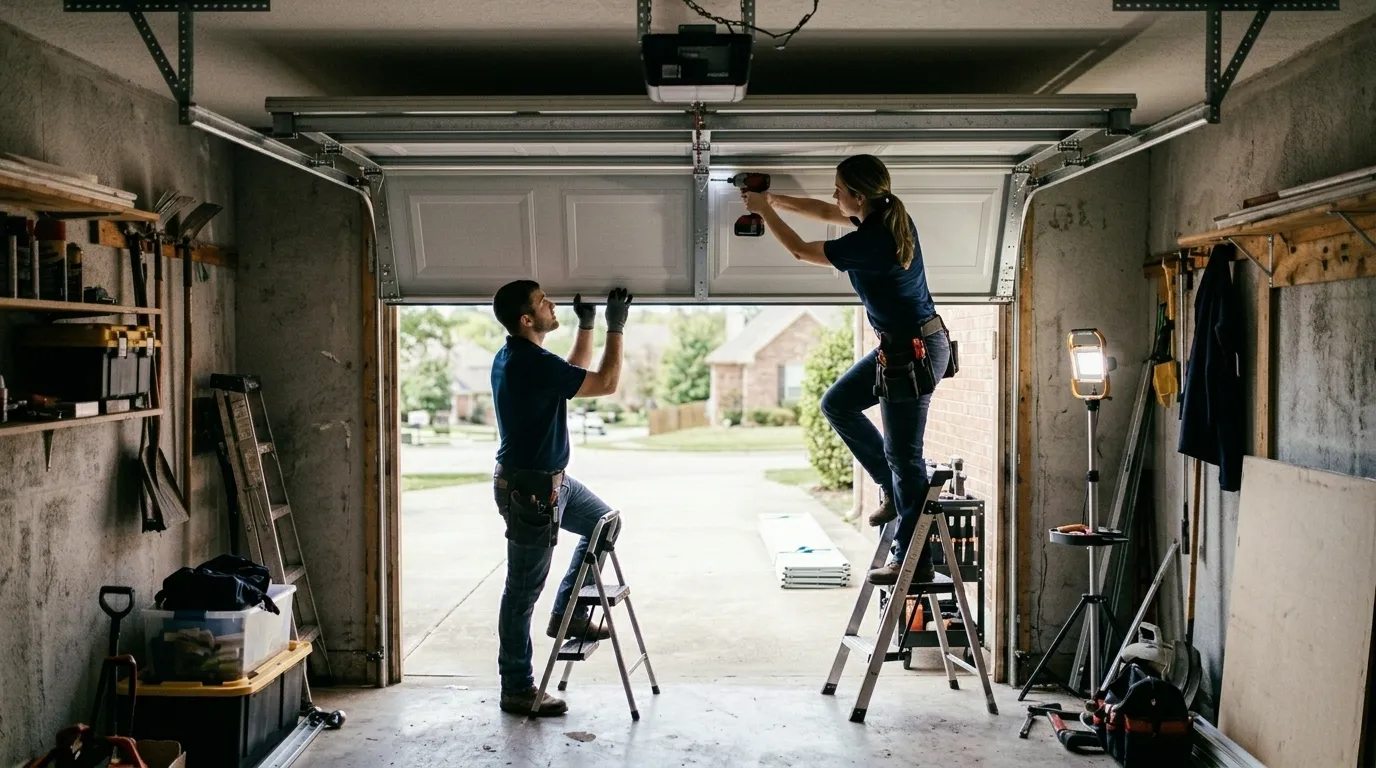
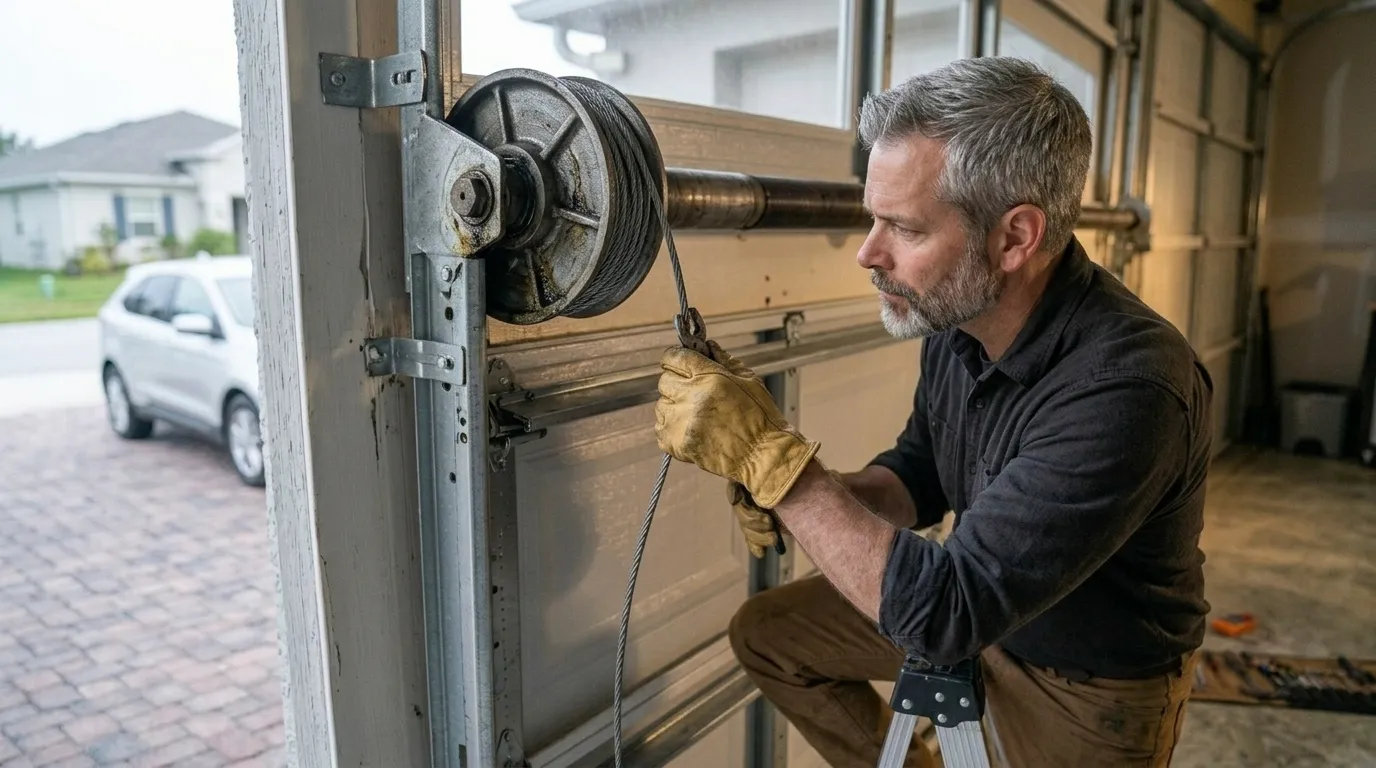
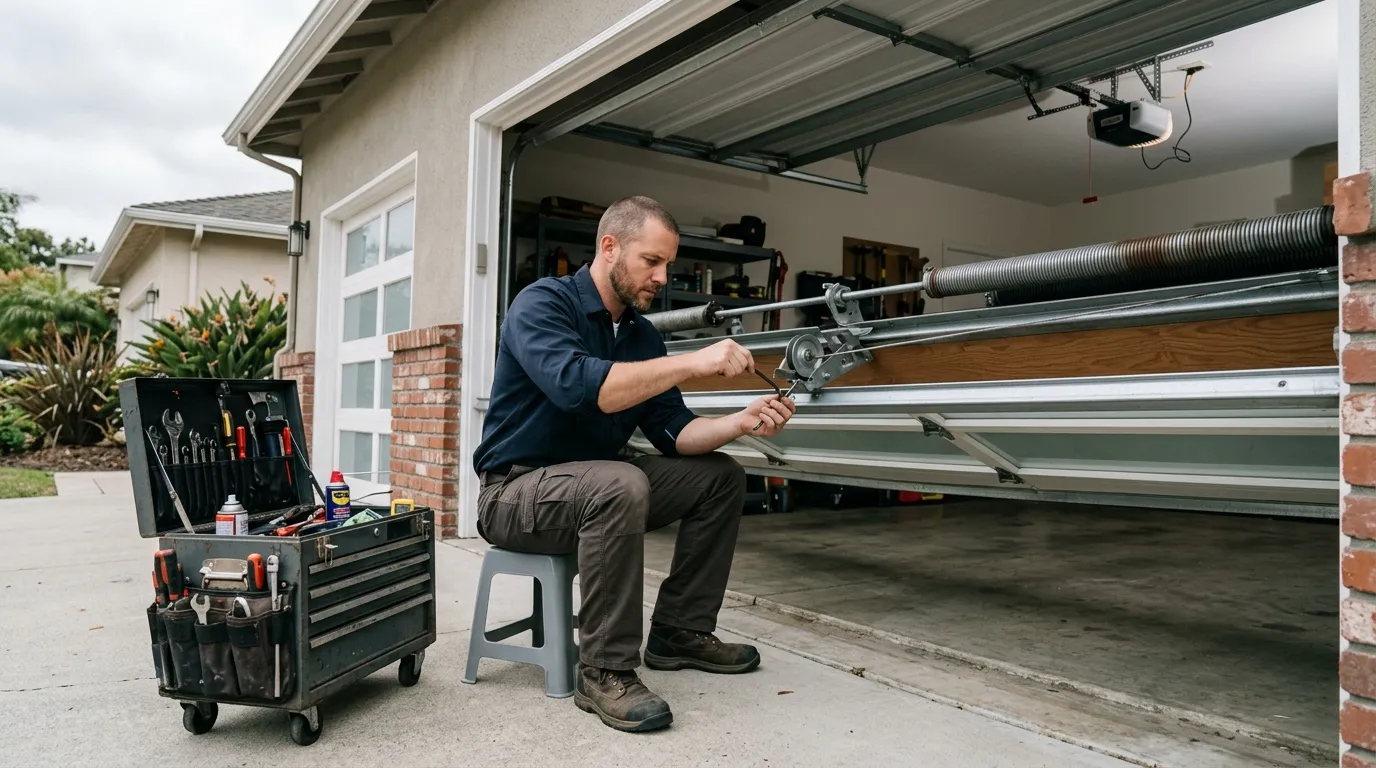
Most houses on Fleming Island went up around 2000, which puts them at the newer end of what we see across the wider Jacksonville service area, where the typical build year runs closer to 1985 and stretches back into the early 1970s. That later build date matters for panel work. Doors installed around 2000 are more likely to be steel sectional units with foam-injected panels rather than the older single-layer steel or wood-composite doors common in the 1970s and 80s stock elsewhere in the area. Foam-injected panels are heavier per section and usually run on beefier torsion springs, so a cracked or dented panel isn't a simple lift-off swap - the spring tension and cable routing have to be respected during the pull.
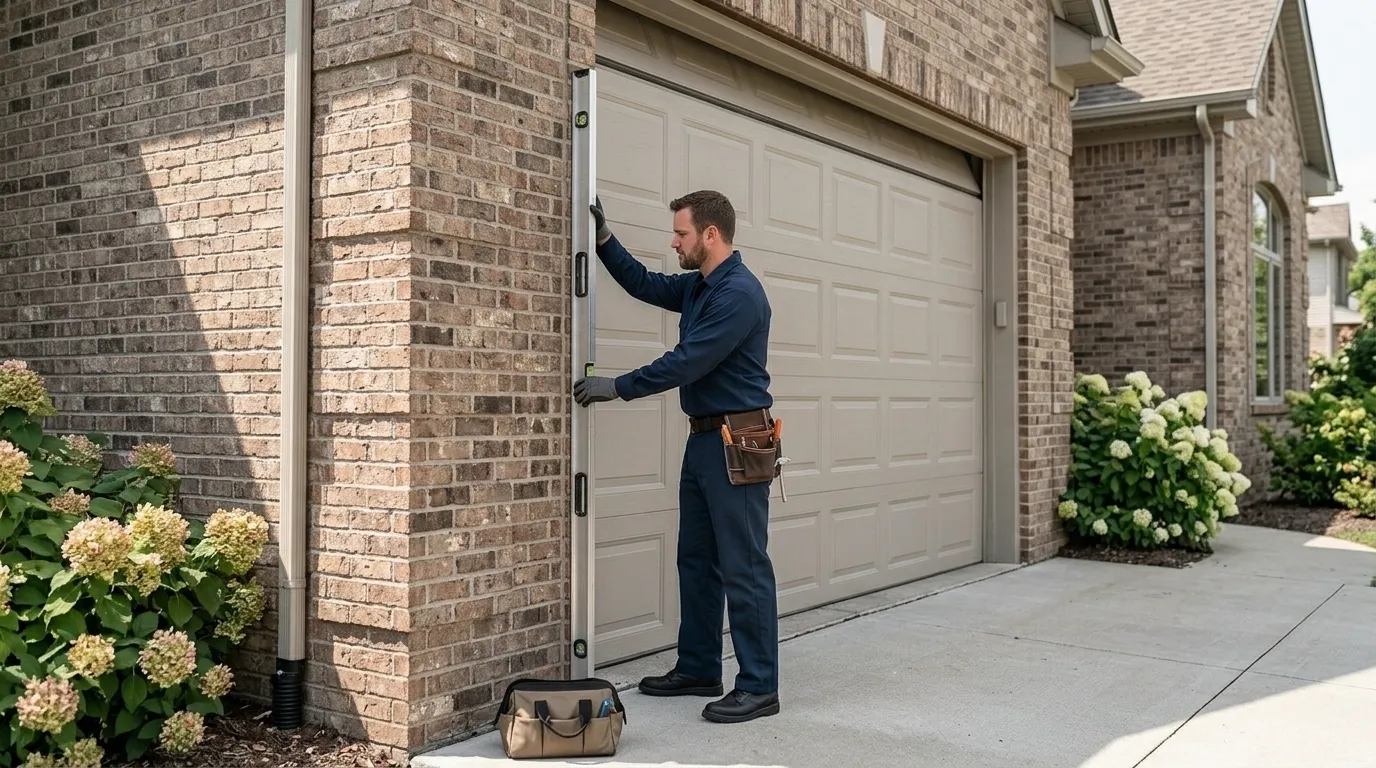
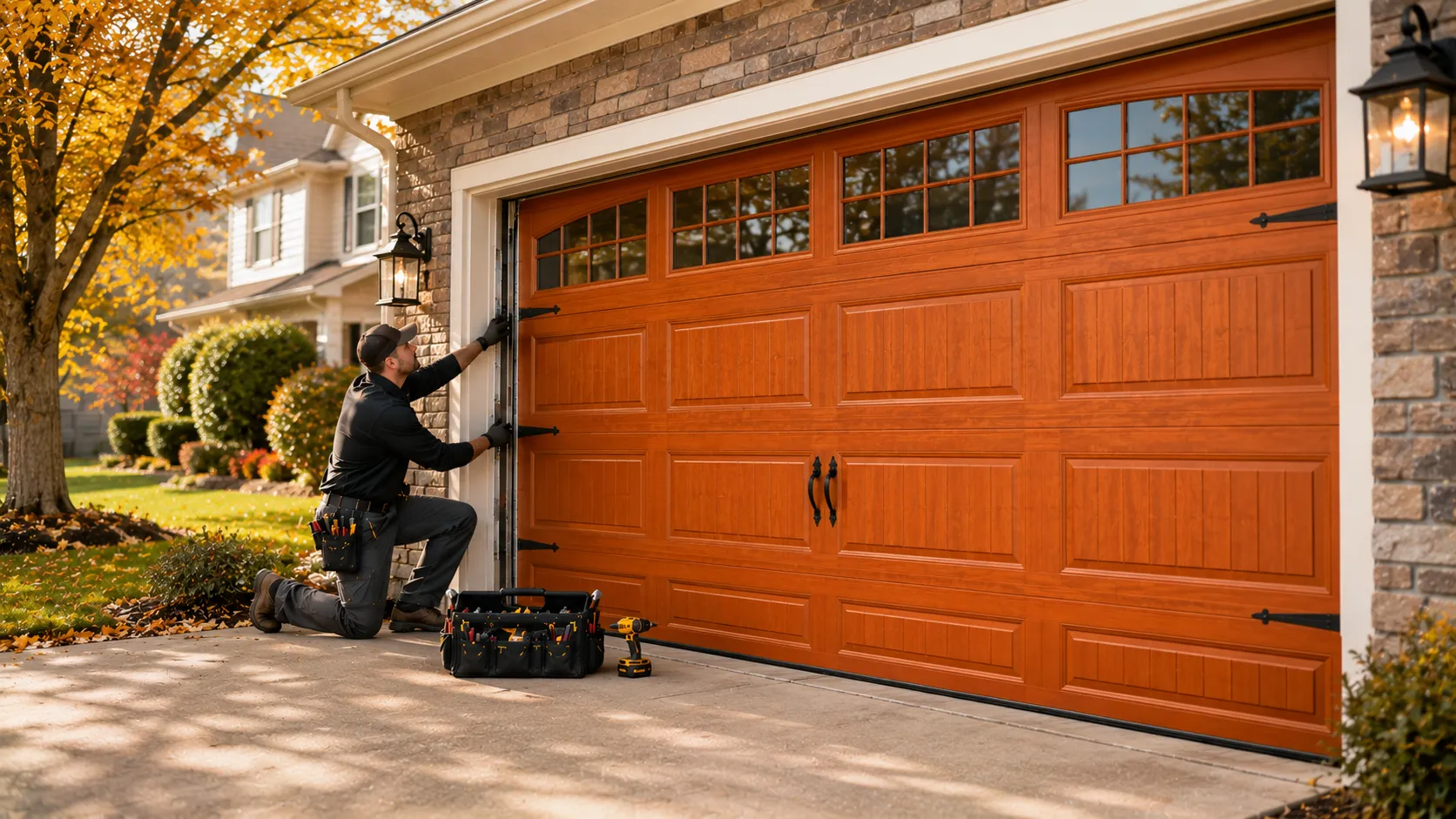
We pull the door's brand and model plate first, because panel sections from this era vary in rib profile and end-stile design even within the same manufacturer's lineup. If the exact section isn't available, we look at whether a full-door match makes more sense than a mismatched single panel sitting next to older, sun-faded ones. Either way, the goal is a panel that seats flush against its neighbors and doesn't throw the door out of square on the tracks.
How It Shows Up
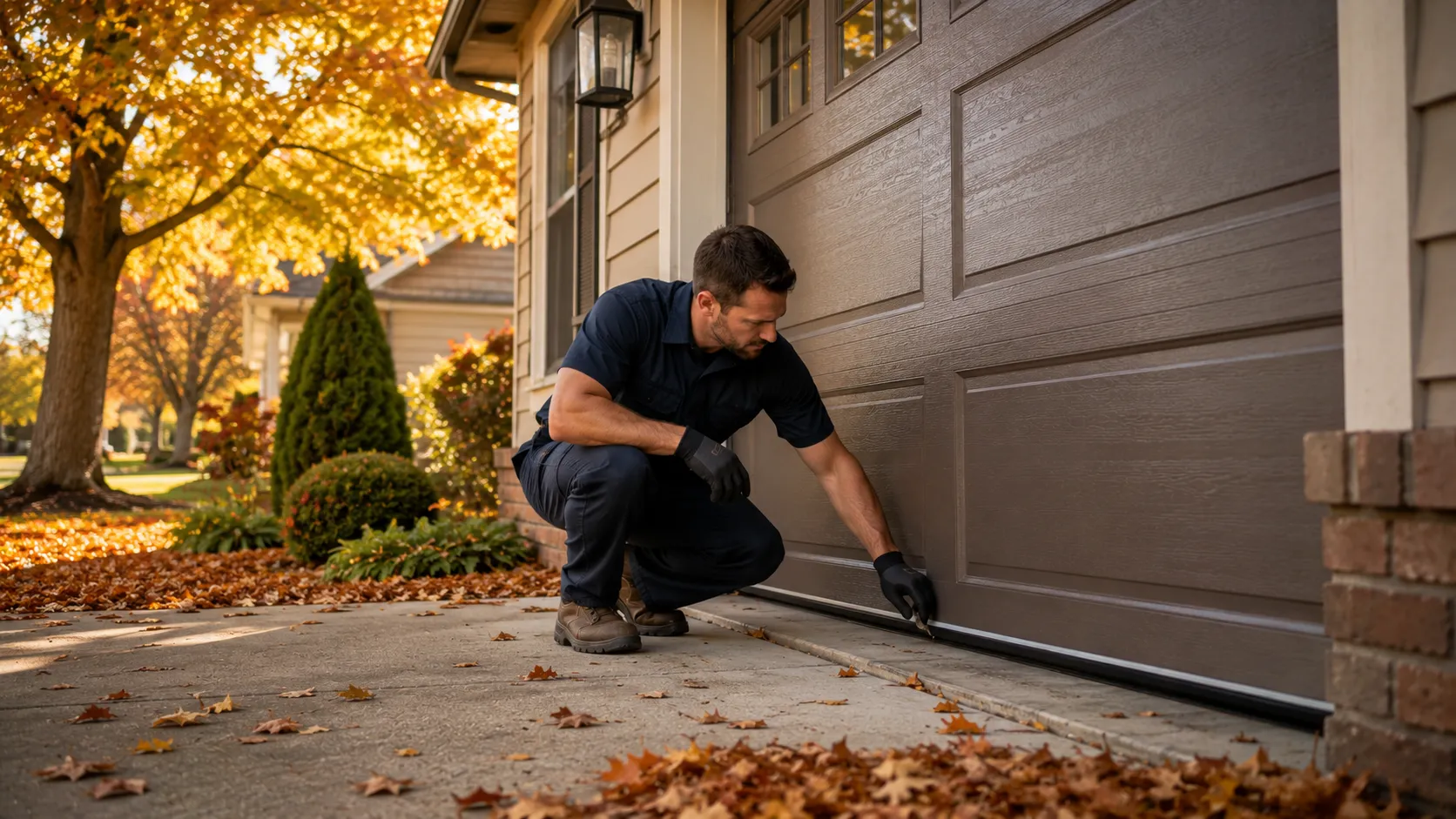
On a door from this era, panel damage usually shows first as a visible dent or crack from an impact - a car bumper, a thrown object, a ladder leaned wrong - rather than the slow warping you get on older wood-composite panels. Because Fleming Island sits in the same mild temperate climate band as the rest of the region, panels here aren't fighting the freeze-thaw cracking or heavy hail pitting you'd worry about further north. What we do see is UV fade and chalking on the outer skin over time, which is cosmetic until a dent breaks the foam bond underneath and the panel starts to bow.
A bowed or dented panel on a foam-backed door throws off the door's balance more than people expect, since the foam is part of the panel's structural stiffness, not just insulation. You'll notice it as a door that binds partway up the track, or an opener that strains and reverses before reaching full open. That's usually the panel telling you it's no longer holding its shape, not the opener or the springs failing on their own.
The DIY Question
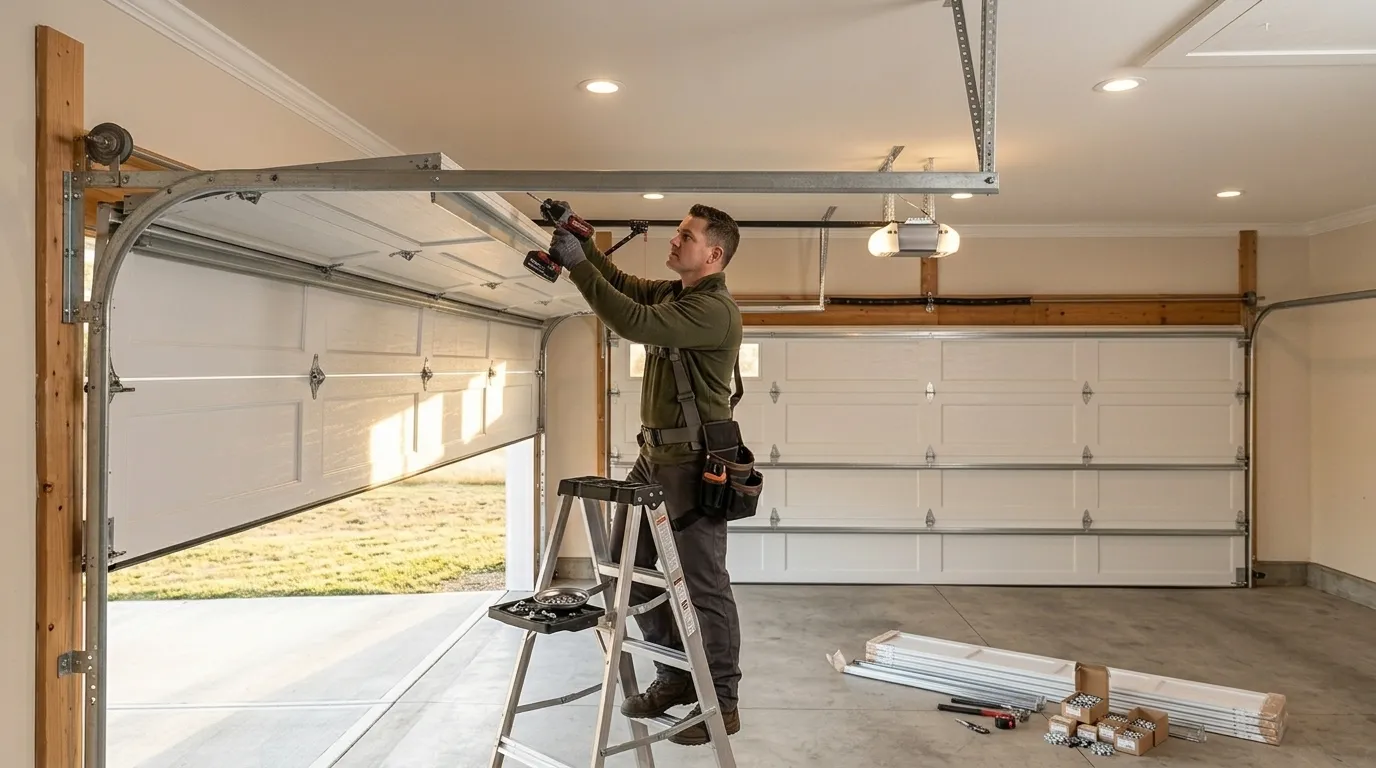
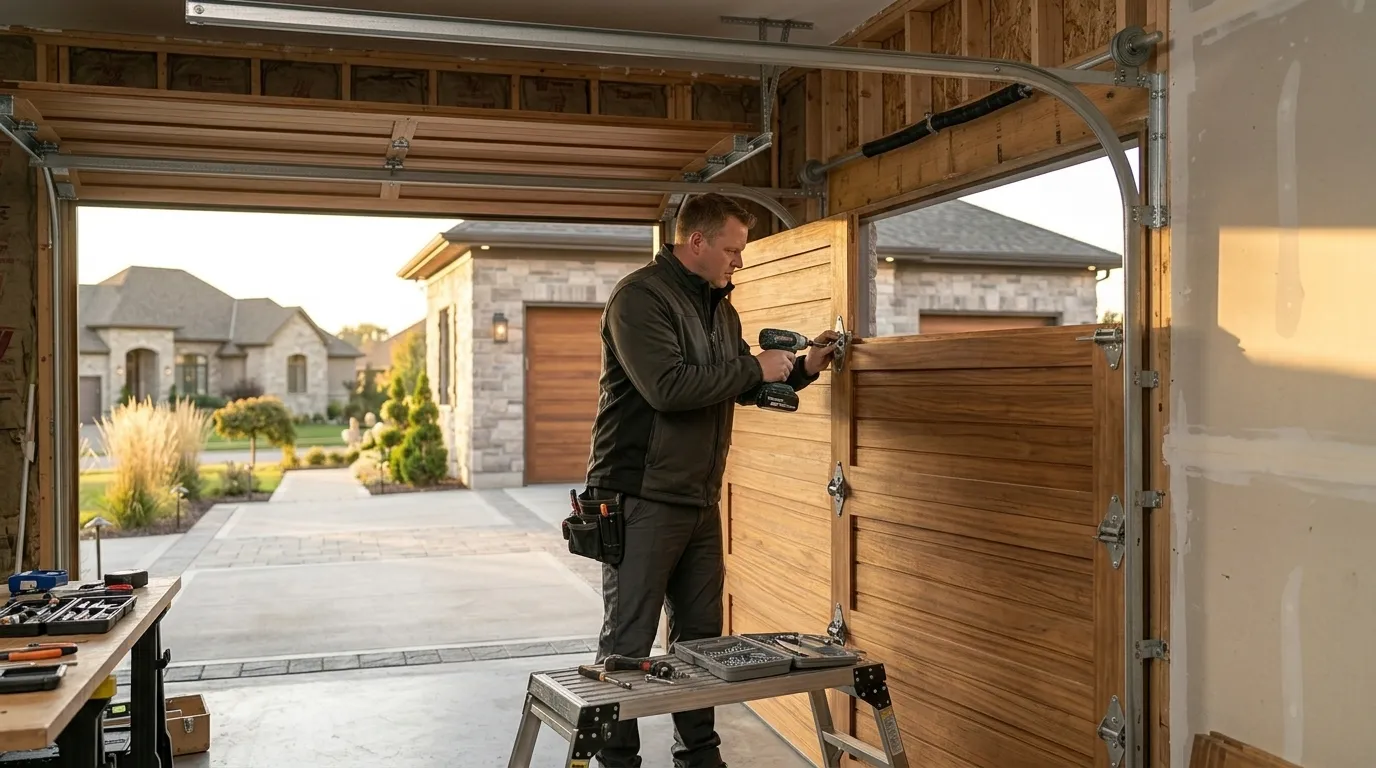
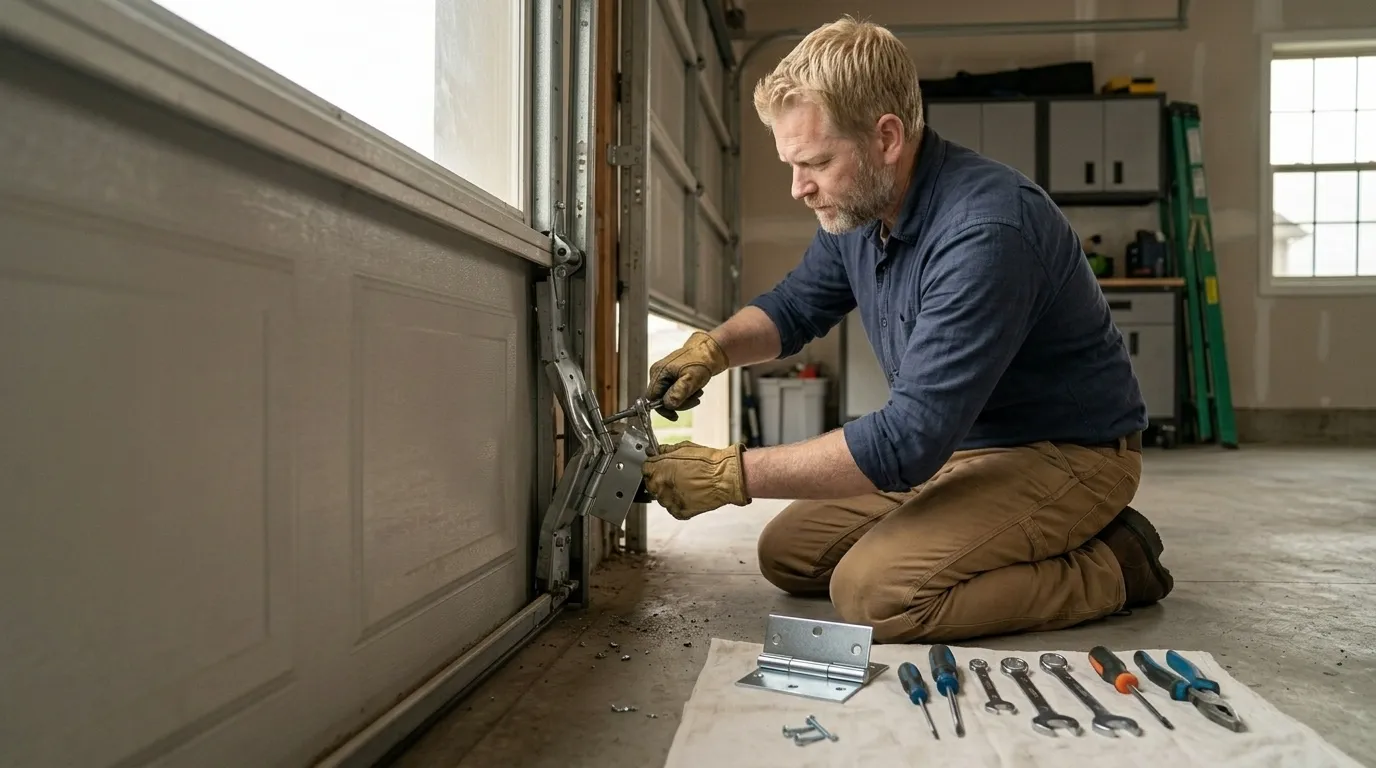
A single panel swap looks straightforward on video, and on some doors it nearly is - a few carriage bolts, a section that slides out and a new one that slides in. The catch on foam-injected doors is that the panels are laminated to internal reinforcement in a way that makes them stiffer and heavier to handle alone, and a door that's out of balance while you're mid-swap can jump the track fast.
We won't talk you out of trying if it's a top panel with no spring tension involved. But if the damaged section sits anywhere near the bottom panel with the cables and rollers attached, or the door binds when you cycle it by hand, that's not a solo job - the risk of a cable letting go under load isn't worth saving a service call. Honest answer: sometimes a full door replacement costs less in labor and hassle than hunting down one matching panel for a less common model.