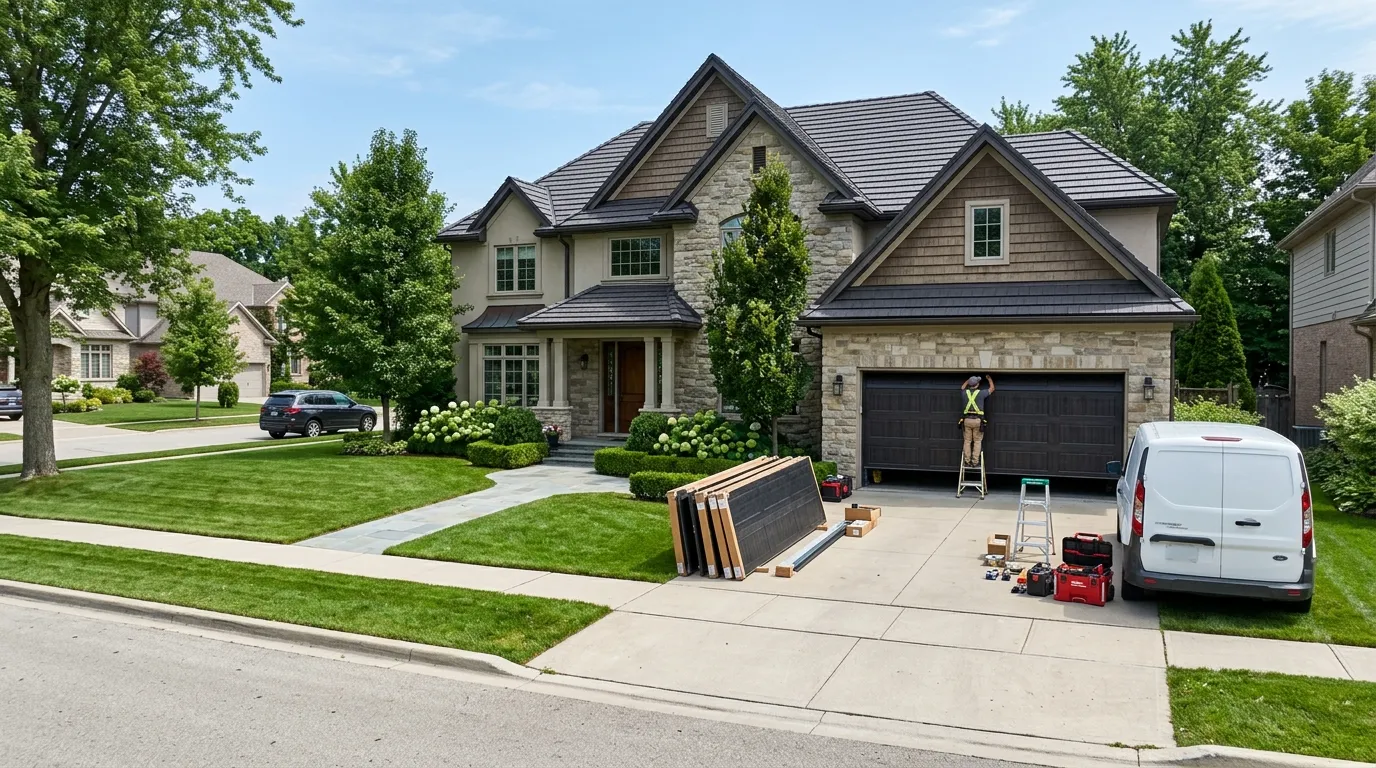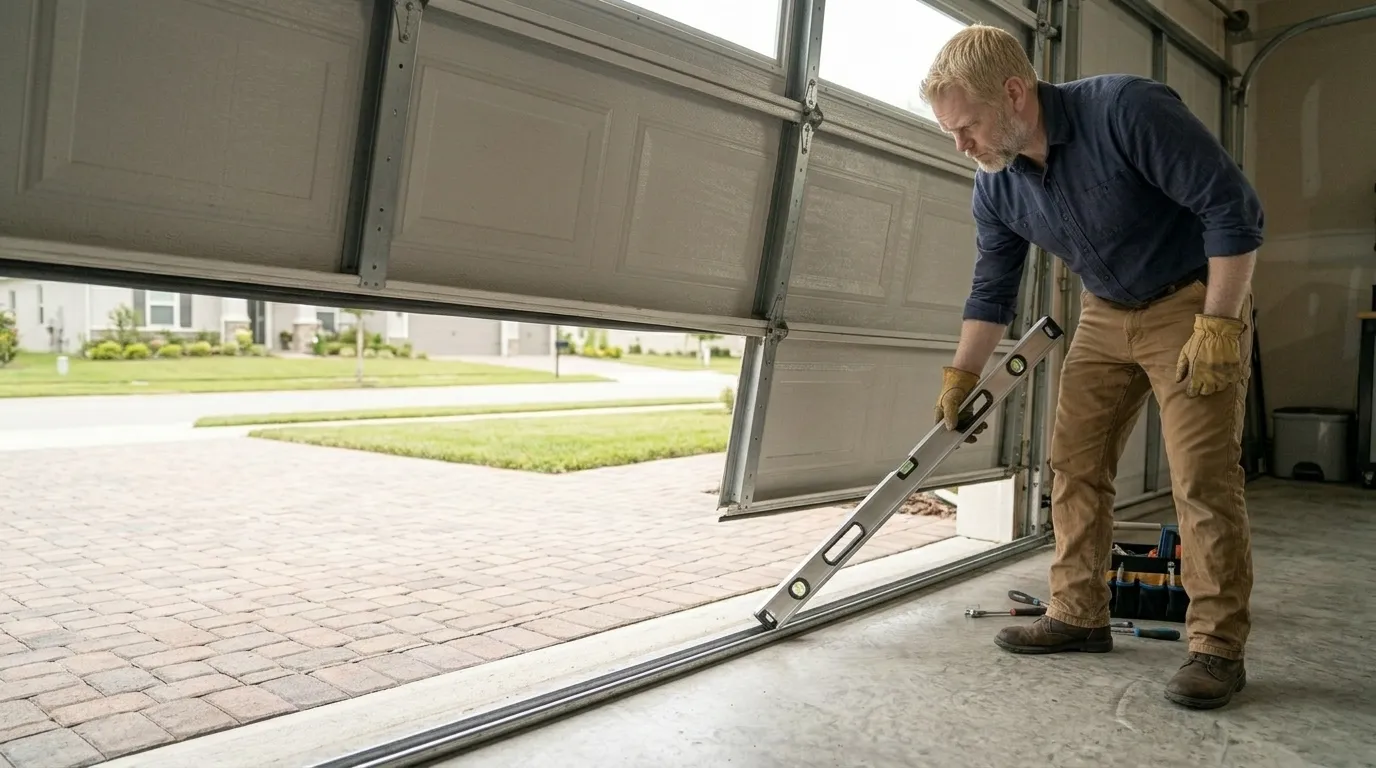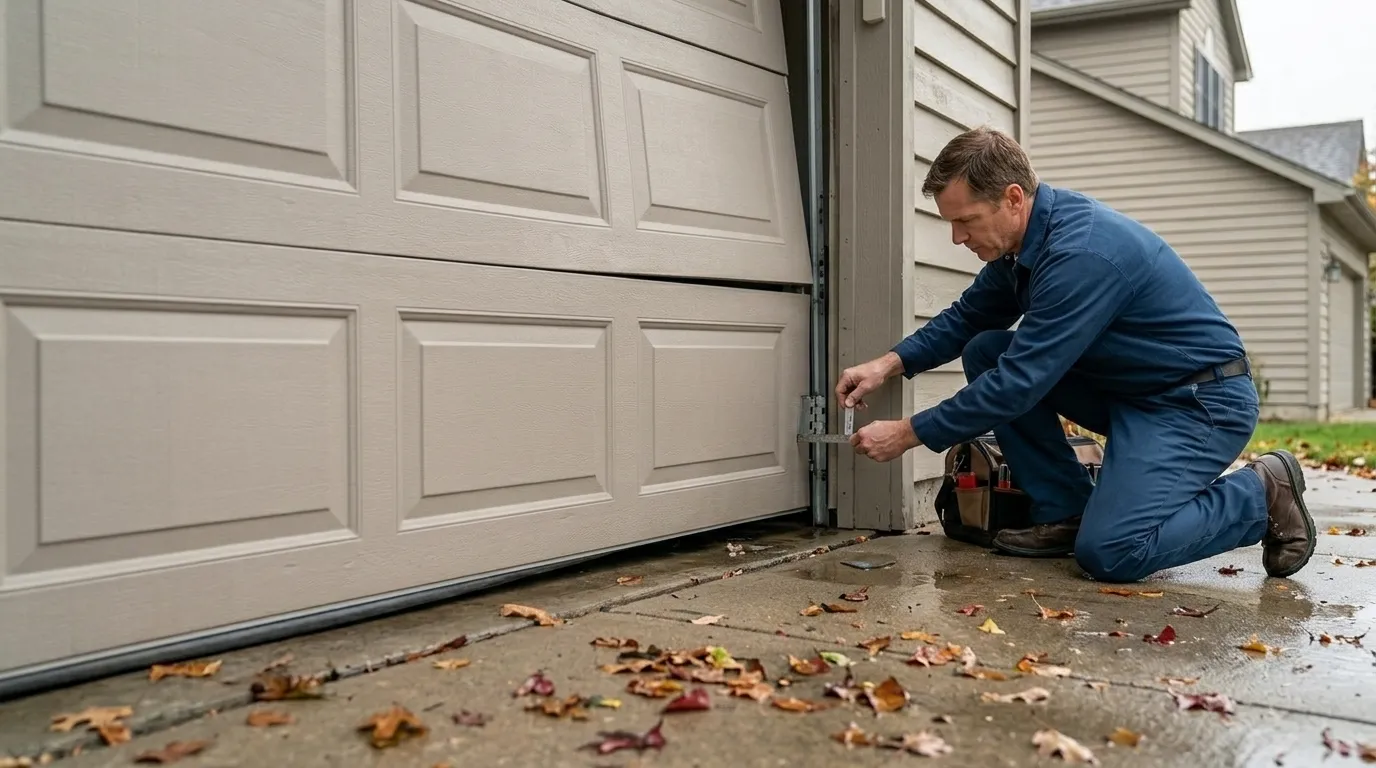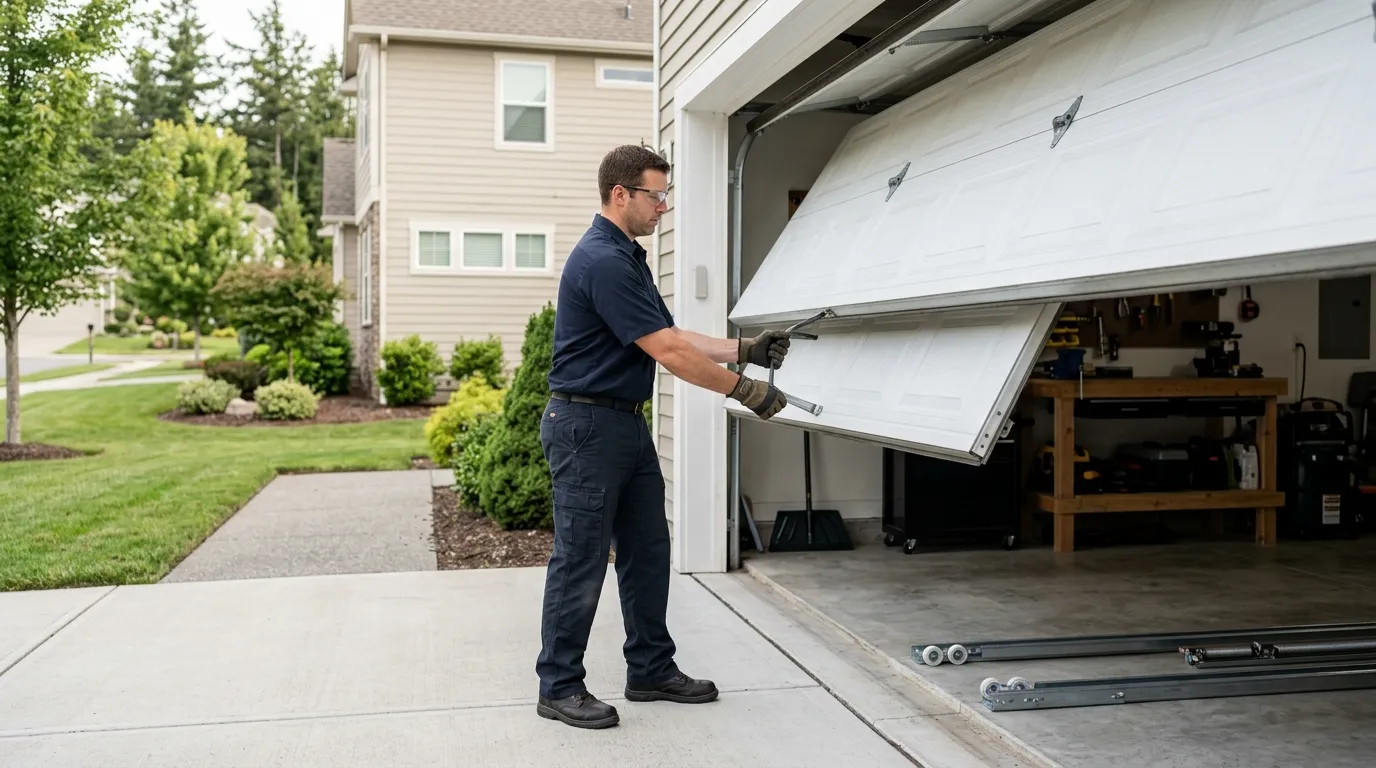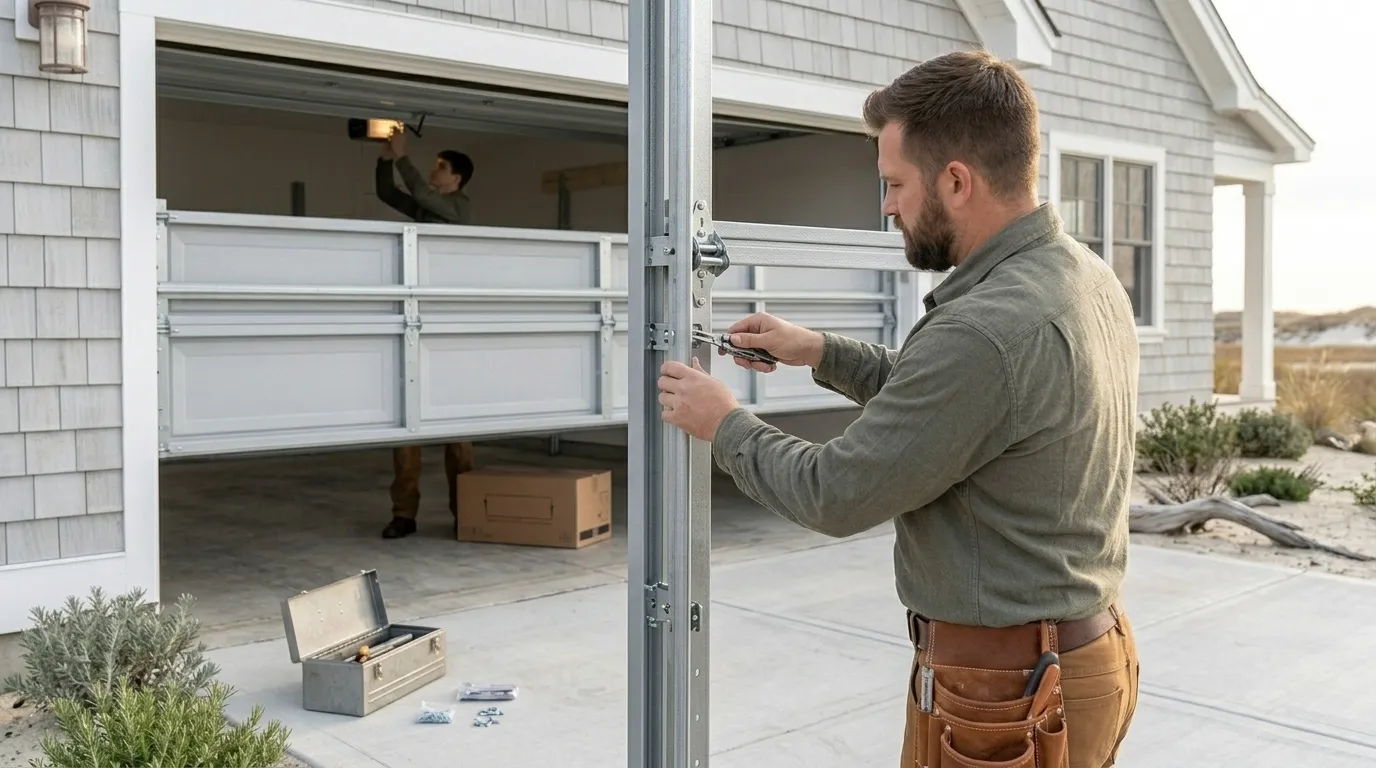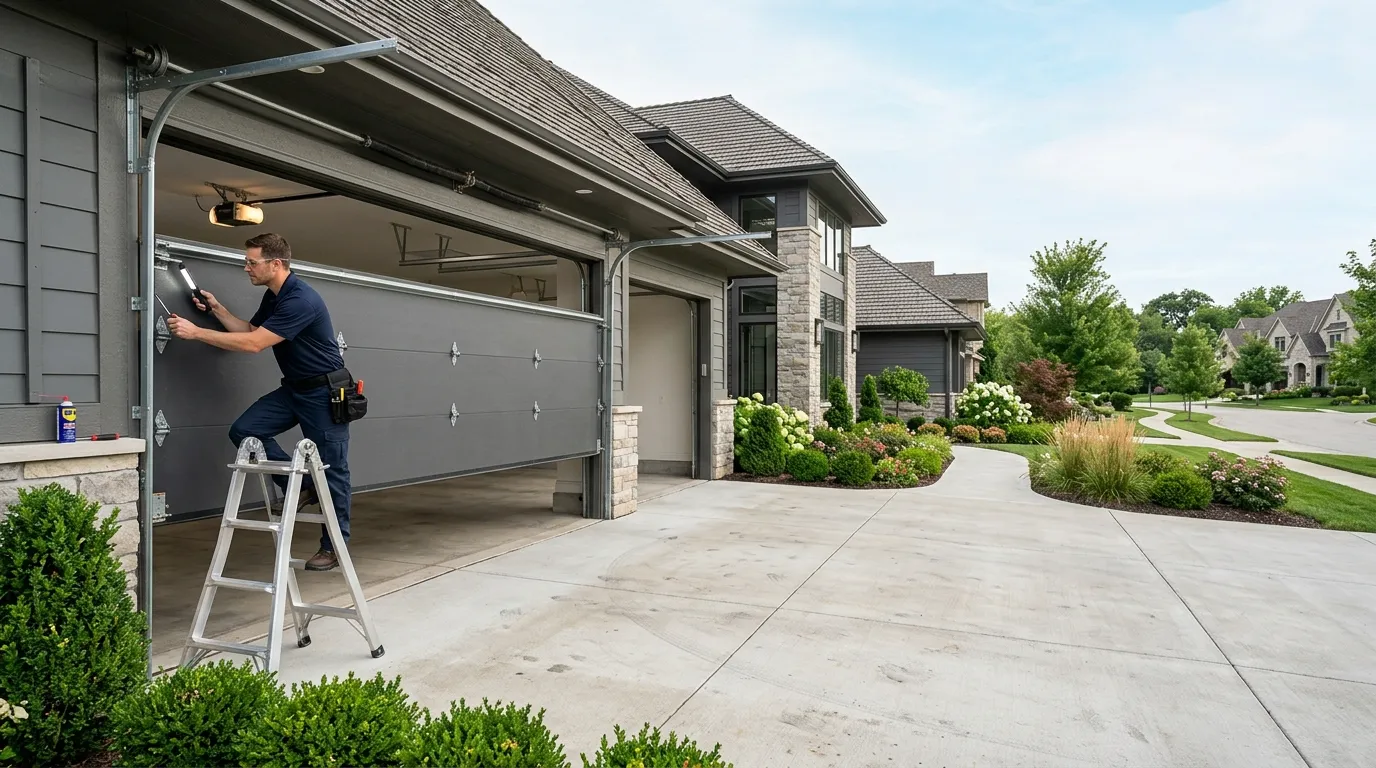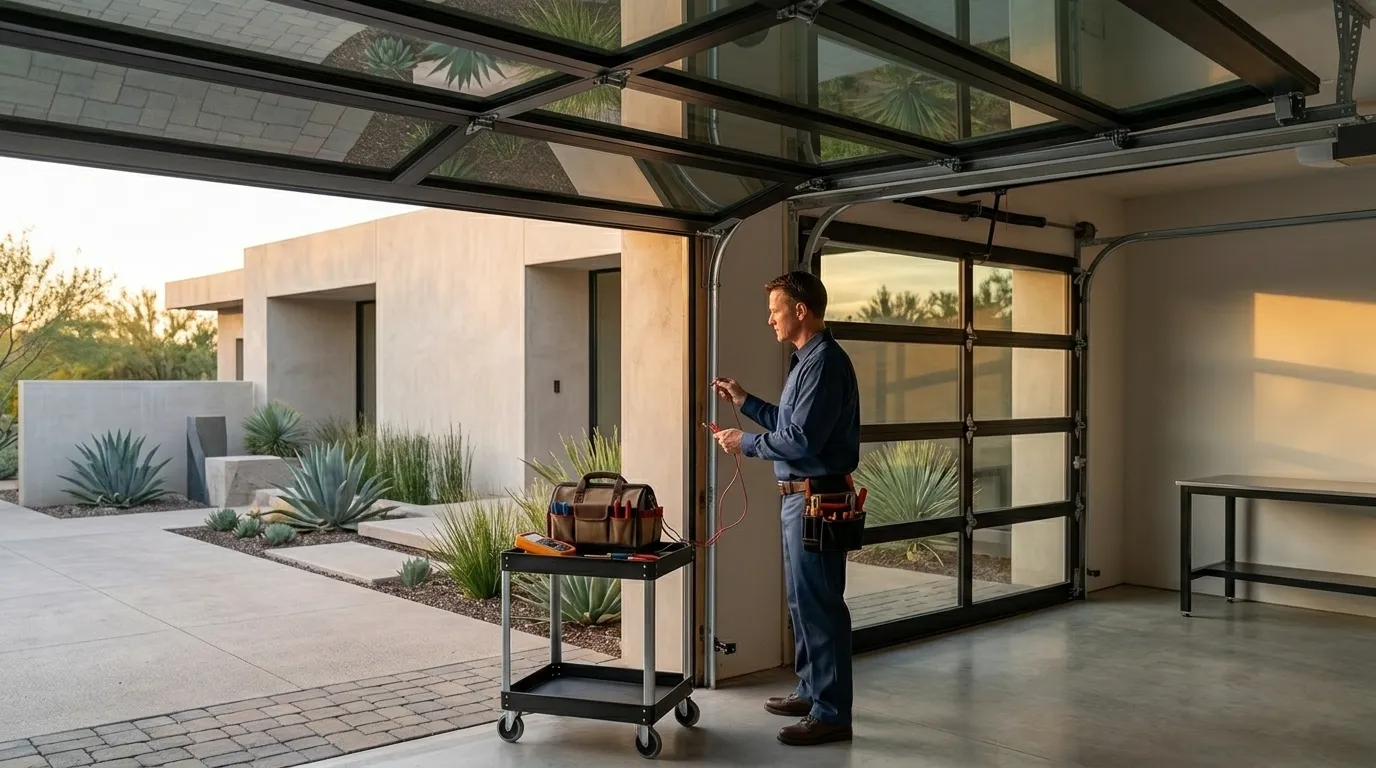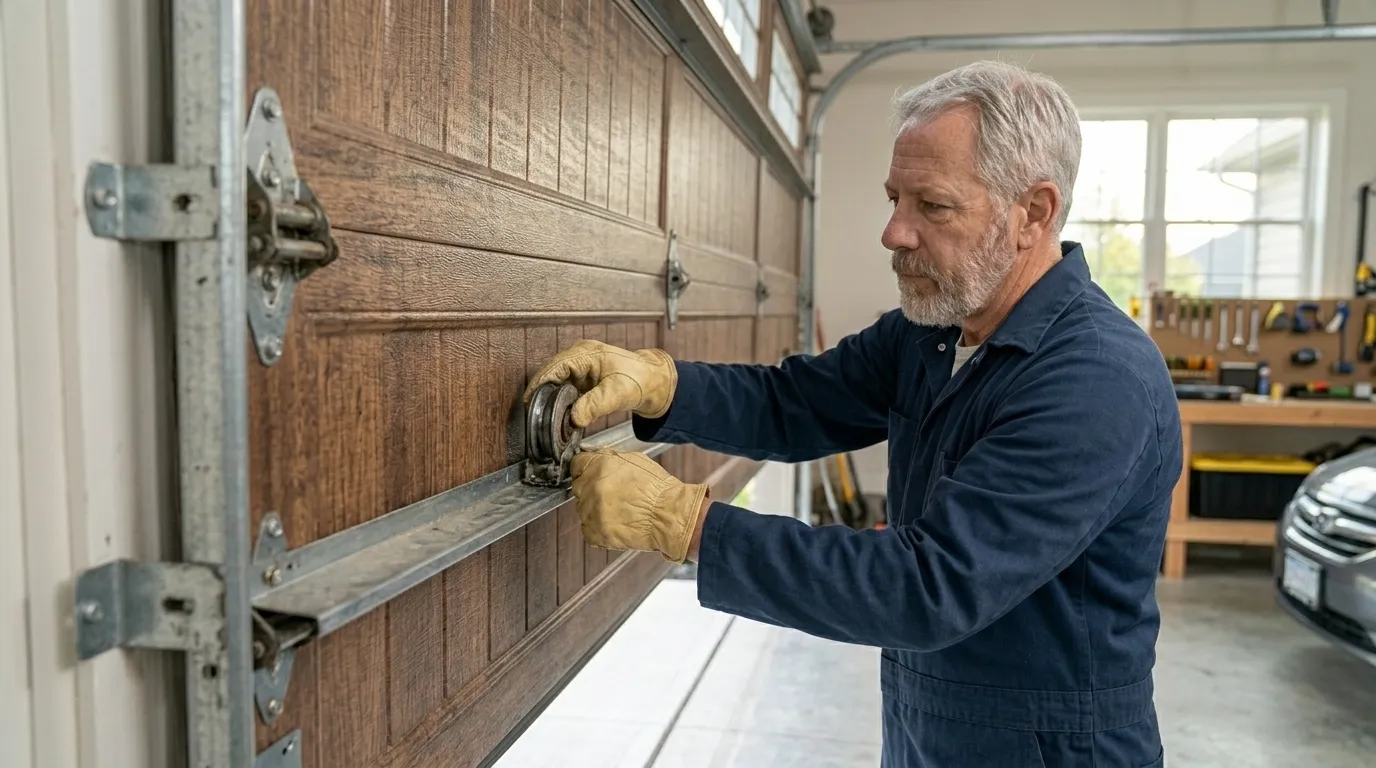

What the Fix Involves
Start with the number that actually decides most repair calls here: median household income on Fleming Island runs $119,046, well above the $103,288 median across the wider service area. That matters because the repair-or-replace math changes at that income level. A homeowner at this income tends to fix a broken spring or a bad opener board without much debate, but replace a door once the steel is dented or the bottom panel is rotted through, rather than nursing an old unit along for another two years. On a house built around 2000, which is the median year for Fleming Island, that's usually the right call anyway, since the door and opener are old enough to be worn but not old enough to be a total mismatch with current hardware.
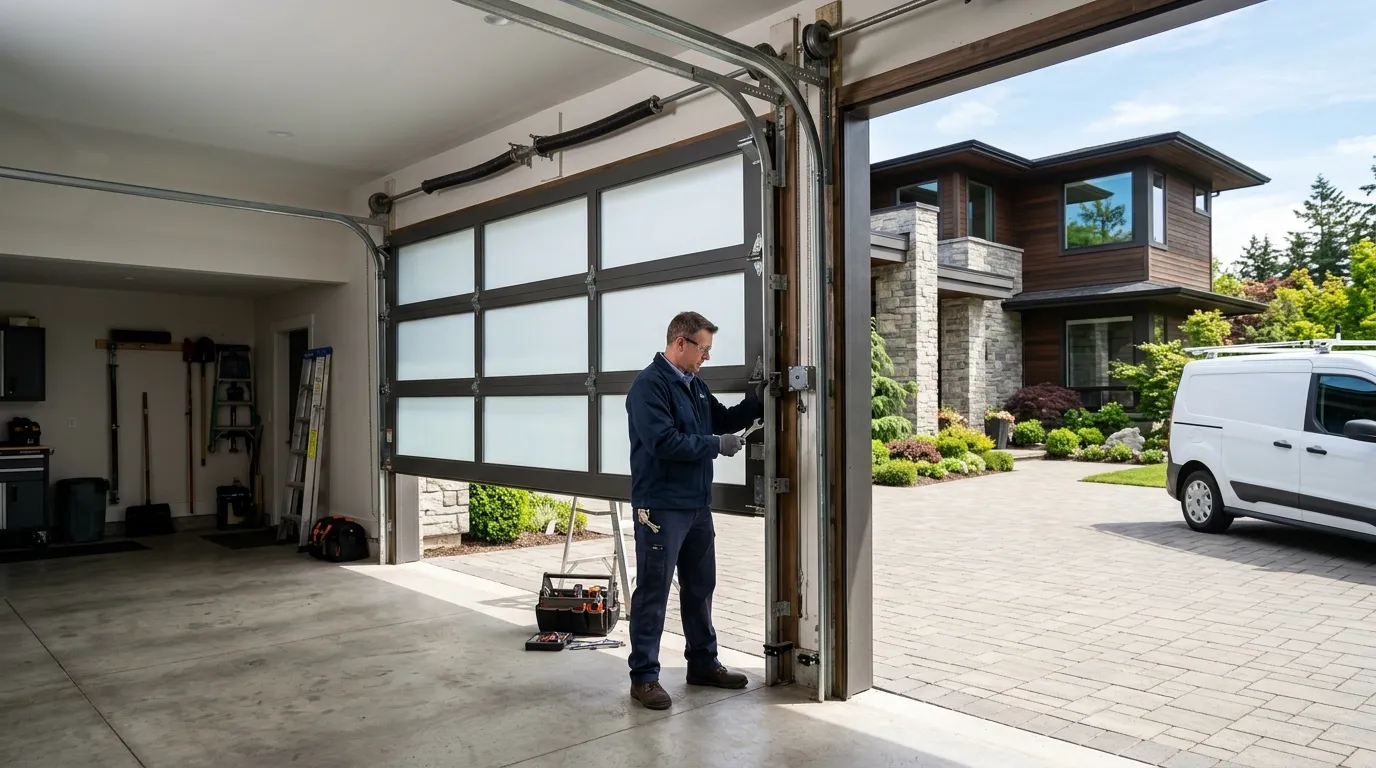
Most of what we see out here is a standard steel sectional door on a torsion spring system, sized for a garage framed to code after 2000. That means one spring, sometimes two on a wider double door, mounted on a shaft above the opening rather than the older side-mounted extension springs you'd find on houses built before the 1990s. Cables, rollers, and the torsion spring itself wear out on a predictable schedule regardless of income bracket - it's the decision after the diagnosis that differs by neighborhood.
How It Shows Up
On a house this age, the failure is rarely structural. The door itself is usually fine; it's the moving parts that give out first. A torsion spring that's cycled for twenty-some years will snap without warning, usually announced by a bang and a door that won't lift, or that lifts a few inches and stops. Rollers on the original nylon wheels start binding in the track around the same age, making the door judder instead of glide.
Openers from that era are also hitting the end of their working life - circuit boards fail, drive gears strip, and the safety sensors at the bottom of the track drift out of alignment. None of this is exotic. It's what happens to a torsion-spring, steel-sectional setup after two decades of daily cycles in a mild coastal climate that doesn't add freeze-thaw stress to the mix, unlike colder parts of the country where ice on the track speeds up wear.
The DIY Question
A torsion spring is under enough stored tension to break a hand or worse if it lets go while you're working on it - that one's not a DIY repair, full stop, regardless of how handy you are. Swapping a keypad battery or reprogramming a remote, sure, do that yourself.
Where it gets less clear-cut is the opener. If it's original to a house built around 2000, replacing it yourself with a new unit off a shelf is possible, but the wiring to the wall switch and the safety sensor alignment trip up a lot of people, and a sensor that's a half-inch off will make the door refuse to close at all. Our honest limitation: we don't stock every opener model on the truck, so if you want a specific brand matched to what's already there, tell us before we roll out, not after.