What Causes It Around Here
Most houses in Jacksonville's garage-door-owning neighborhoods went up between 1973 and 2007, with the median build year landing around 1985. That means the springs, rollers, and hinges on a lot of these doors are original hardware pushing thirty-plus years of cycles. Across the named areas we cover - and out toward Fruit Cove - the housing stock skews the same way: mostly 1980s-90s construction, so the failure points repeat house to house.
Jacksonville sits in a mild temperate band, which is the good news and the bad news. You don't get the freeze-thaw cycling that snaps torsion springs up north, but you do get steady humidity and salt-adjacent air near the coast-side neighborhoods, and that works on unlubricated coils, cable ends, and steel track slower but just as surely. A door that never gets touched doesn't announce it's dying. It just gets a little louder, a little slower, a little heavier on the opener, until one morning it doesn't move.
We don't find a lot of dramatic weather damage on maintenance calls here. What we find is thirty years of dust in a track, dry rollers, and a spring that's lost tension nobody noticed because the opener kept compensating for it.
Getting It Booked In
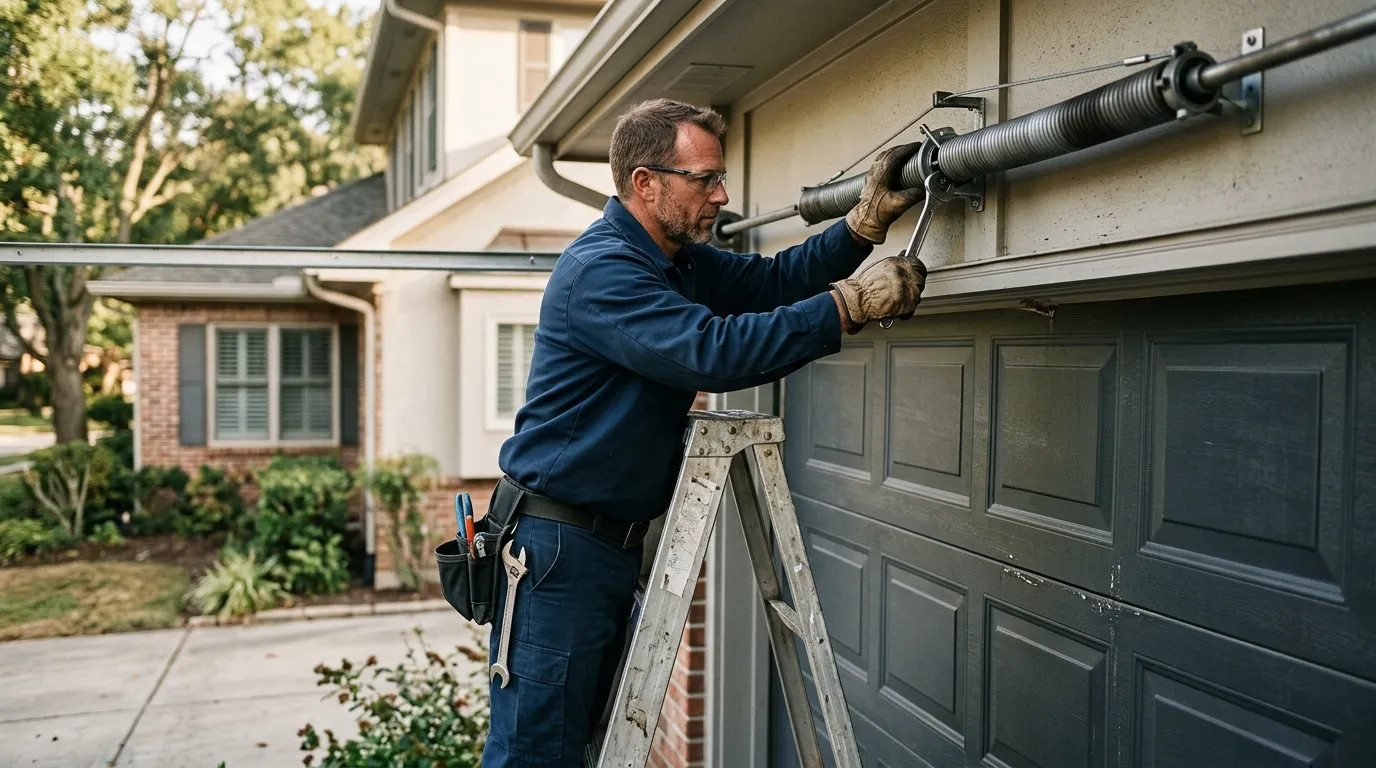
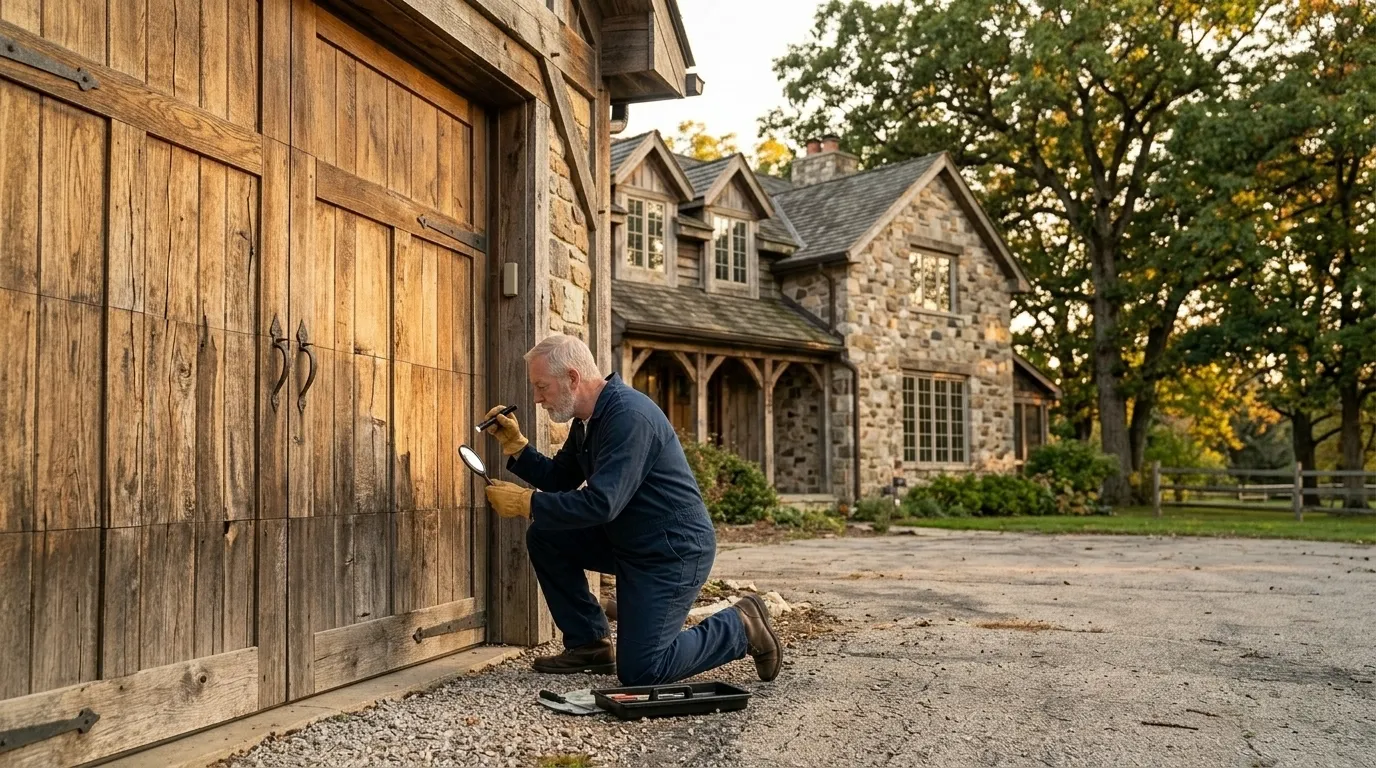
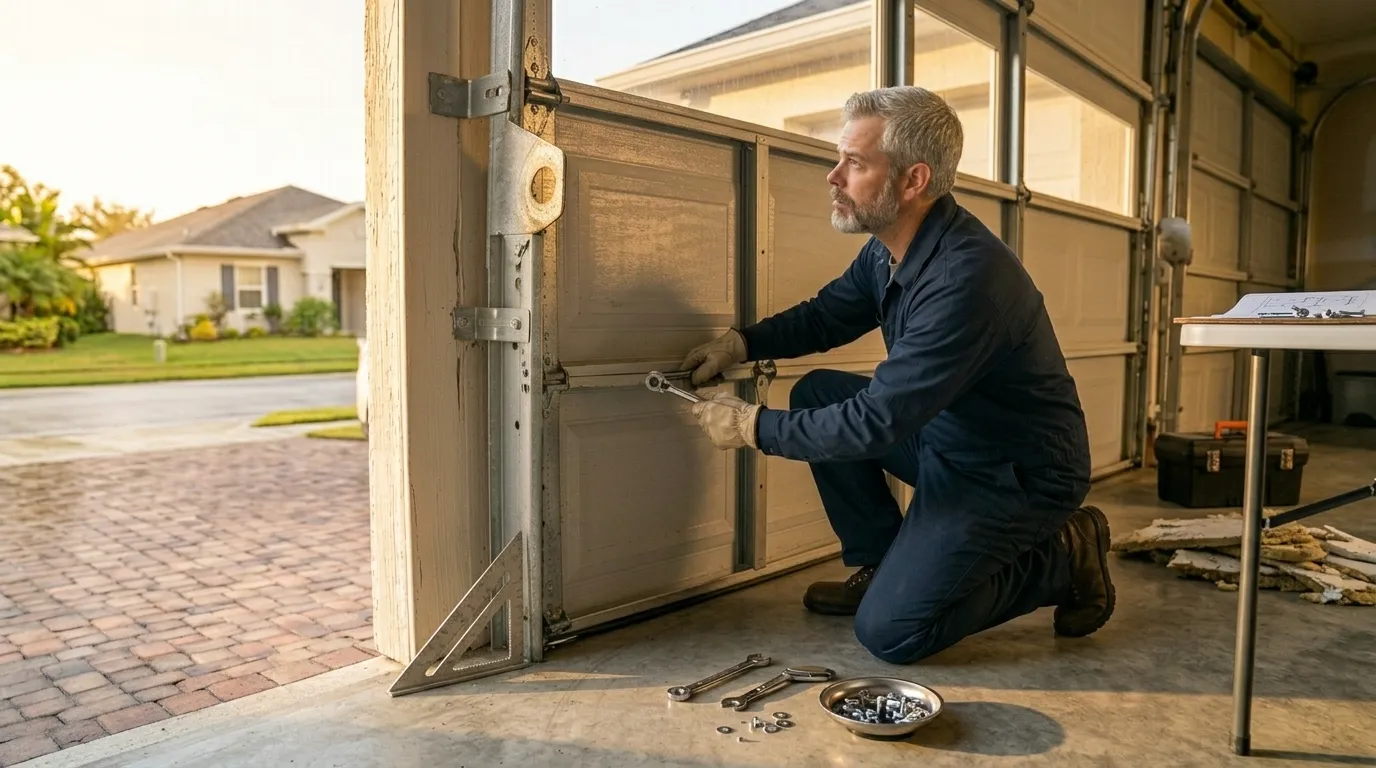
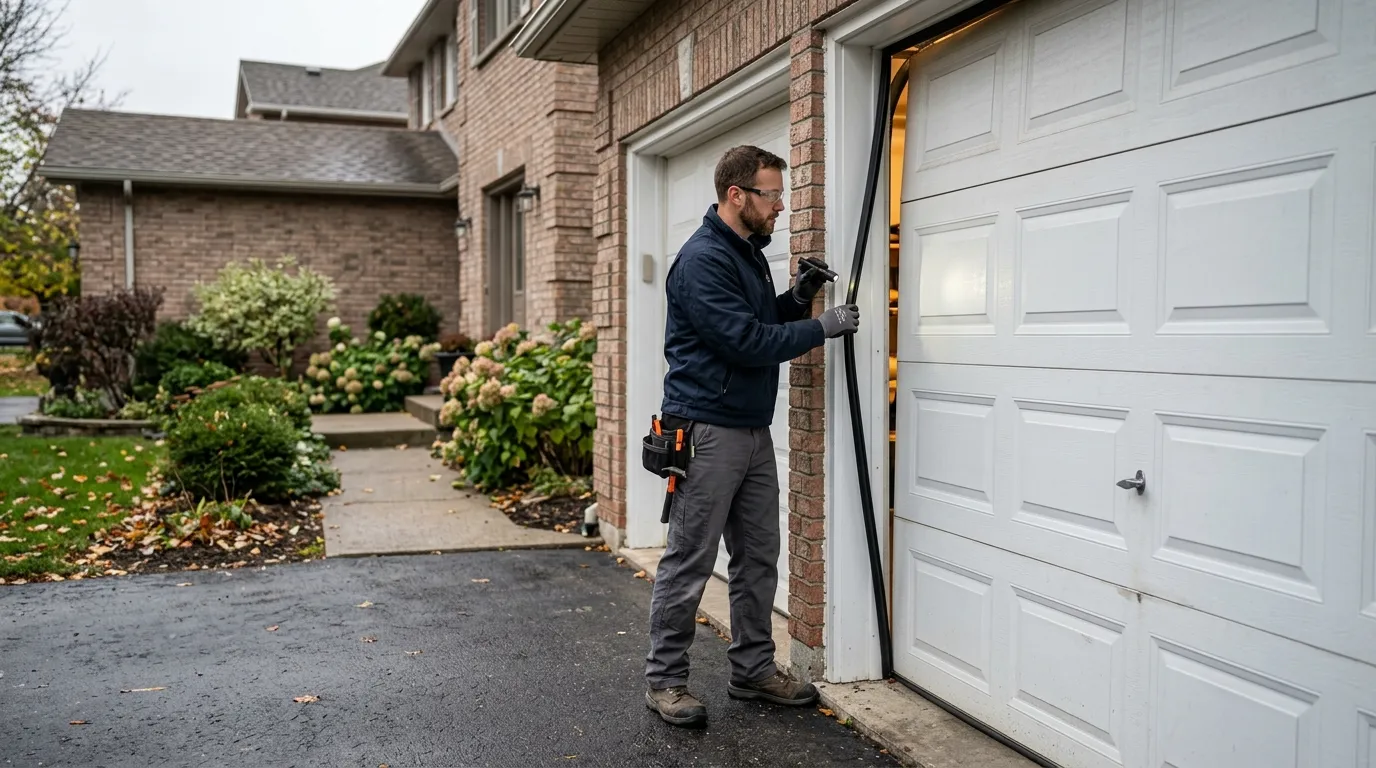
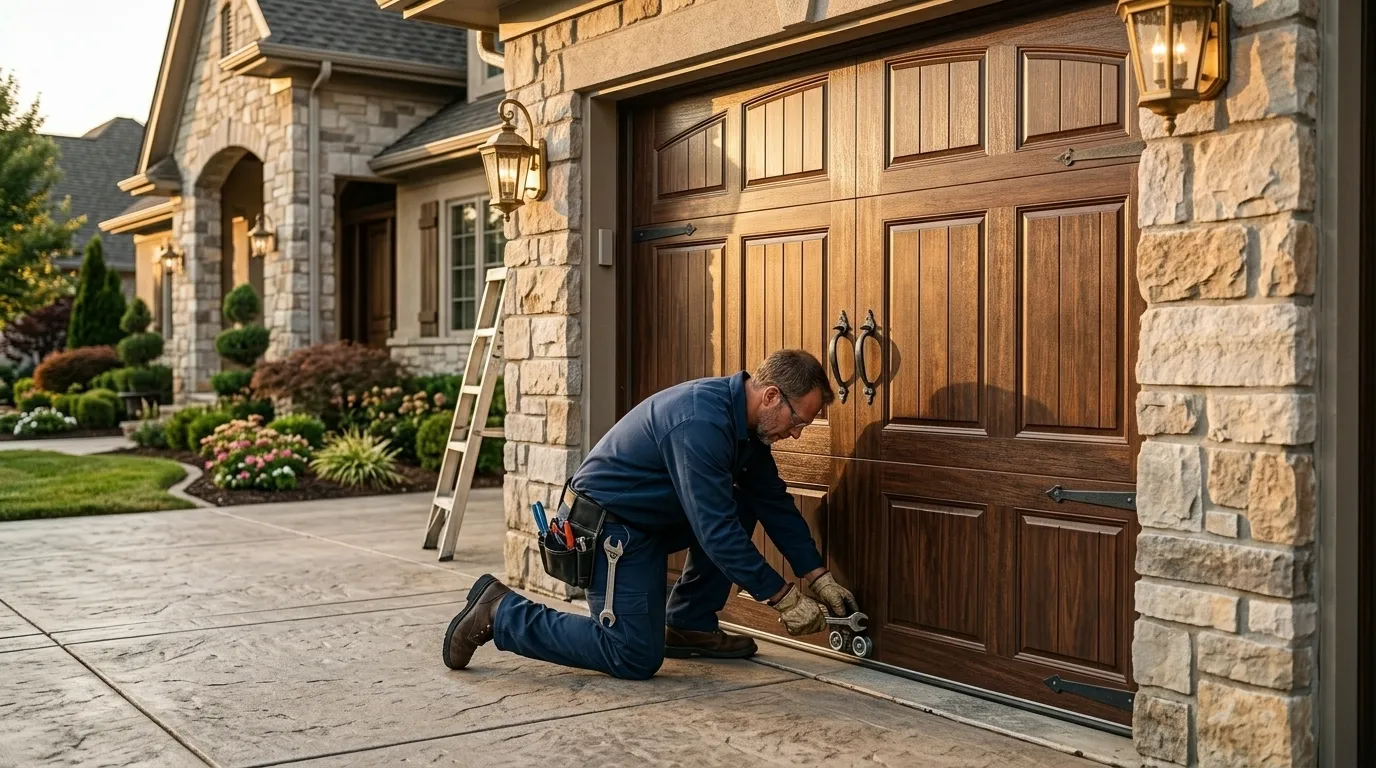
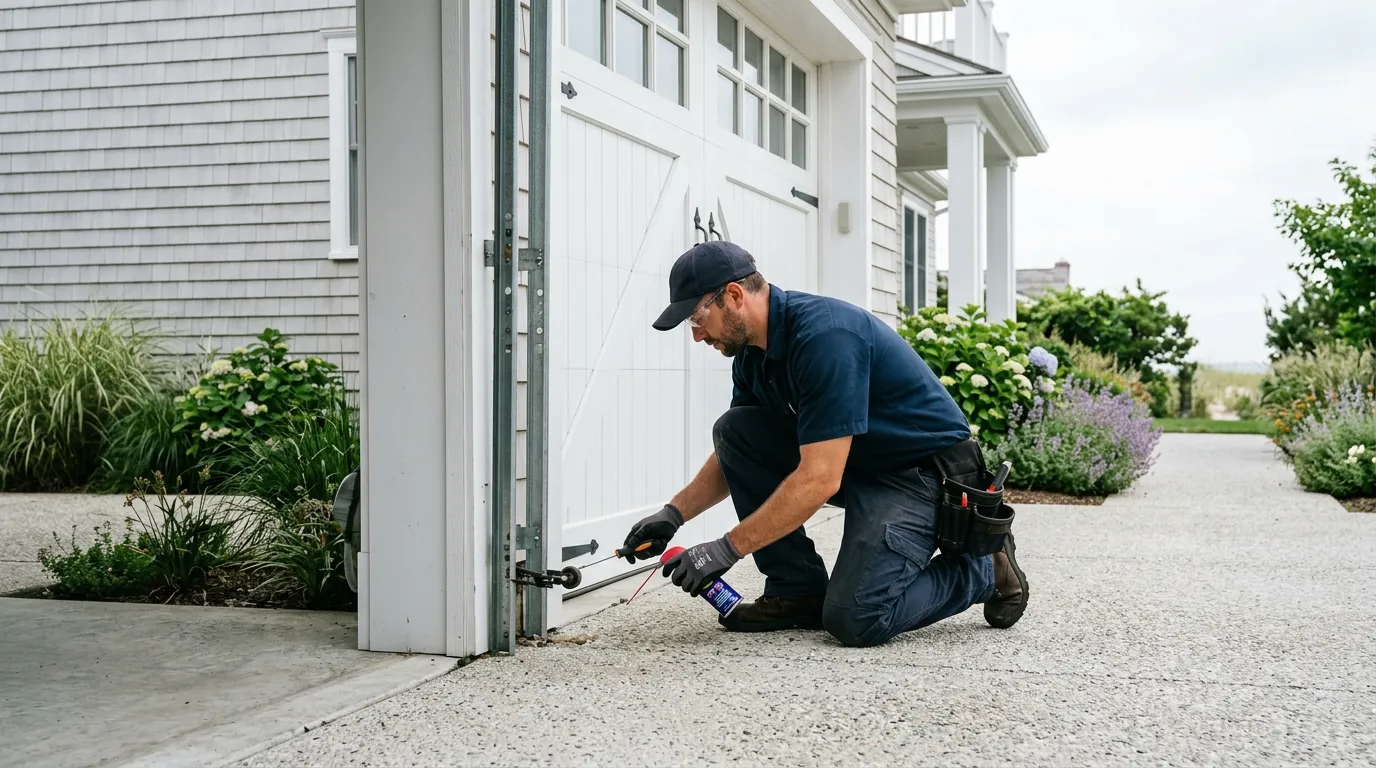
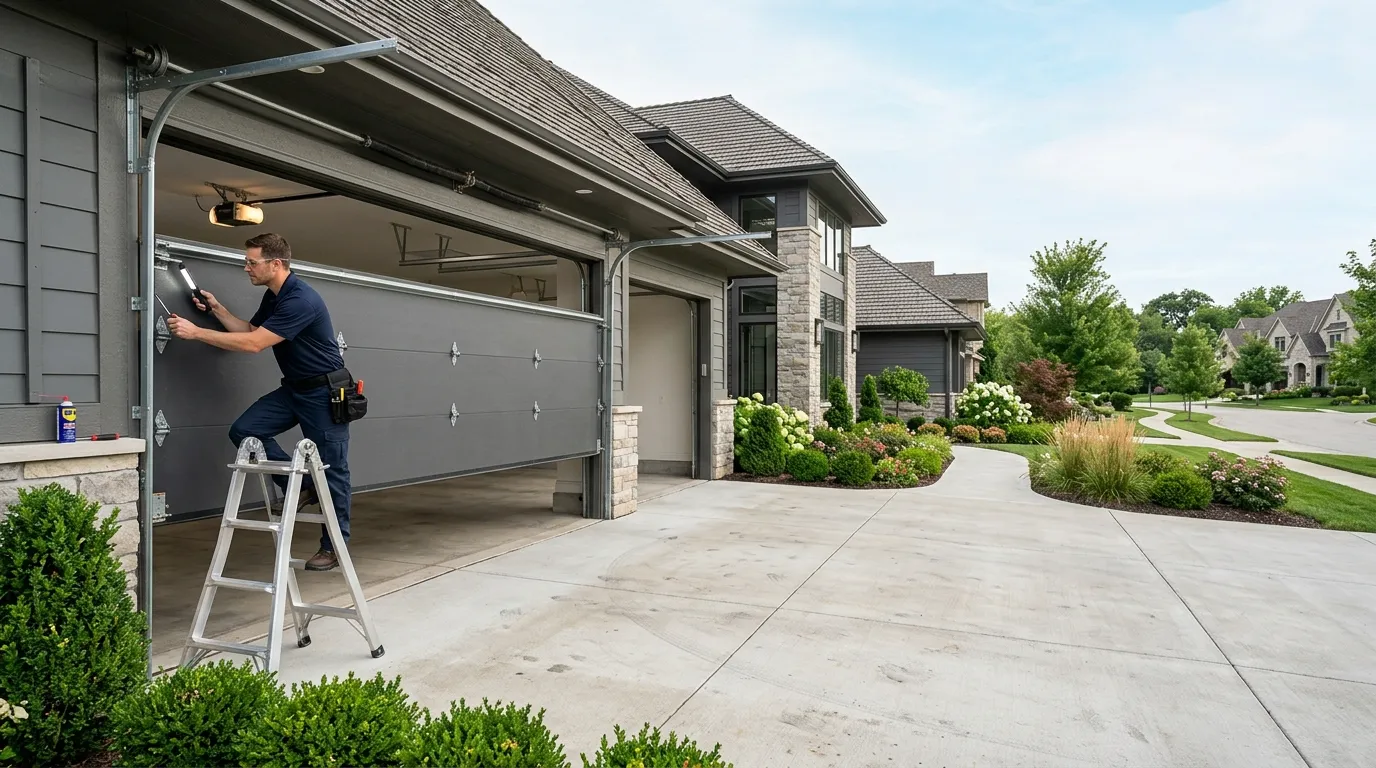
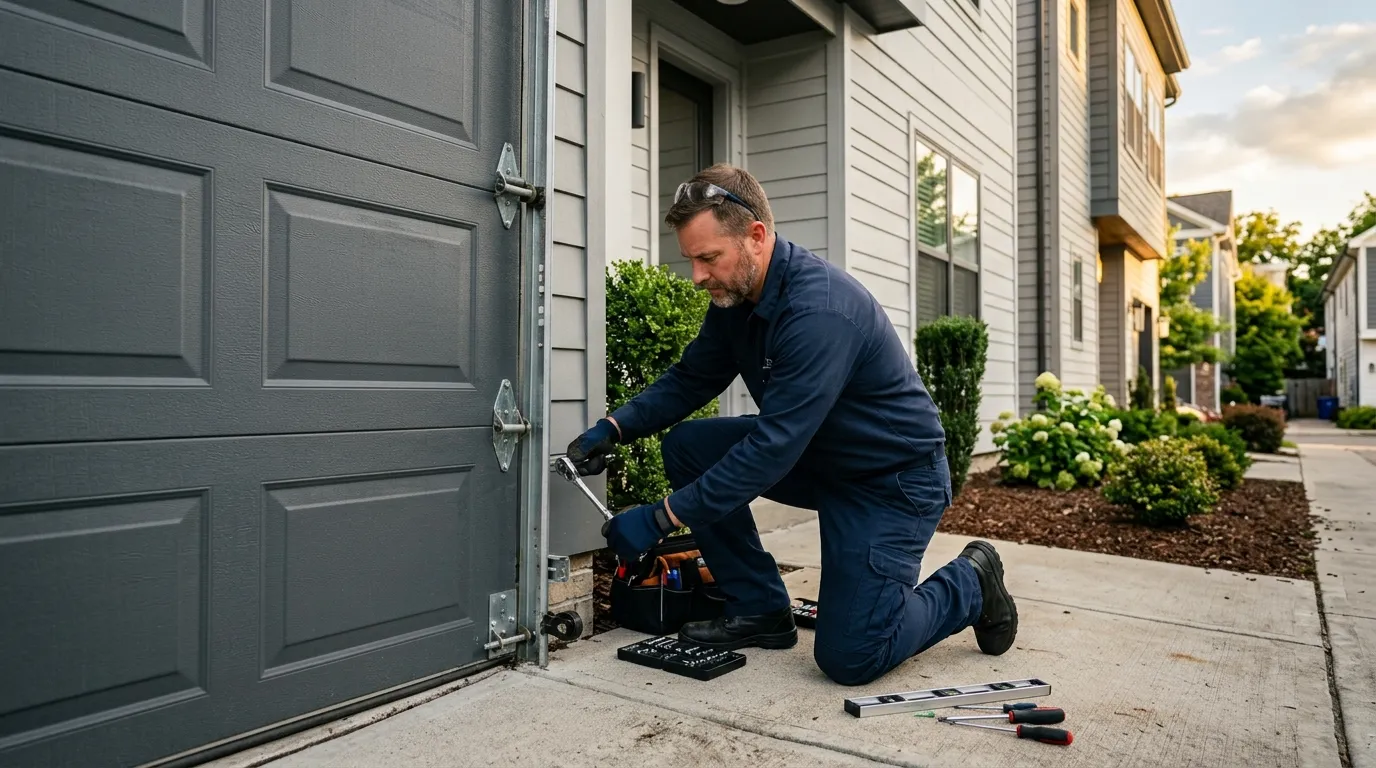
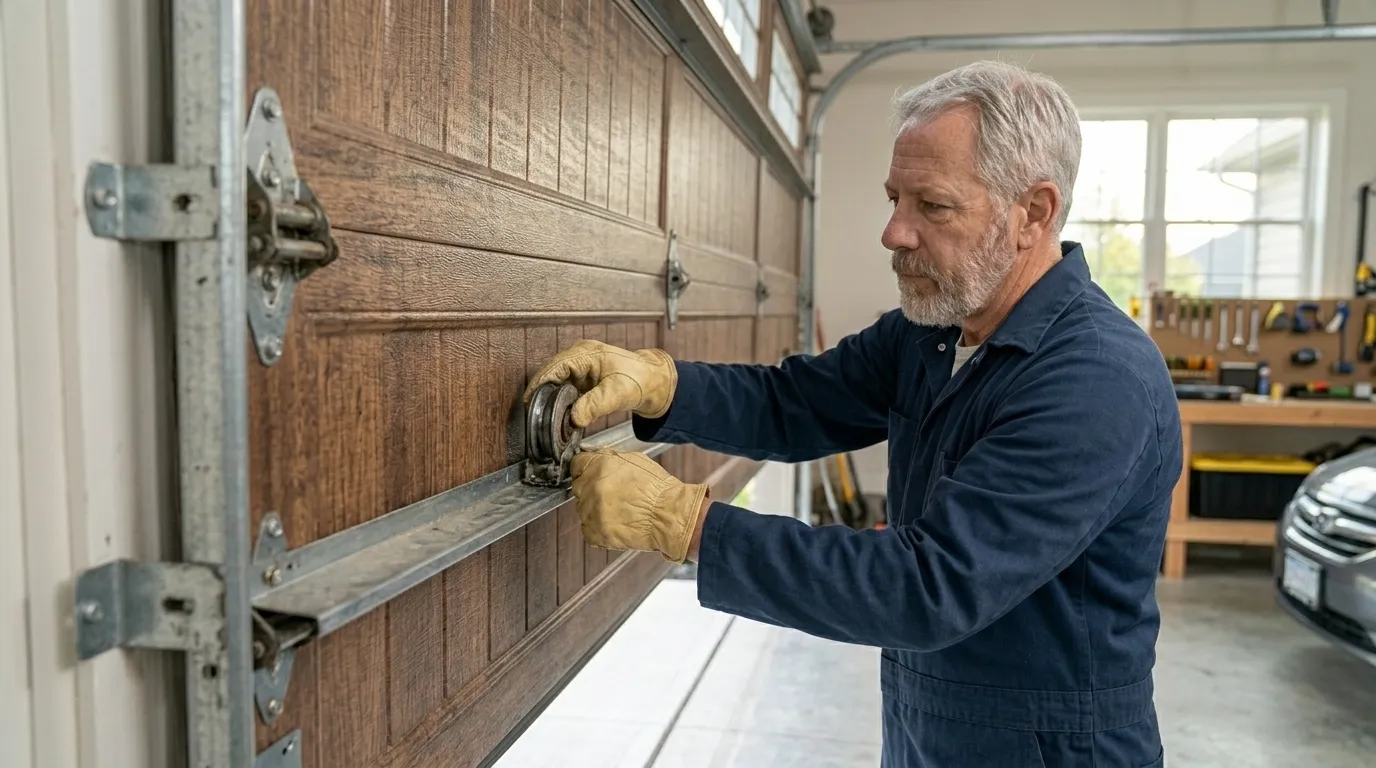
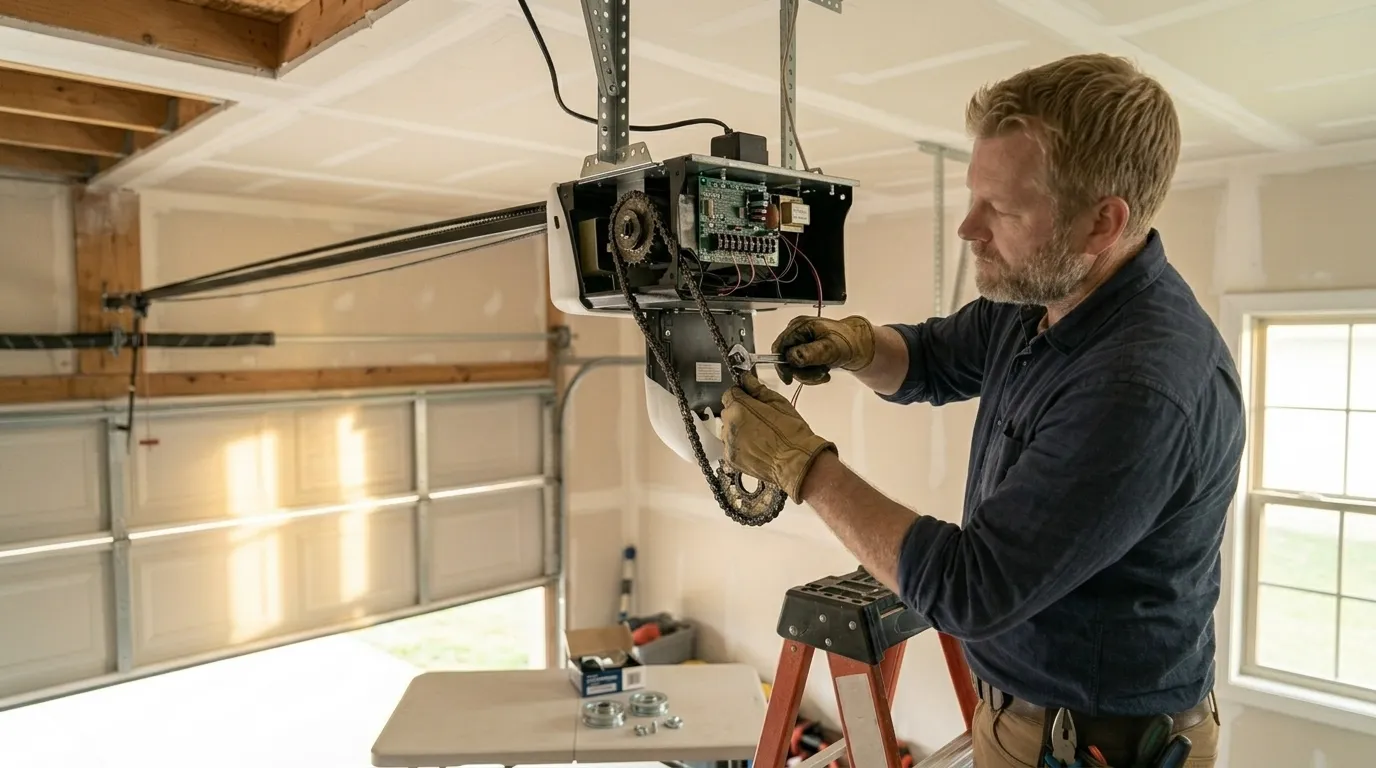
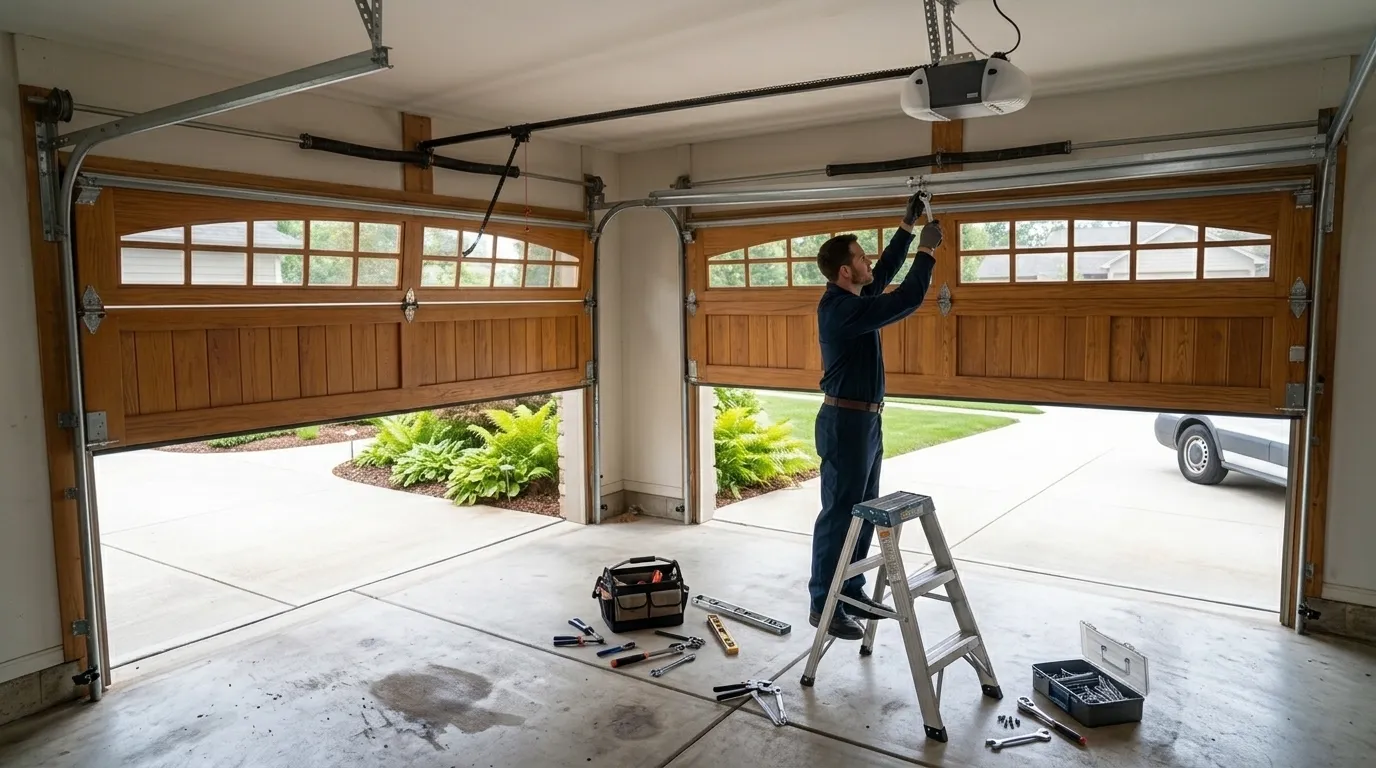
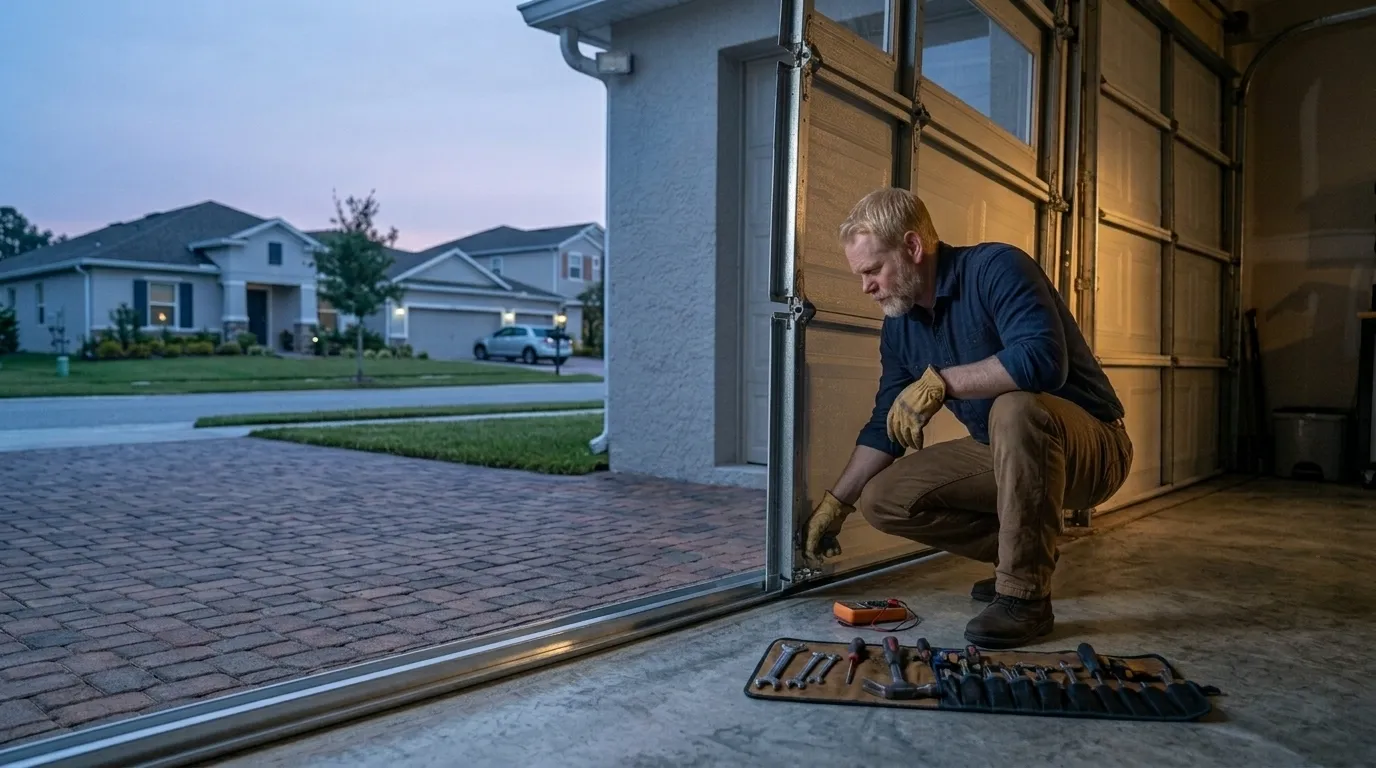
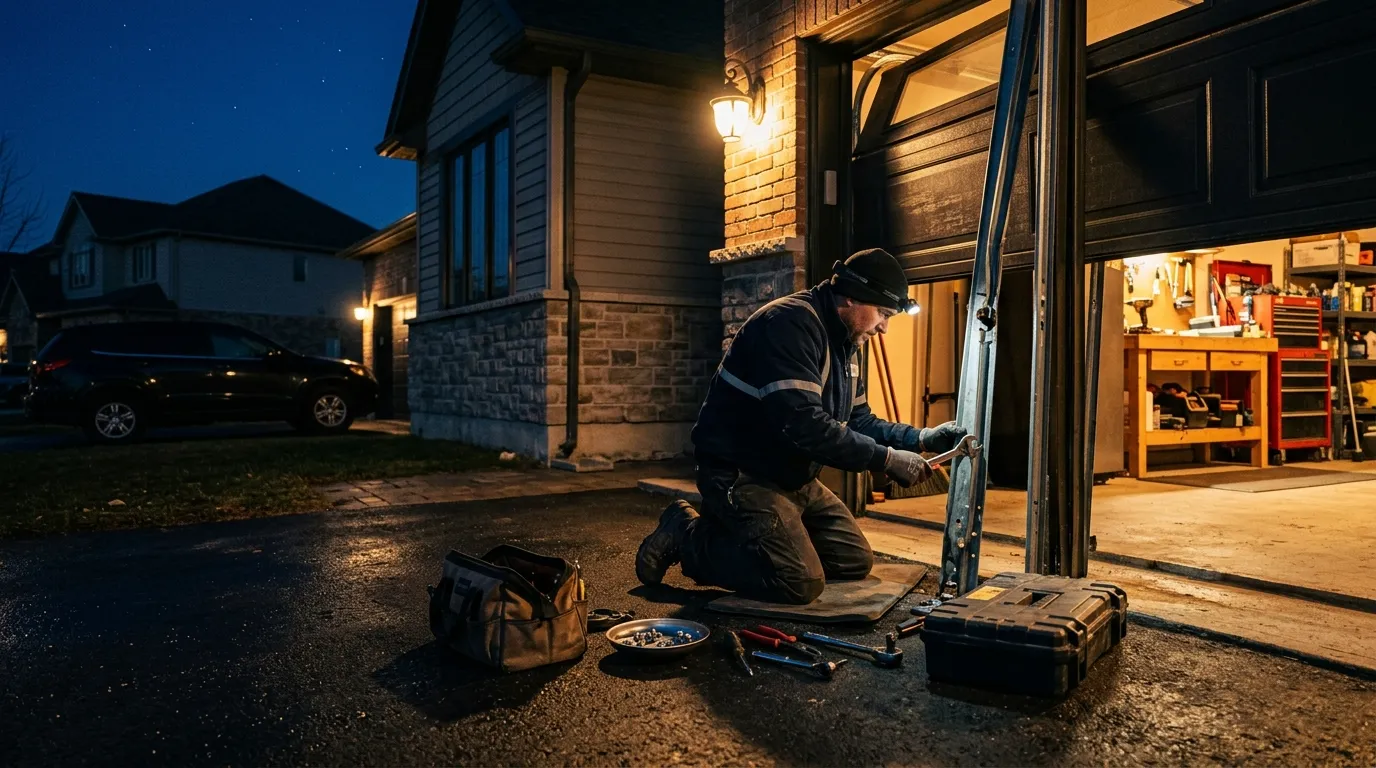
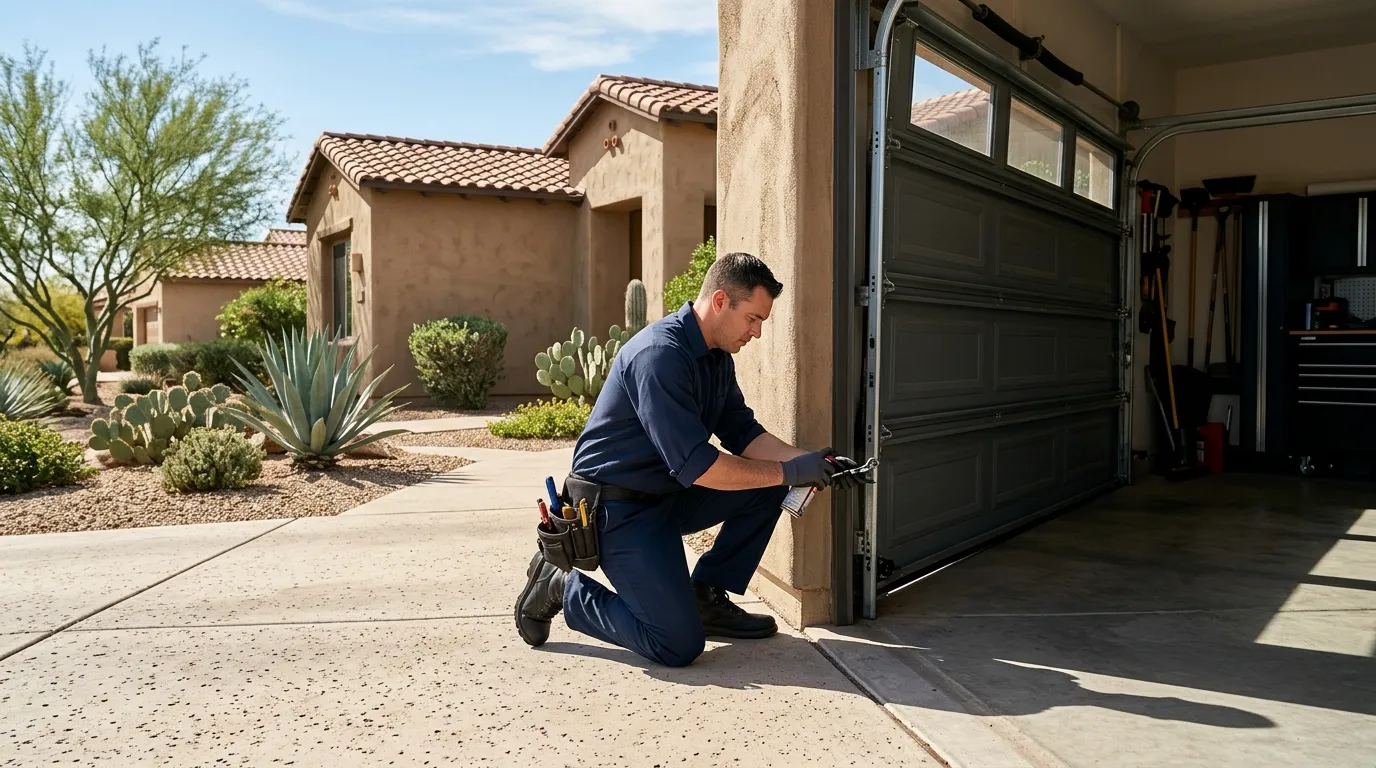
A maintenance visit isn't a big production. We come out, run the door through its full cycle, check spring tension, inspect cables and rollers for fraying or flat spots, lubricate the moving hardware, and check the opener's force and travel settings. If something's worn past adjusting, we tell you what it is and what it costs to fix - we don't turn a maintenance call into an upsell pitch on the spot.
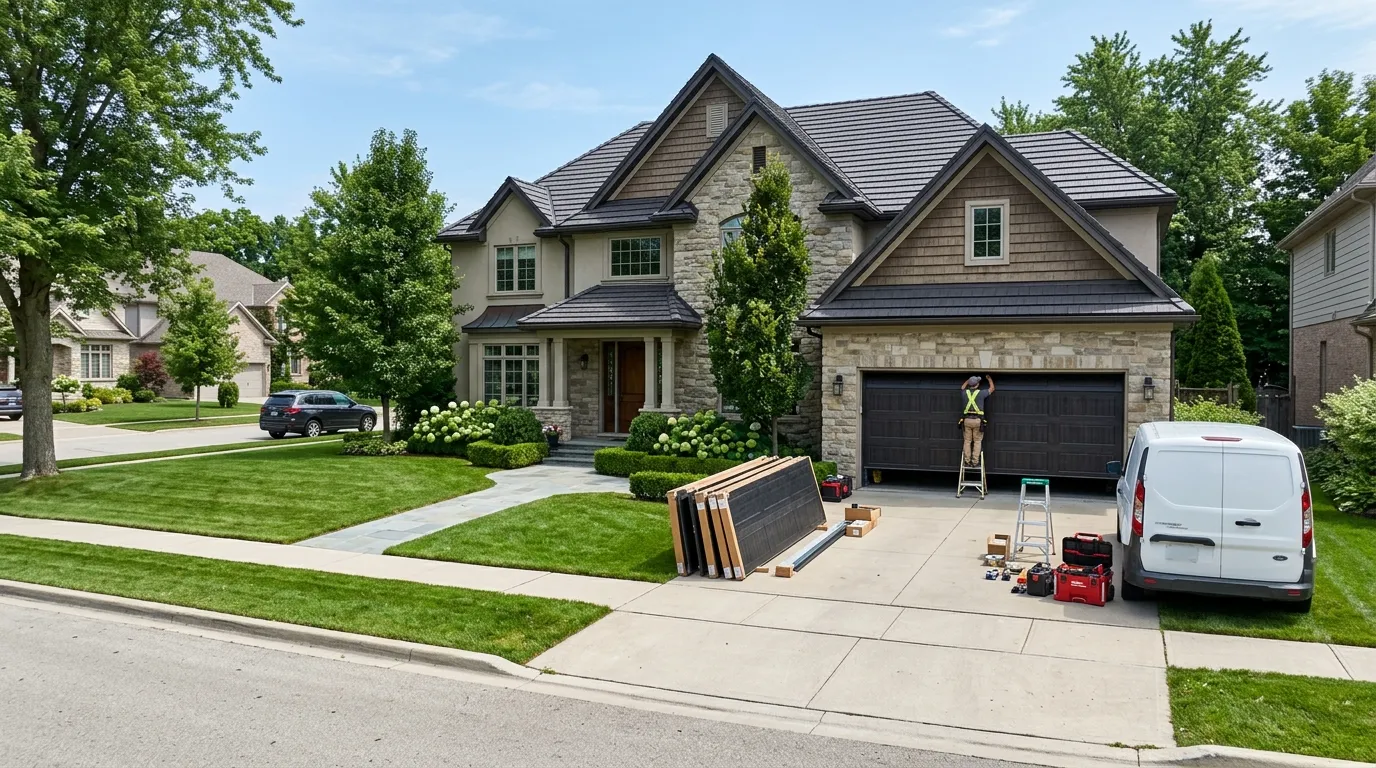
We cover the Jacksonville service area broadly: in close, that's Downtown, Brooklyn; further out it's Fruit Cove, Fleming Island, Orange Park, Jacksonville Beach, among others. Scheduling is the same either way - tell us roughly how old the door is and whether it's been serviced before, and we'll get a slot on the truck route.
One honest limit: if your opener is old enough that replacement parts are backordered from the manufacturer, we'll say so up front rather than promise a part we can't get on a normal lead time. Sometimes the right maintenance call ends with a recommendation to plan for a new opener instead of chasing parts for one that's aging out.
What You Pay
We don't have a flat rate to quote here without seeing the door - torsion spring tension, opener age, and how many hardware pieces need lubrication versus replacement all change what a visit runs. What we can tell you is that a maintenance call is priced separately from a repair call, and if we find something during the visit that needs more than lubrication and adjustment, we'll quote it before doing it, not after.
Given the age of a lot of doors across this service area - original to houses built in that 1973-2007 window - most maintenance visits turn up at least one worn part worth flagging, even on a door that still opens fine. That's normal for hardware this age, not a sign anyone did anything wrong.