What the Fix Involves
Most garages in Orange Park went up around 1975, a full decade ahead of the 1985 median for the wider service area we cover. That gap matters more than it sounds. A house built in the mid-1970s has had close to fifty years to either replace its opener once, or never touch it at all - and a surprising number of the ones we see fall into the second group. The chain is original. The rail is original. The wall button, if it still works, is the same one that came with the house.
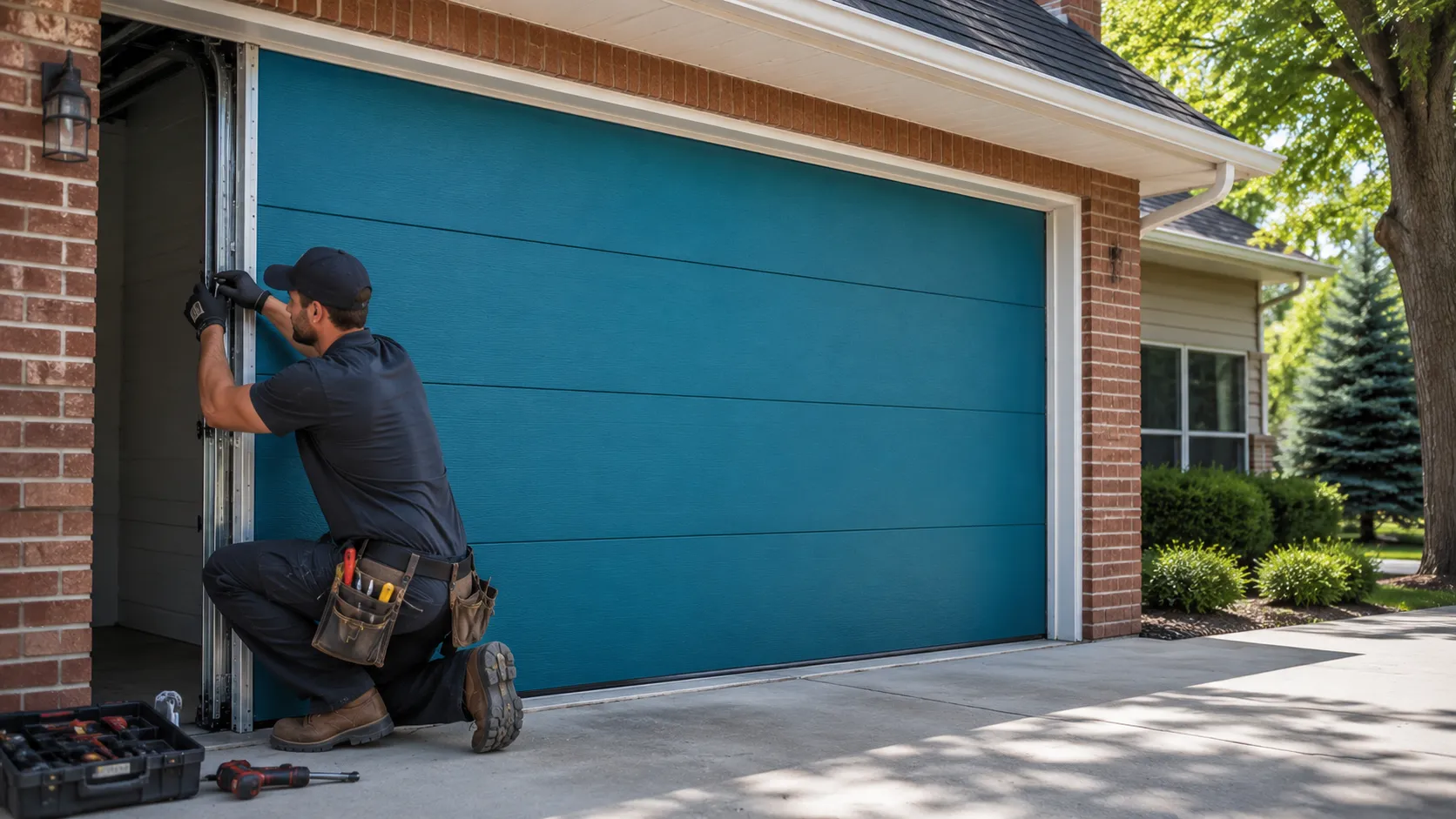
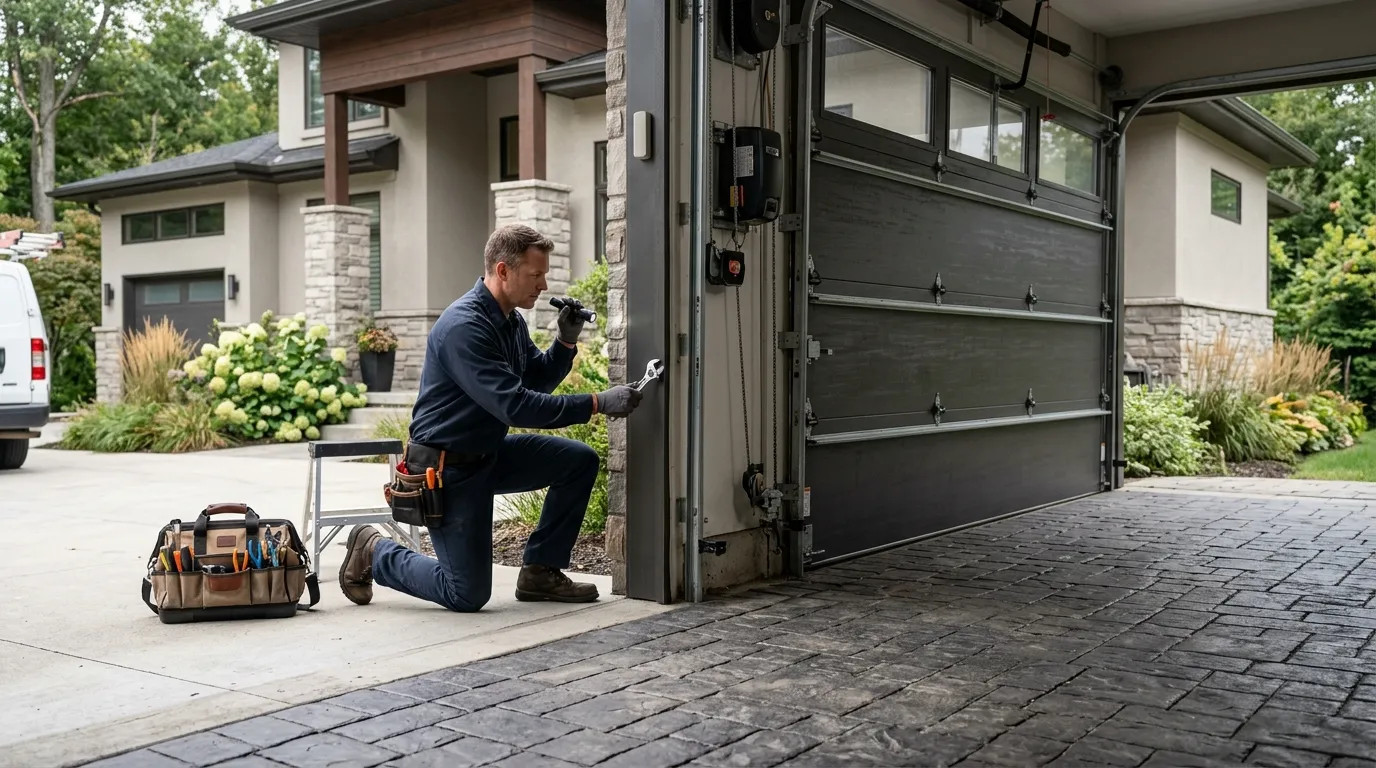
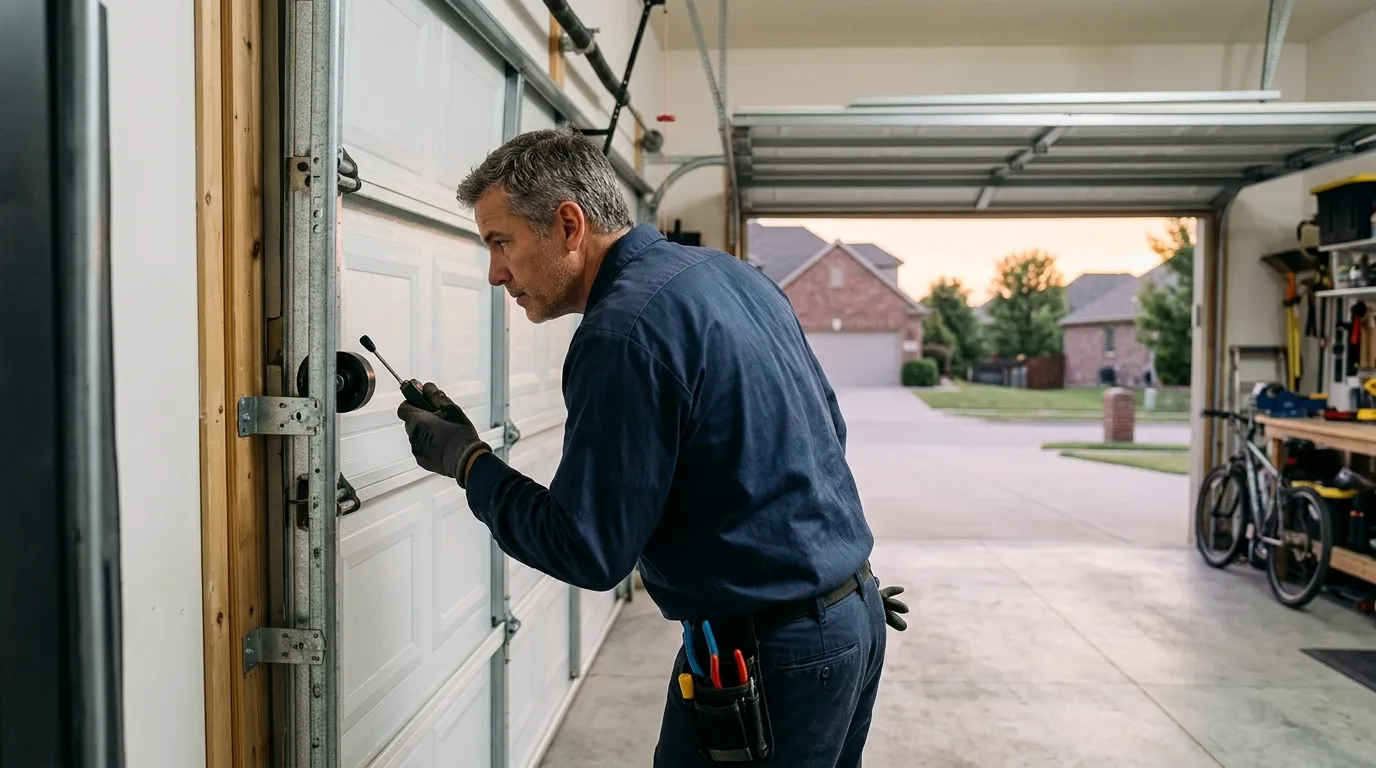
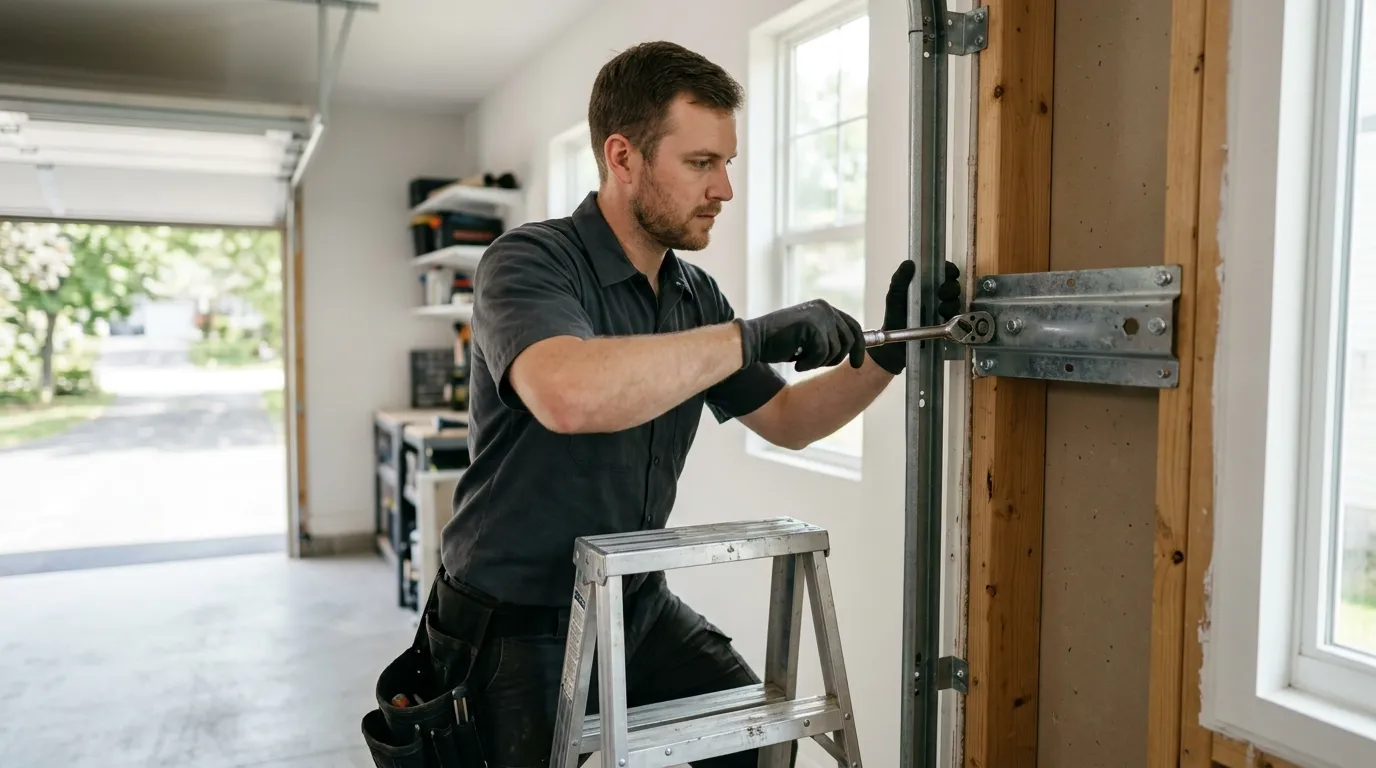
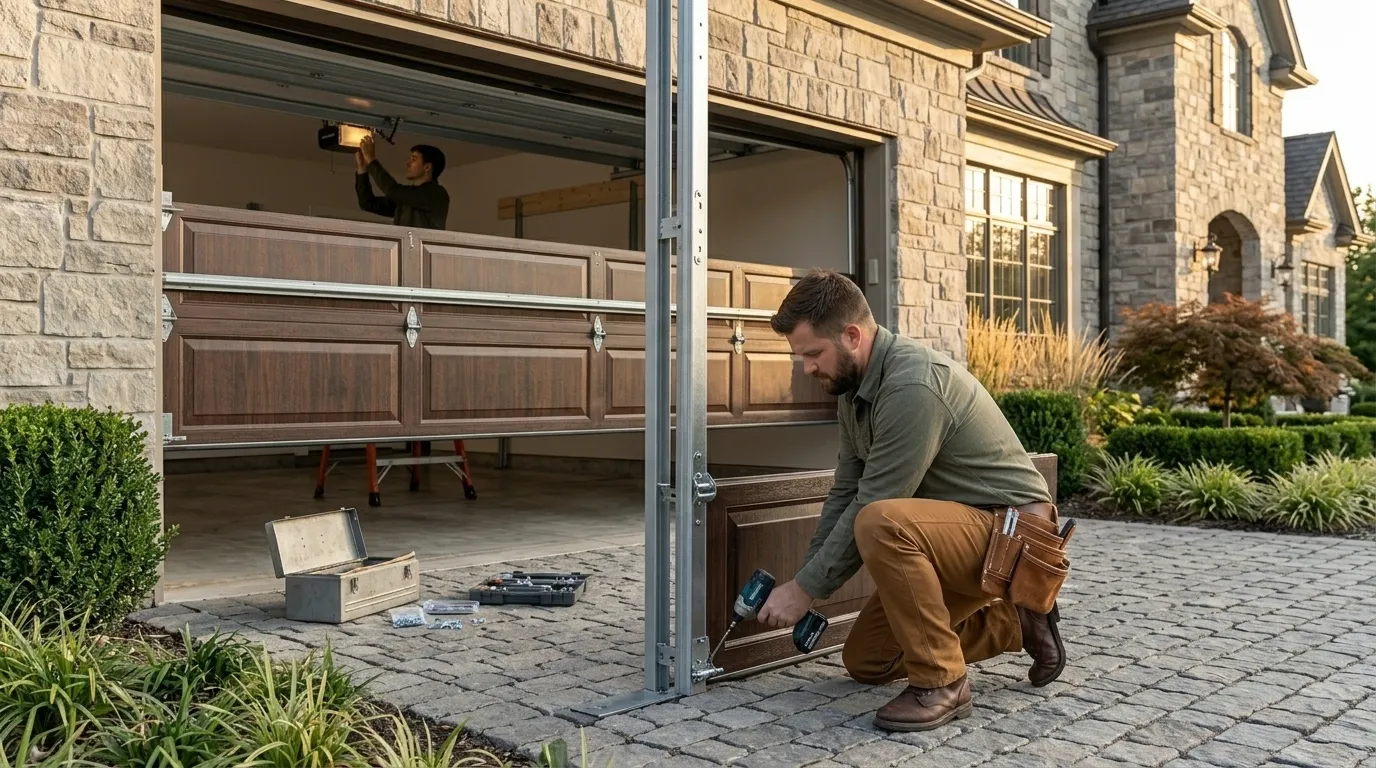
Installing a new opener on one of these means starting with what's already bolted to the ceiling joist, not a clean slate. We check the header bracket for wood rot before we hang anything new on it, because framing from that era wasn't always sized for today's heavier belt-drive units. If the existing bracket won't take the load, that's a separate line item, not something we skip past. The install itself is a day job: mounting the rail, wiring in safety sensors that the original setup likely never had, and setting travel limits so the door doesn't slam the floor or crush the header on the way up.
How It Shows Up
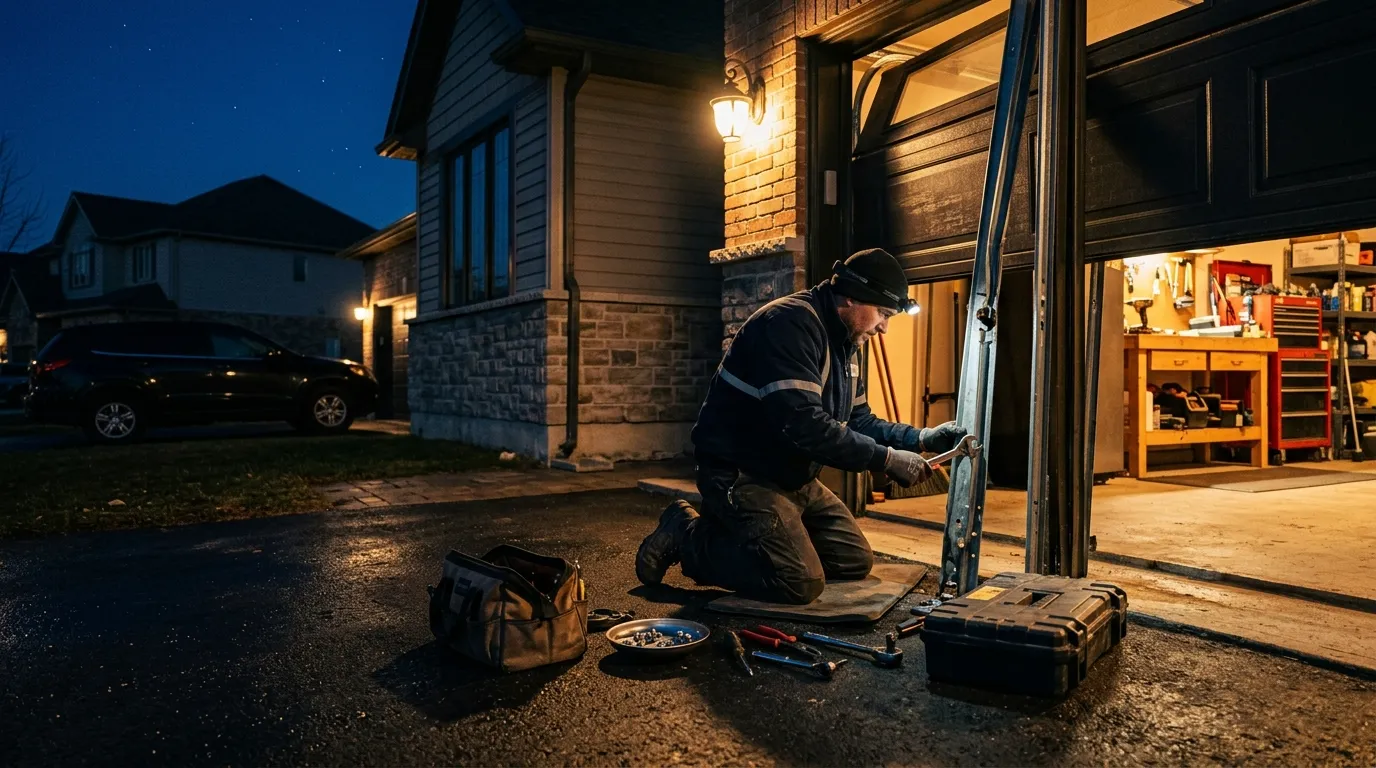
The tell in Orange Park is usually noise before it's failure. A 1975-era chain-drive opener grinding through its last few months sounds like metal dragging on metal, especially right before the motor gives out. Homeowners often describe the door as "jerky" near the top of the travel, which is usually the drive gear stripping inside the housing rather than anything wrong with the door panels themselves.
The other common sign is a door that opens on remote but won't reverse when something blocks it. Older units built before photo-eye sensors became standard just don't have that safety feature wired in at all - there's nothing broken to fix, the house simply predates the requirement. Some owners also notice the opener light staying on constantly or flickering, which usually points to a failing circuit board rather than a bulb.
The DIY Question
A retail opener kit will physically bolt onto a lot of these older rails, and that's exactly the problem. The mounting compatibility is not the same thing as a safe, code-correct install. Wiring in the safety reversal sensors correctly, setting force limits so the door doesn't keep closing on something it hit, and confirming the header bracket can take a belt-drive motor's pull - none of that is covered by a kit's quick-start card.
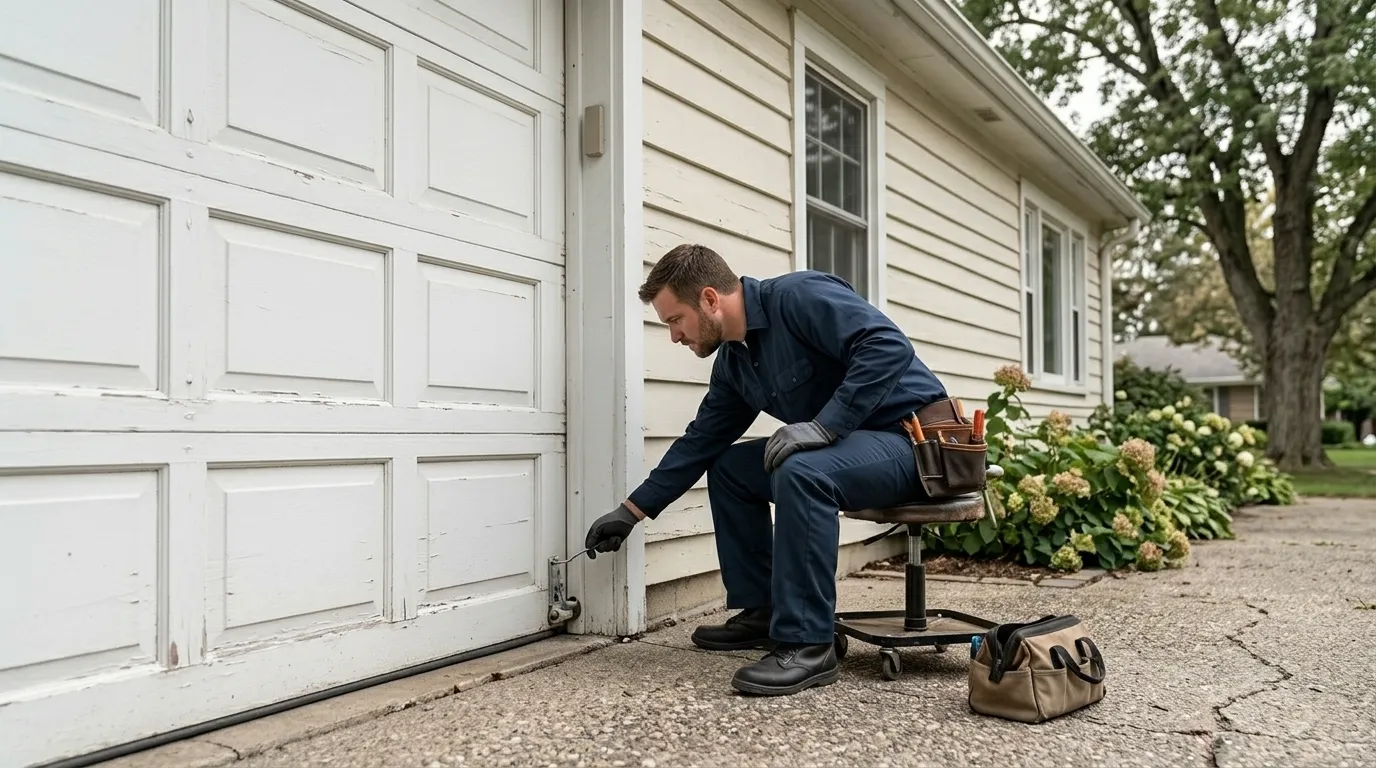
If your opener is simply dead and the rail, chain, and header are all sound, swapping the motor head yourself is a reasonable weekend job for someone comfortable with a ladder and a multimeter. Where we'd push back is anyone rewiring safety sensors on a house that never had them, without also checking the door balance and spring tension first - an opener fighting an unbalanced door burns itself out again within a year or two, no matter how new it is.
What Causes It Around Here
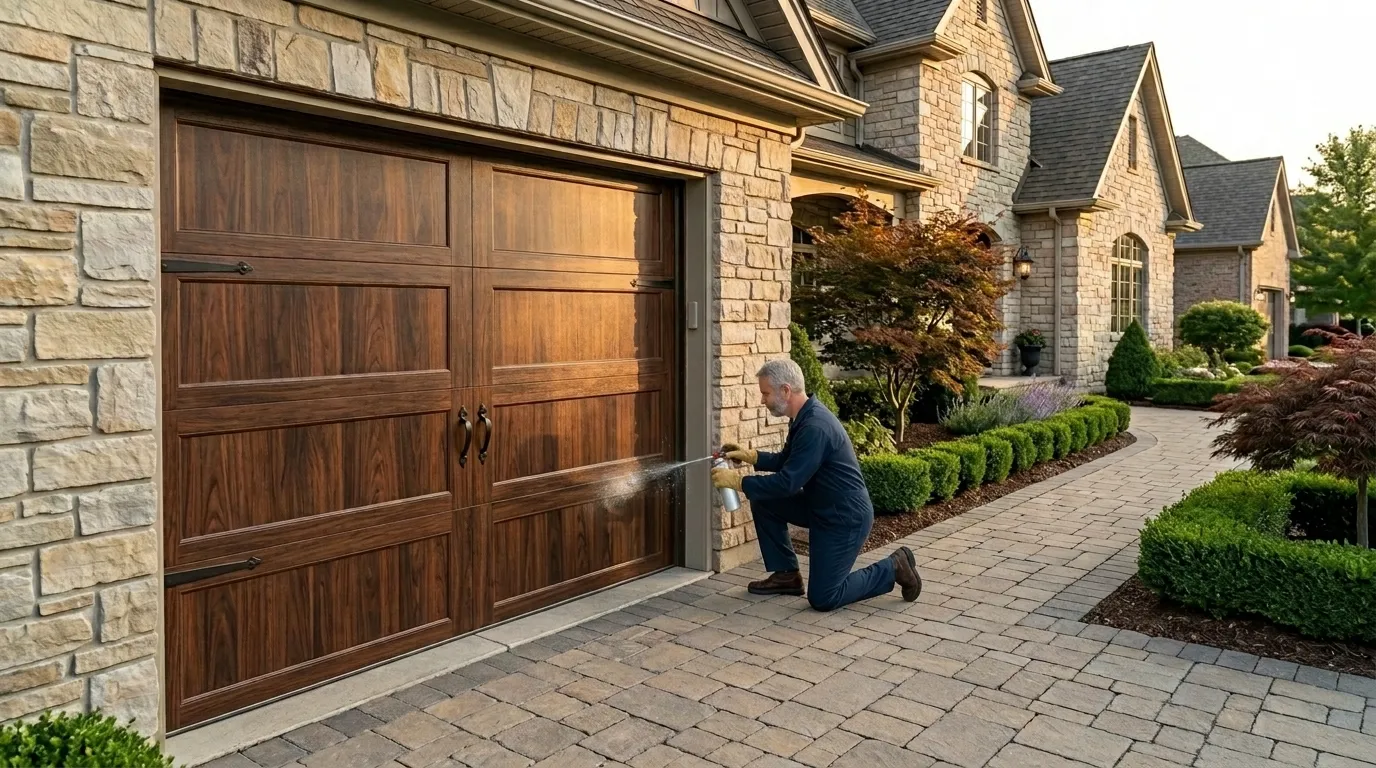
The climate across this part of the area sits in a mild temperate band, without the extreme cold that kills lubricants or the desert heat that cooks plastic housings fast. That's the good news. The slower, less obvious problem is decades of ambient humidity working into wiring insulation and circuit boards on a house that's now approaching fifty years old. Corrosion on old contact points doesn't announce itself the way a snapped cable does - it shows up as intermittent failures that come and go for months before the board finally quits.
With a median household income of $74,564 in Orange Park, noticeably under the $103,288 median across the broader service area, the calls we get here lean toward fixing what's fixable rather than defaulting straight to premium units. That's a reasonable instinct. Where it doesn't hold up is a board that's already failing intermittently - patching a dying circuit board costs real money and buys very little time before it needs doing again.