What the Fix Involves
The fault we see most in Orange Park is a torsion spring that's outlived its cycle count paired with an opener that was never upgraded when the spring was. Orange Park's median house went up around 1975, a full decade ahead of the 1985 median across the wider Jacksonville service area. That gap matters because a house built in the mid-70s has usually been through at least one full spring replacement already, sometimes with hardware that doesn't match what a supply house stocks today.
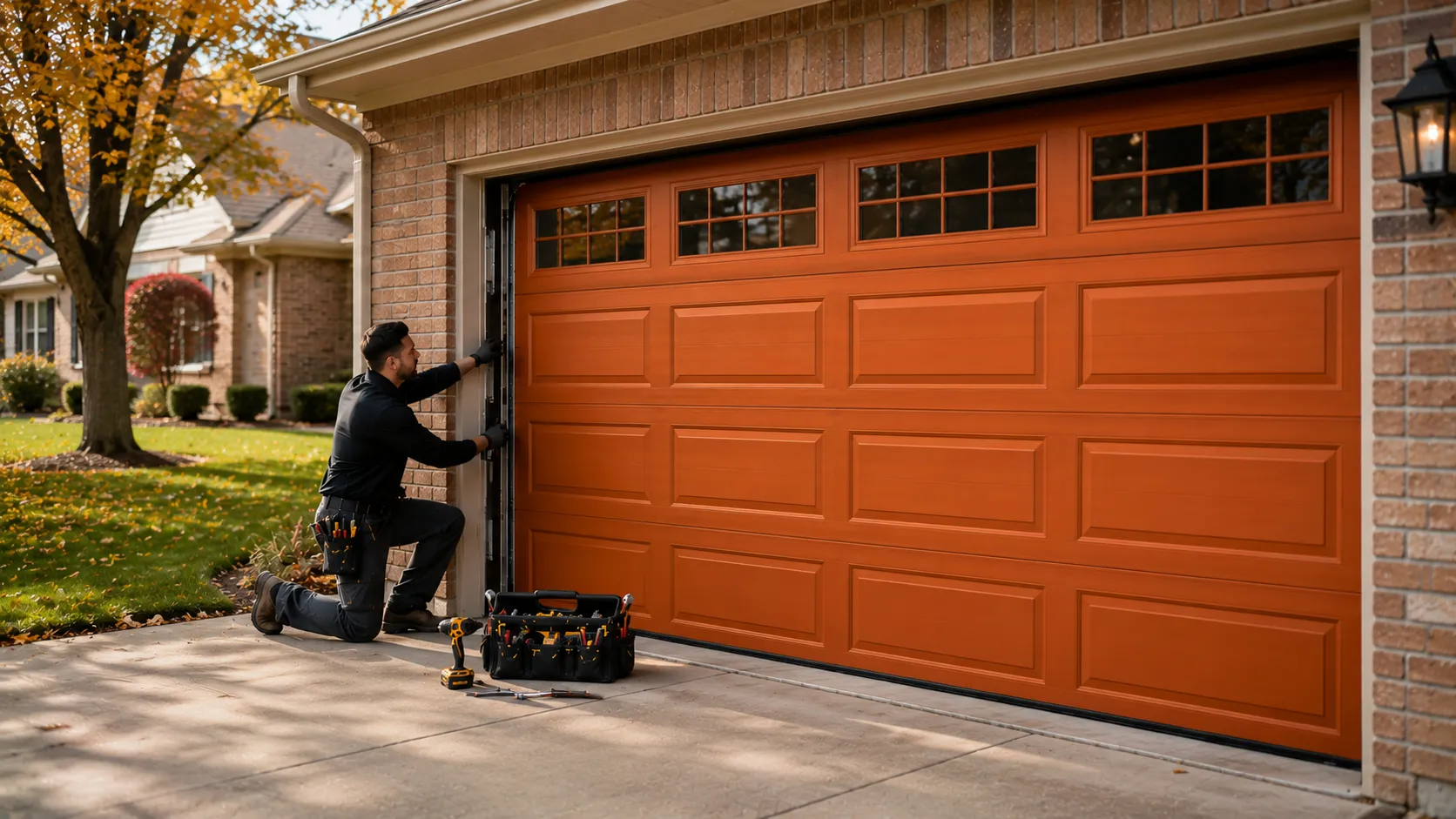
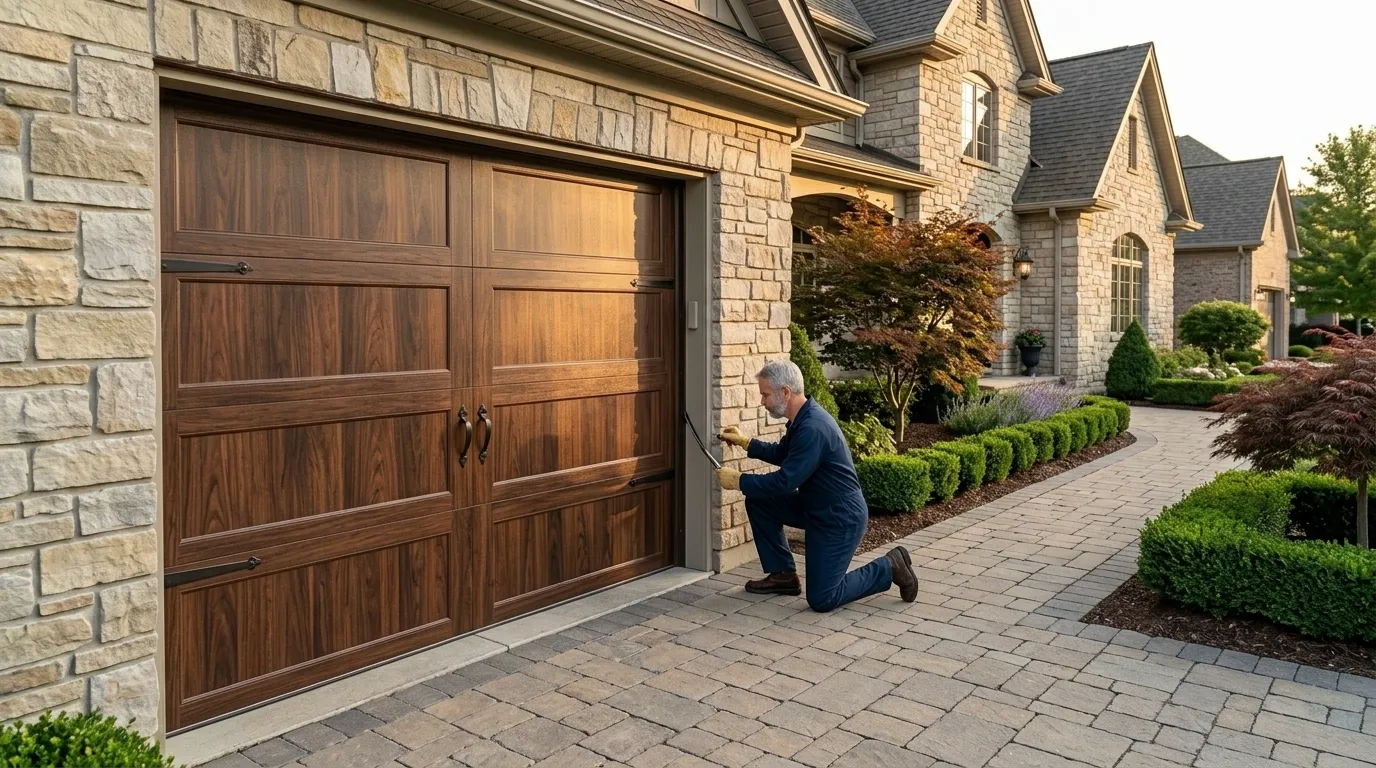
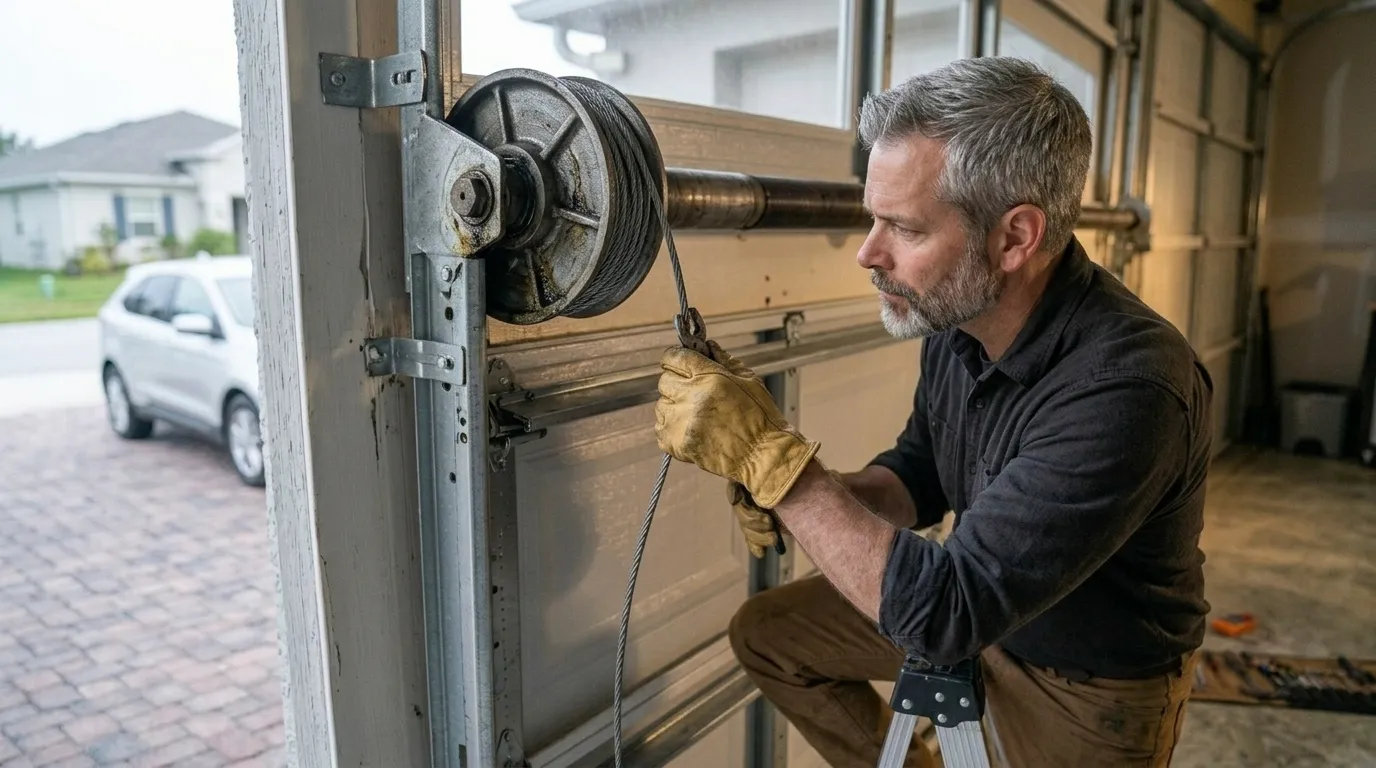
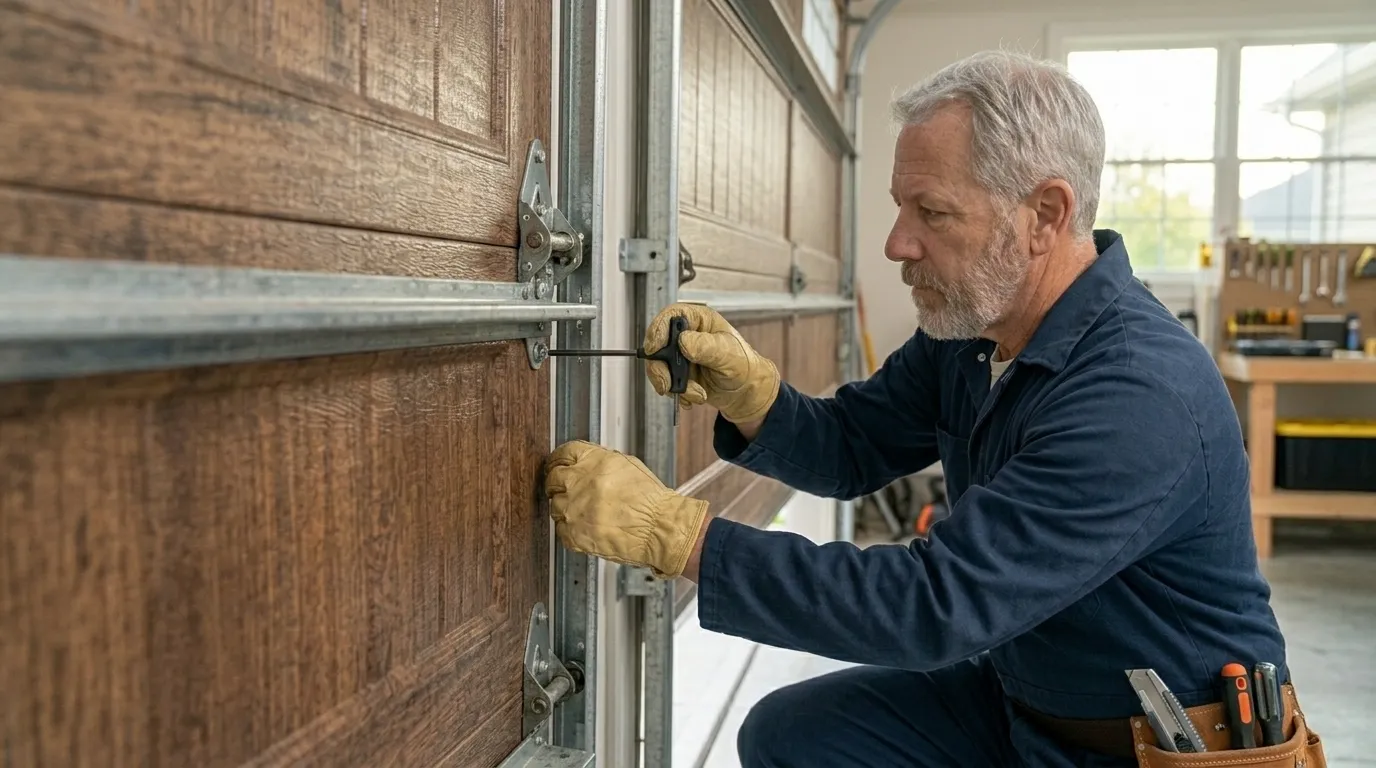
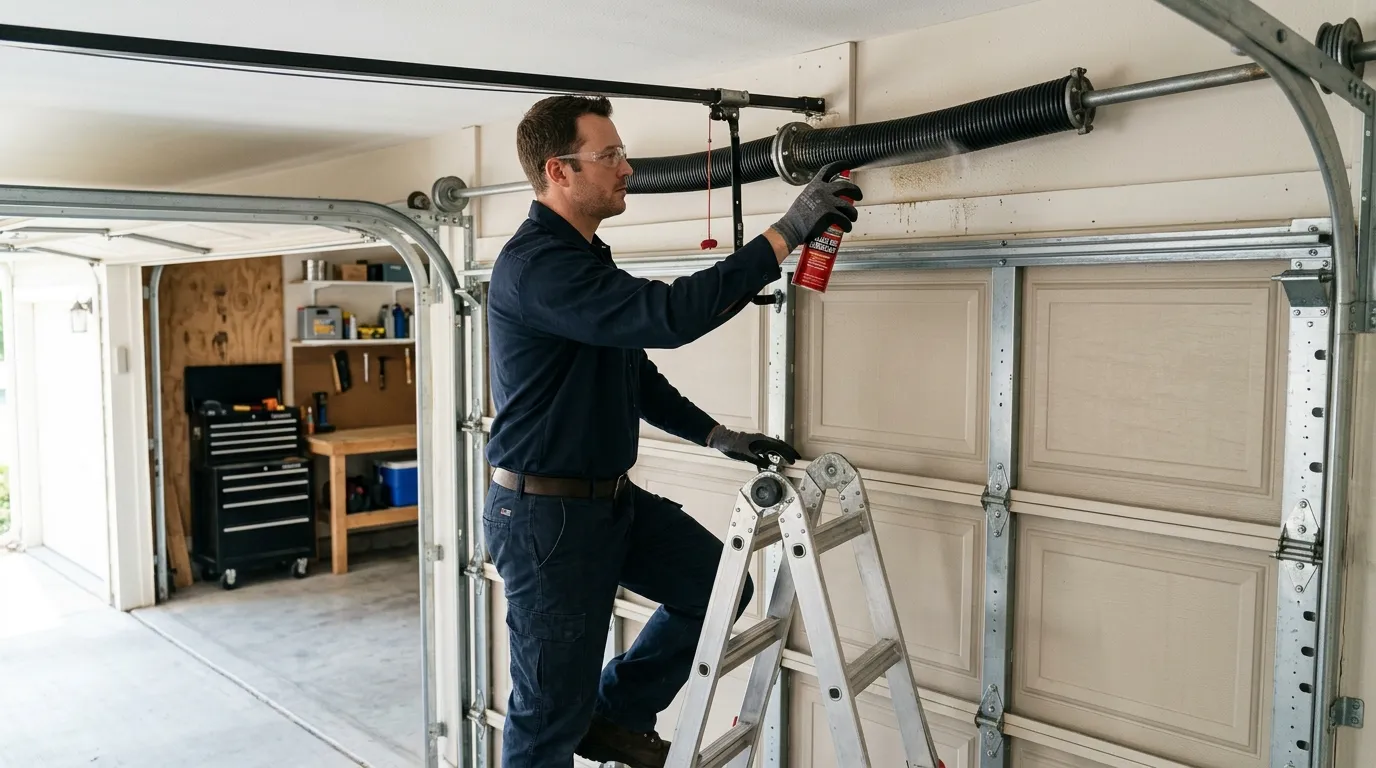
Maintenance here means checking whether the spring, drum, and cable are all from the same generation of hardware, or whether someone swapped one piece in 1998 and left the rest. We check torsion spring wind and wear, lubricate rollers and hinges, test balance by hand, and look at the bottom brackets, which take the most stress on older sectional doors. We also check the opener's force settings, since a lot of these doors have had a replacement opener bolted onto original track that was never adjusted to match.
We don't replace parts that don't need it. If a spring still has life in it, we say so and note when to check it again, rather than sell a full respring on a door that's fine.
How It Shows Up
Owners usually notice the door before they notice why. A door that used to close in one smooth motion starts hesitating a third of the way down, or the opener strains and reverses on its own. That's usually spring fatigue combined with track that's shifted slightly out of parallel over 40-plus years of settling, common in a house from this era.
Some owners hear it first: a grinding or clunking on the way up that wasn't there a year ago. That's rollers that have worn past their bearing life, which happens faster on doors that get daily use in and out of a garage used for parking rather than storage.
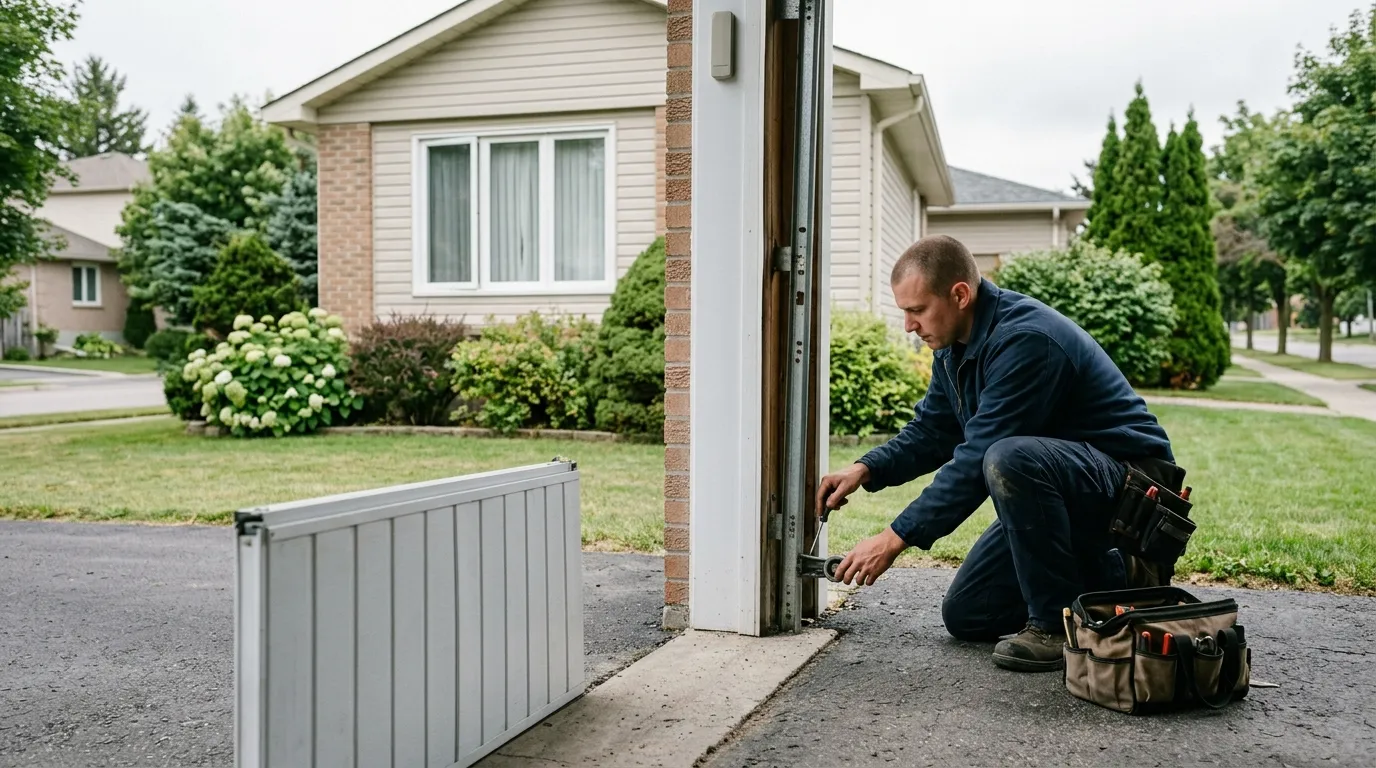
A less obvious sign is a door that closes unevenly, one side dropping faster than the other. That points to uneven spring tension or a cable starting to fray, and it's worth a call before it becomes a snapped cable, which is a bigger and more dangerous job.
The DIY Question
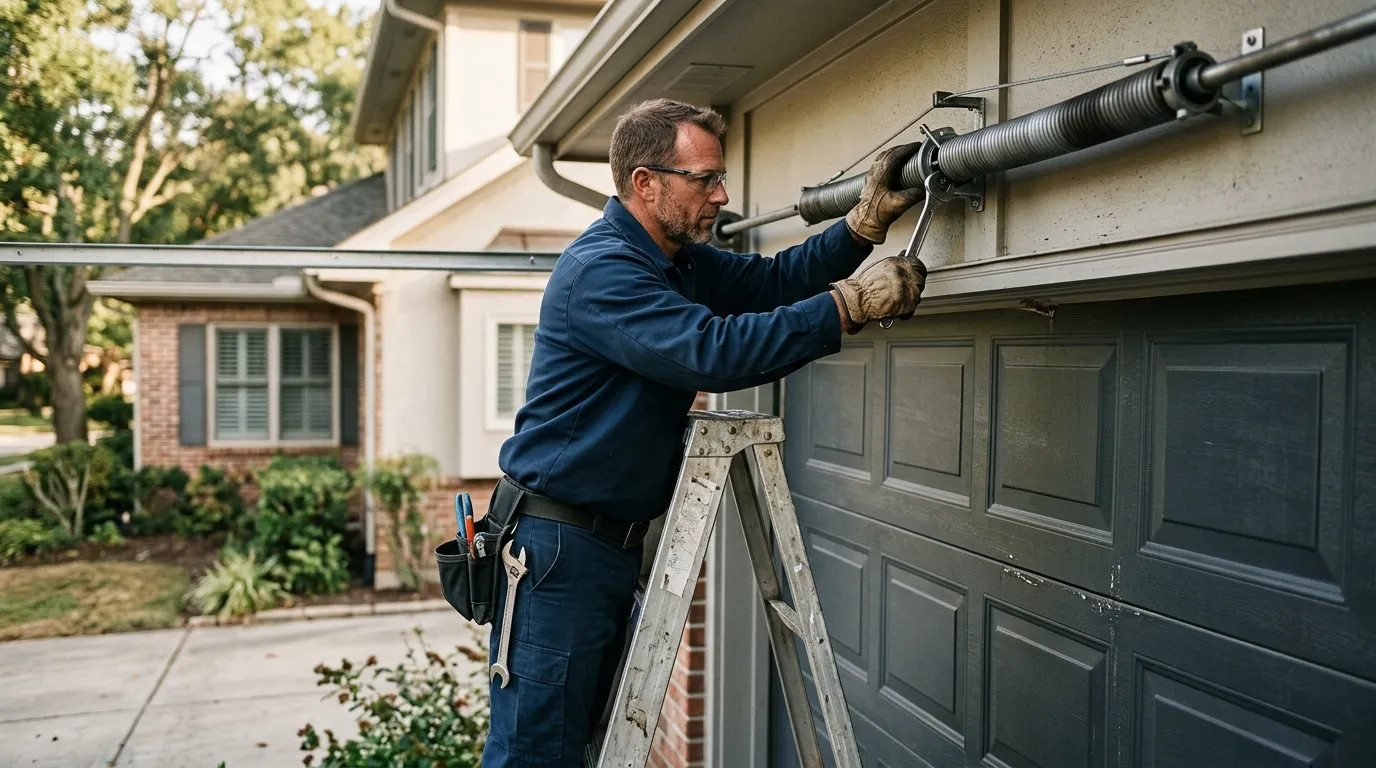
There's a real limit to what's safe to do yourself here, and it's worth being honest about it. Lubricating hinges and rollers, wiping down tracks, and testing the auto-reverse safety feature are all fine for an owner to handle. Touching the torsion spring is not. A wound spring under tension can cause a serious injury, and on an older door where the spring may already be mismatched to the door's current weight, guessing at adjustment is how people get hurt.
If your door is from the original 1970s build and has never been resprung, that's also not a job to diagnose by ear. Bring it in, or have us take a look before you decide whether it's a tune-up or a bigger repair. We'd rather tell you it's a quick fix than let you find out the hard way that it wasn't.
What Causes It Around Here
Florida's mild temperate climate means we're not fighting the freeze-thaw cycles that crack seals and warp track up north, so a lot of the wear in Orange Park is straightforward mechanical fatigue from age and use rather than weather damage. Forty-plus years of humidity does slowly work on unpainted hardware and steel cable, though, so surface rust on springs and brackets shows up more here than in newer construction across the rest of the service area.
Household income in Orange Park runs lower than the wider area's median of $103,288, which we mention only because it shapes a real choice: on an older door, a full respring plus a hardware tune-up often costs less over time than letting a worn part fail and force an emergency call. Regular maintenance on a 1975-era door isn't optional upkeep, it's how you avoid the expensive version of the same repair.