What the Fix Involves
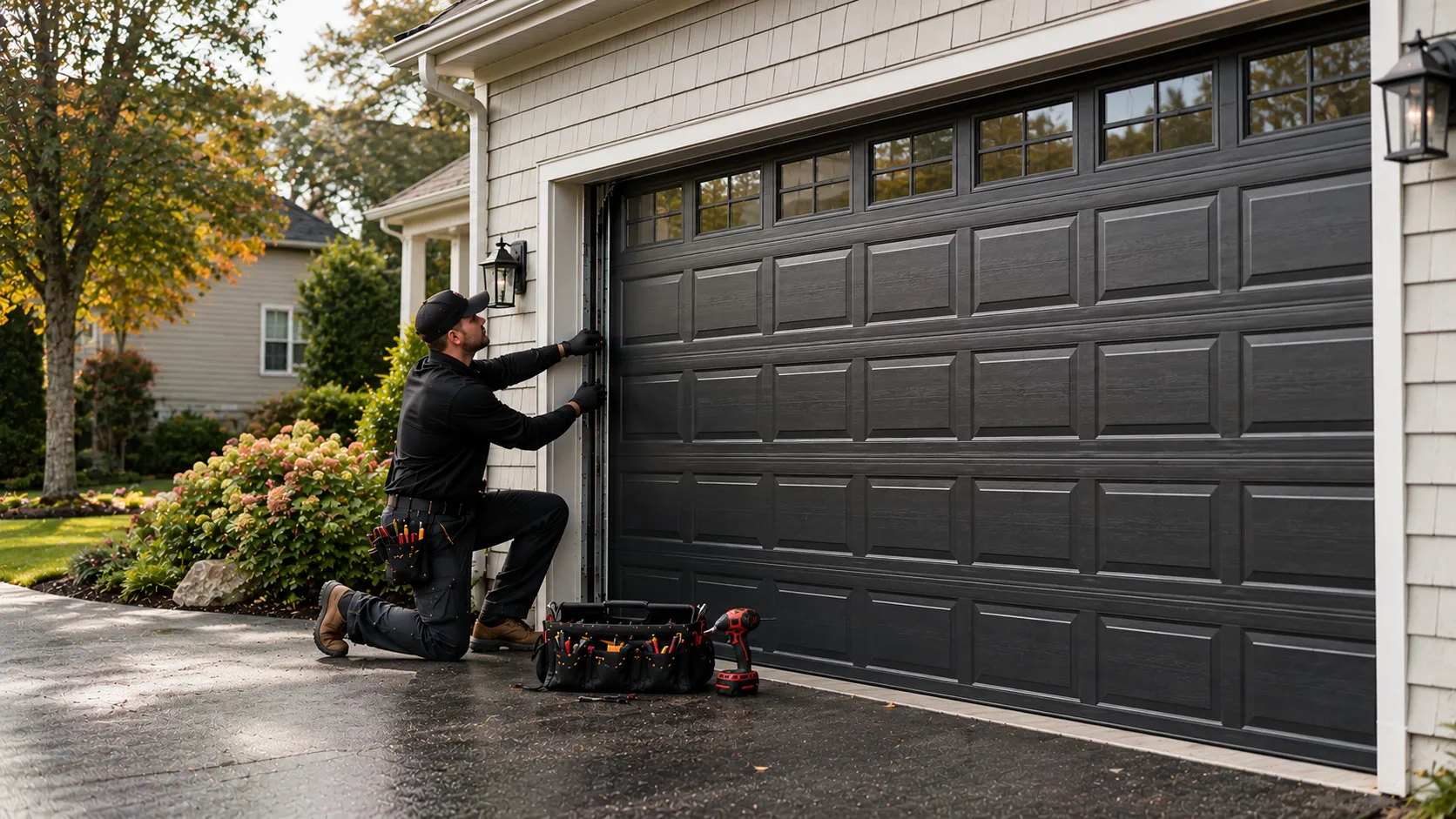
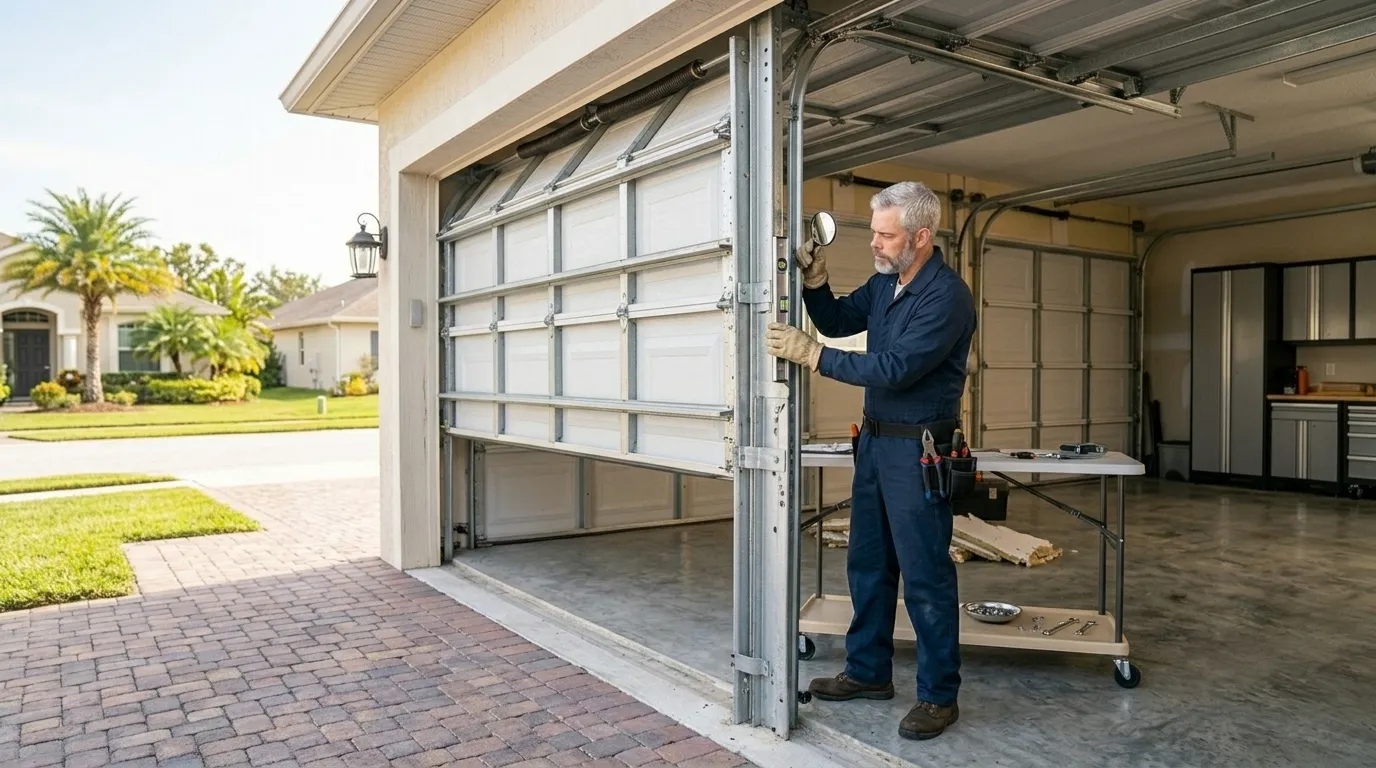
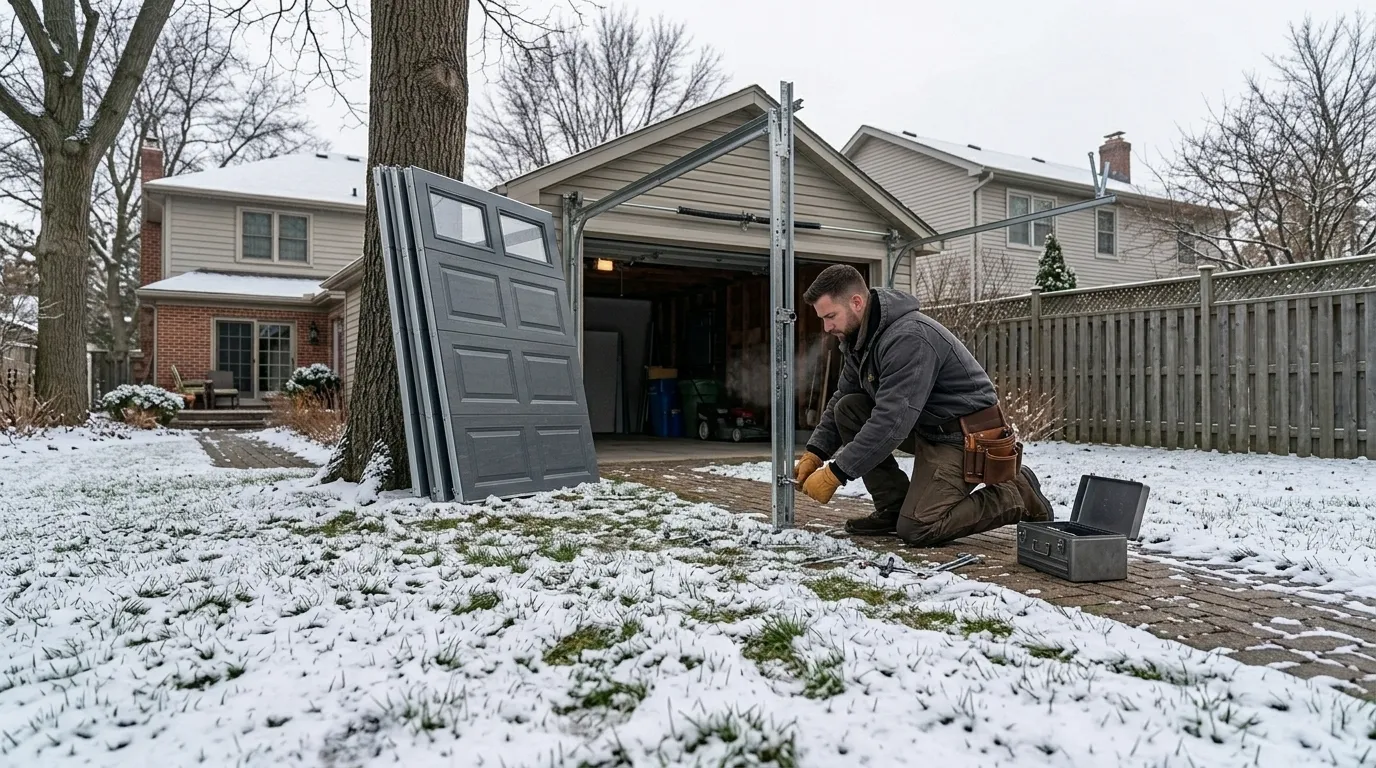
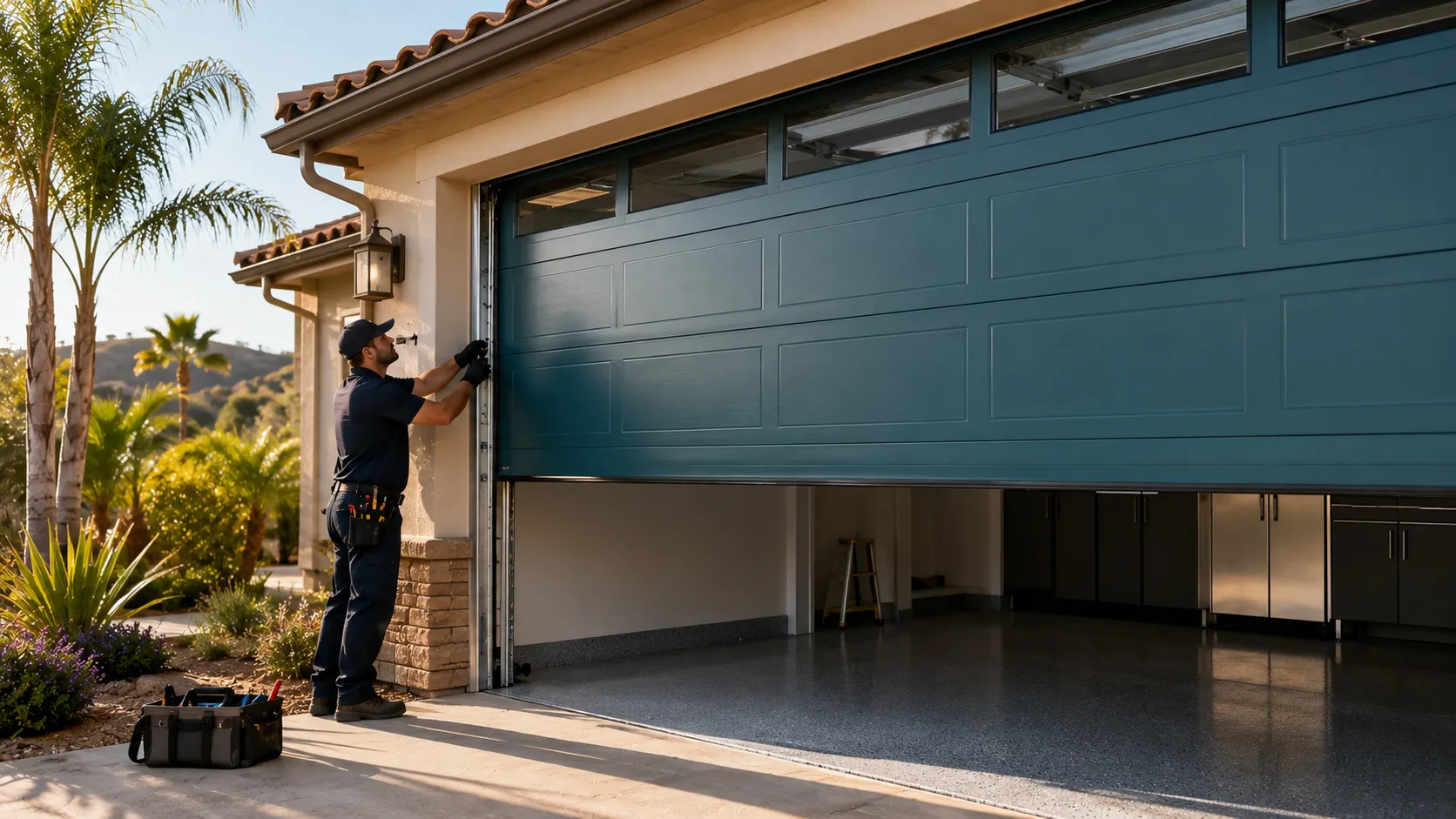
Orange Park sits twelve miles from our Jacksonville shop, and that drive shapes how a call here actually runs. We're not pulling up in five minutes - we're loading the truck with what a 1975-built house is likely to need before we ever leave the yard. That means torsion springs sized for older extension setups, not the newer low-headroom hardware you'd find in a house built in 2005. A tech heading out to Orange Park brings a different spring cage, different cable length, and sometimes a different opener bracket than one heading to a subdivision built last decade.
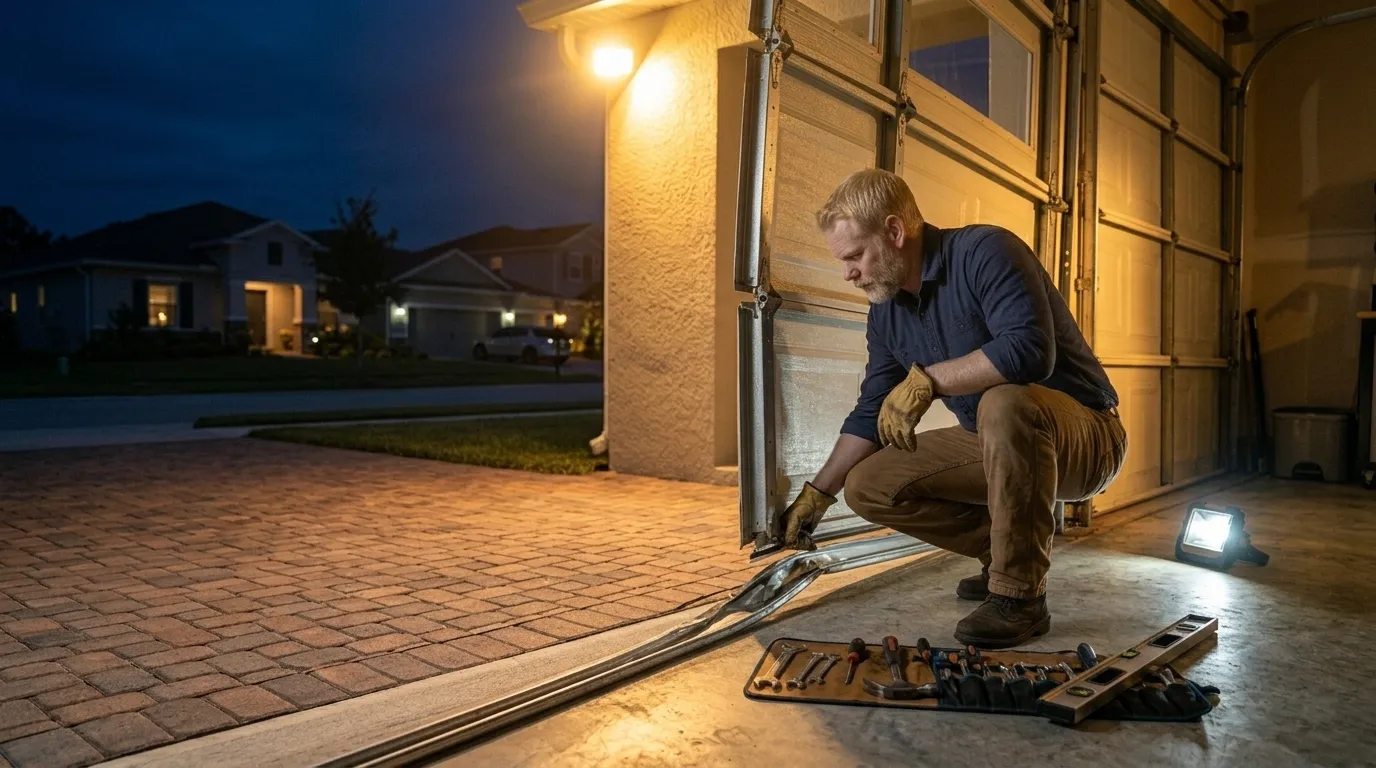
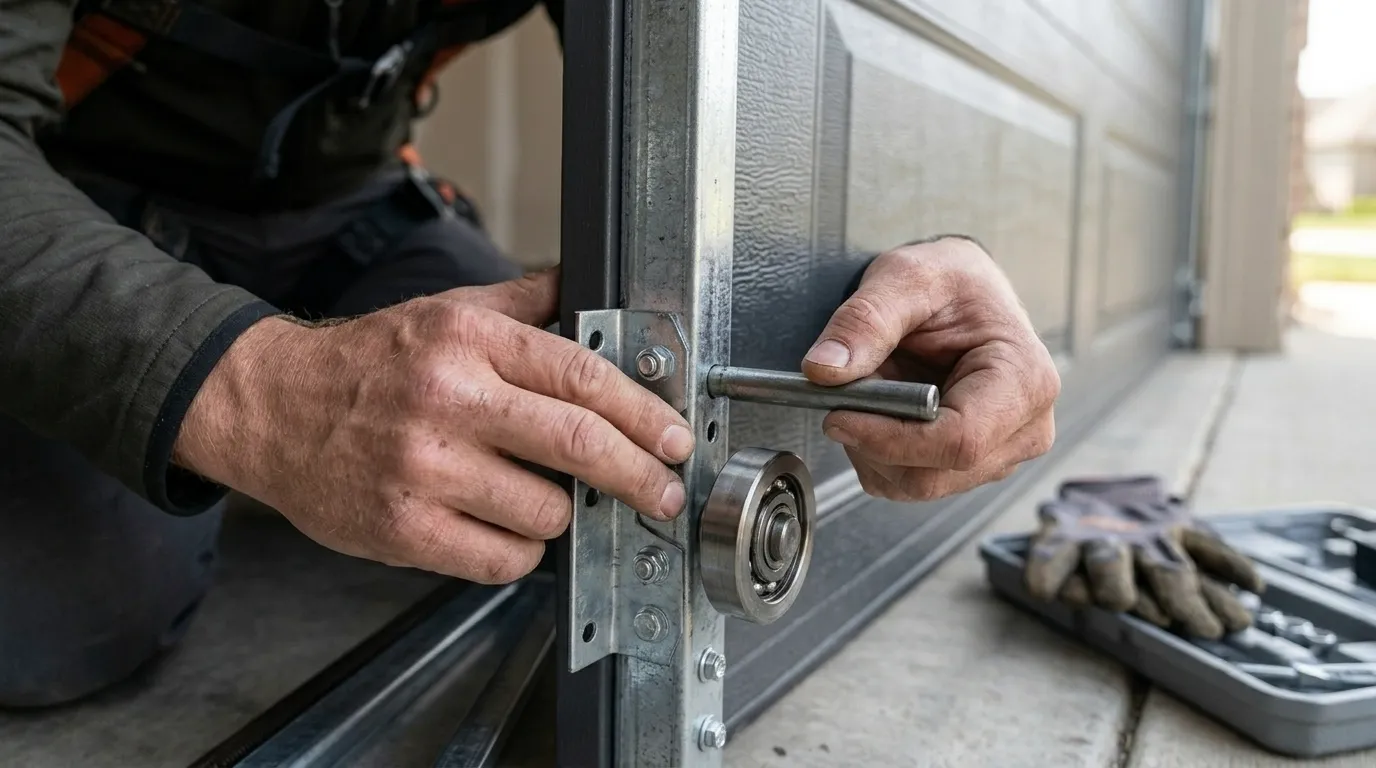
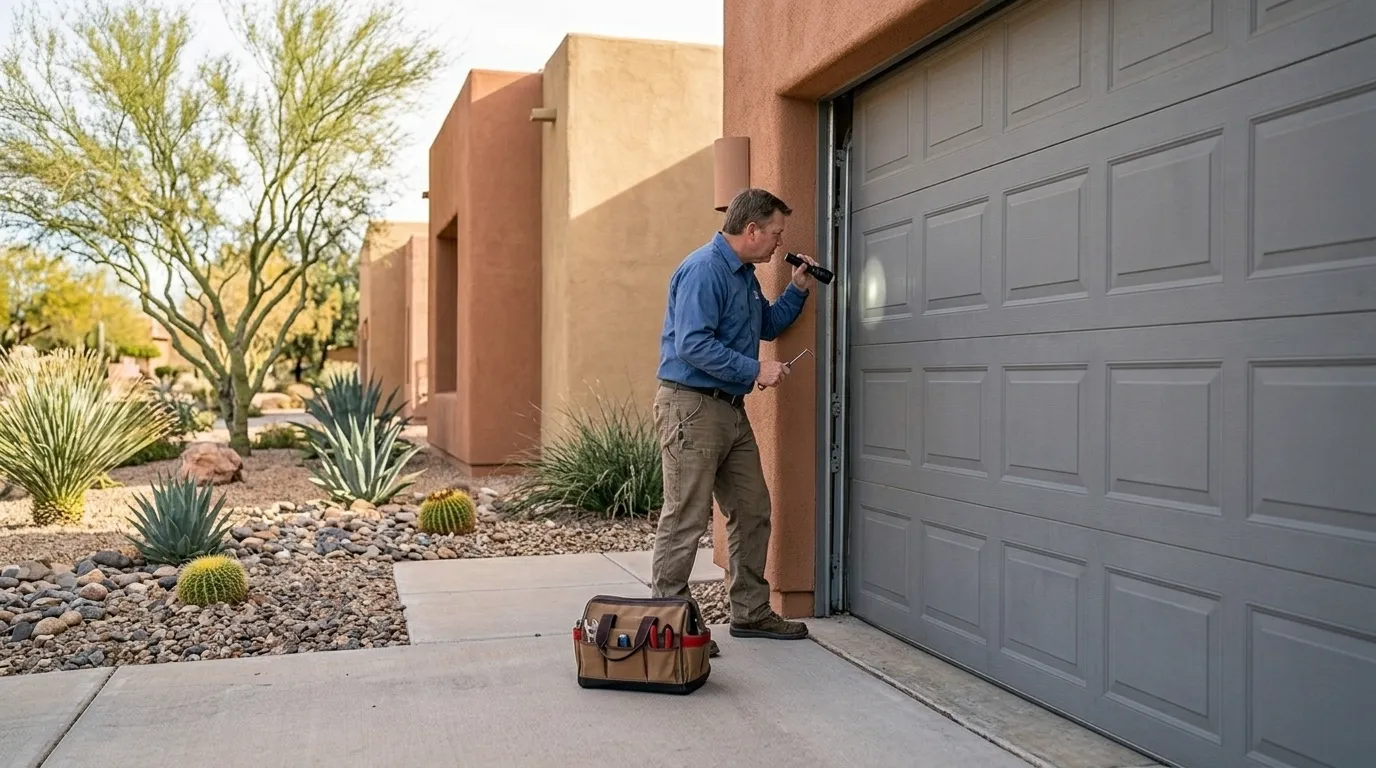
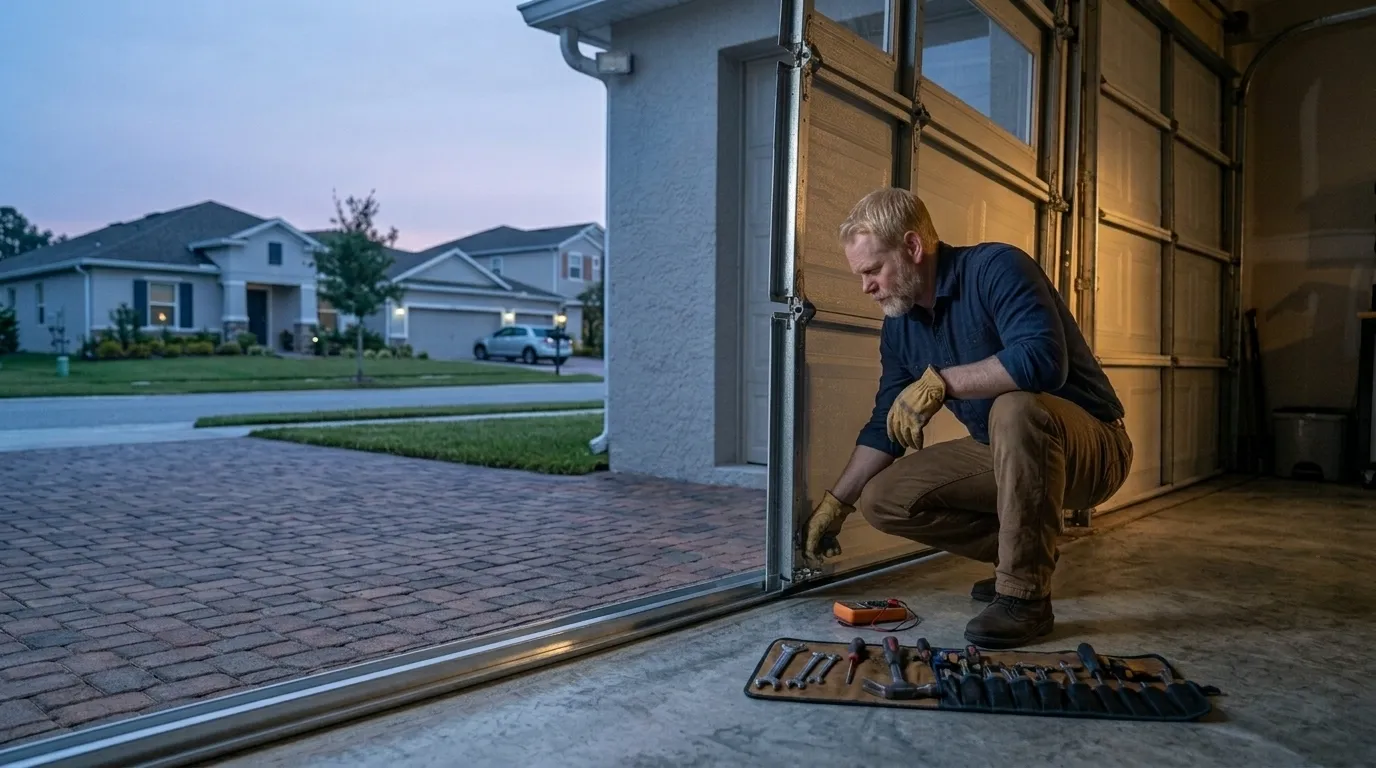
Most of the repair work is straightforward once we're on site: broken torsion or extension springs, worn rollers that have started chewing up the track, cables that have frayed at the drum, and openers that finally give out after two decades of Florida humidity. Panel damage from a bumped car or a storm-bent track shows up too, though replacing a single panel only makes sense if the door itself isn't already near the end of its run. We diagnose on arrival rather than guessing over the phone, because guessing wrong on a 12-mile trip wastes everyone's time.
What we don't do is stock every part on the truck for every possible door. If your hardware is unusual - an odd-width double door or a discontinued opener model - we may need to order a part and come back, which we'll tell you upfront rather than let you find out at the door.
How It Shows Up
In a neighborhood built around 1975, the failure pattern is pretty consistent. Torsion springs on doors that age have usually been cycled tens of thousands of times, and they don't fail gently - you'll hear a bang from the garage, sometimes loud enough to bring someone outside, and then the door won't lift past a few inches, or it slams down if it's already open. That's a spring, not an opener, and it's not safe to force.
Openers from that housing era, or the replacements installed since, tend to show wear differently: a motor that hums but the door doesn't move, a remote that stopped working while the wall switch still does, or a door that reverses itself halfway up. Rollers on original or early-replacement track wear down to bare metal over the decades and start grinding - you'll feel it as a rough, uneven pull rather than a smooth glide.
Because Orange Park's median household income runs lower than the wider Jacksonville service area, we hear from a lot of owners who've been living with a noisy or stiff door for months, hoping it holds until it doesn't. Mild coastal-adjacent humidity here doesn't cause the dramatic swings you'd get further north, but it does mean unlubricated hardware corrodes and stiffens faster than you'd expect for the door's age.
The DIY Question
There's a real line between what's safe to try yourself and what isn't, and torsion springs sit firmly on the wrong side of it. A torsion spring under tension can put someone in the hospital if it's released wrong, and on a house this age the spring has likely never been replaced - meaning it's tired, possibly the wrong size for the door already, and unpredictable. Leave that one to a call.
What you can reasonably check yourself: whether the track has visible dents or gaps, whether the rollers look worn flat on one side, and whether the door is balanced - disconnect the opener (pull the release cord) and see if the door stays roughly where you leave it when lifted halfway. If it slams down or shoots up, that's a spring or cable problem, not something to keep testing by hand.
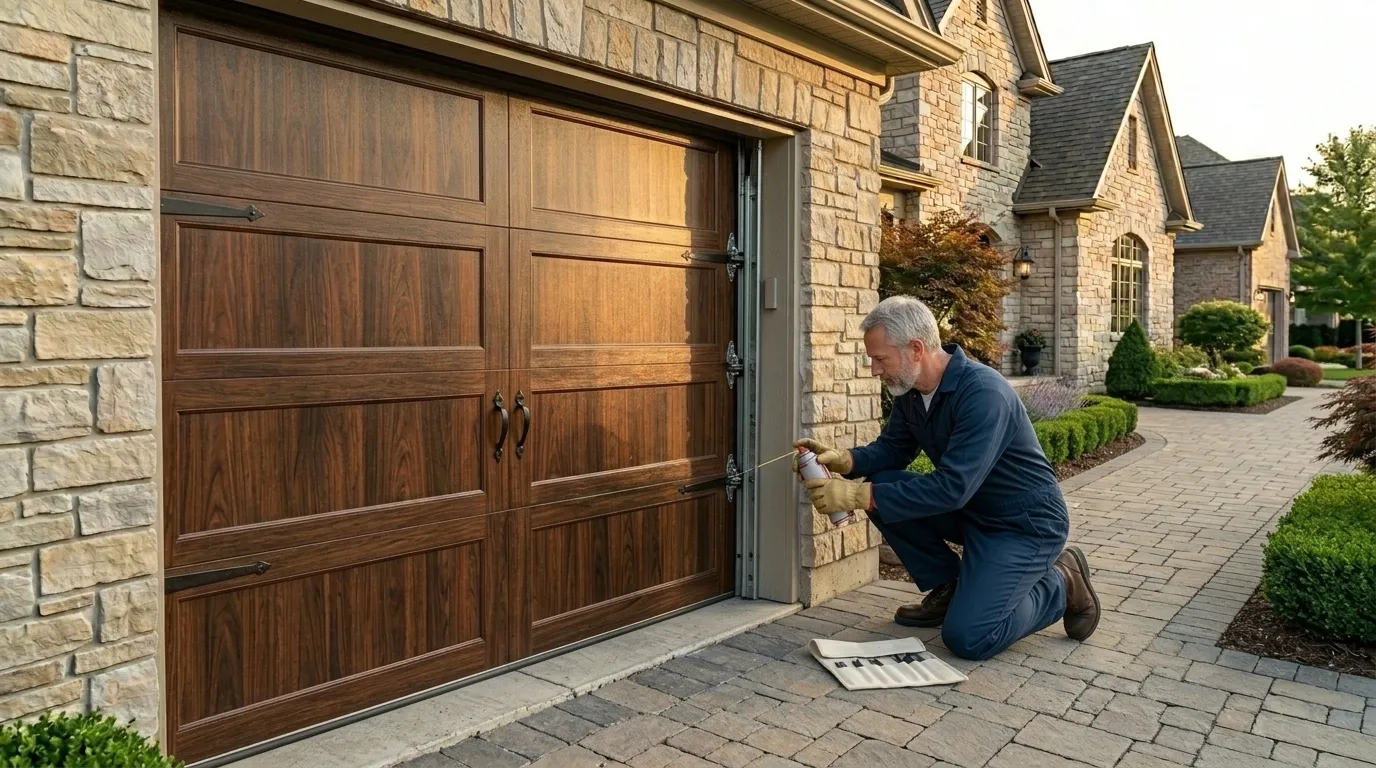
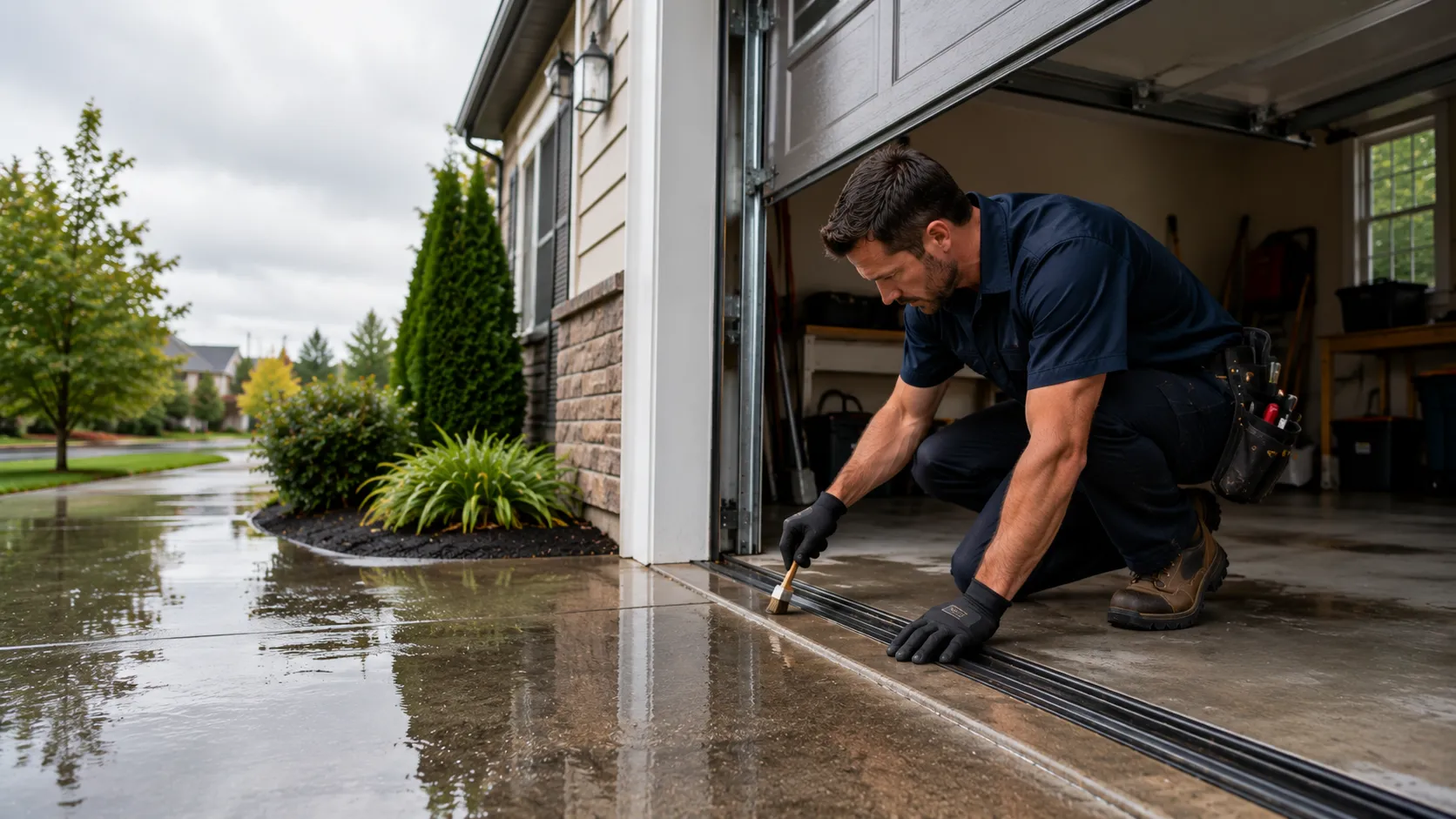
Lubricating hinges and rollers with a garage-door-specific lubricant, not household oil, is fine to do yourself and worth doing every so often given how corrosion creeps in on older hardware even in a mild climate. Tightening loose bolts on the track brackets is also reasonable. Beyond that - cable replacement, spring work, opener gear replacement - the cost of a mistake outweighs what you'd save.
What Causes It Around Here
The short version: age. With a median year built around 1975 for houses in this part of Orange Park, a lot of doors and their original hardware are well past the point where failure is a surprise. Springs have a rated cycle life, and a door that's been opened and closed twice a day for close to fifty years has burned through several springs' worth of cycles even if it's only had one or two replacements.
The mild temperate climate here doesn't put the stress on doors that you'd see in a place with hard freezes or wide swings, but consistent humidity still matters - it works on unlubricated metal steadily rather than dramatically, so a door that's never been serviced tends to seize up or fray a cable gradually rather than failing all at once. Owners often don't notice until the last stage, which is also the loud, sudden one.
Households here number in the low thousands rather than the tens of thousands across the wider service area, so this isn't a neighborhood with a large recent-construction share diluting the older stock - most of what we see really is original-era housing with original-era failure points. That's useful to know going in: the fix usually isn't exotic, it's just overdue.