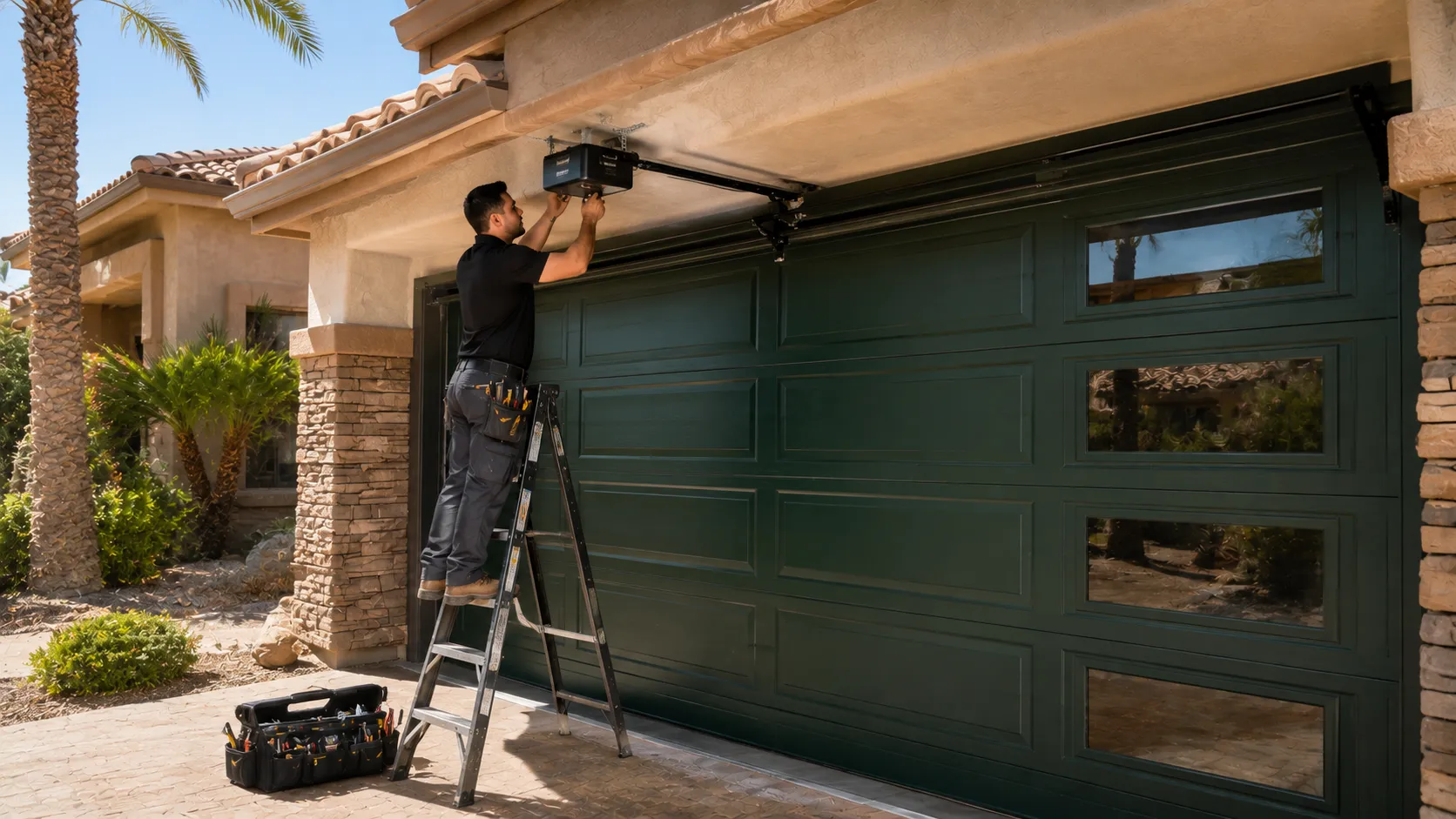
What Can Go Wrong
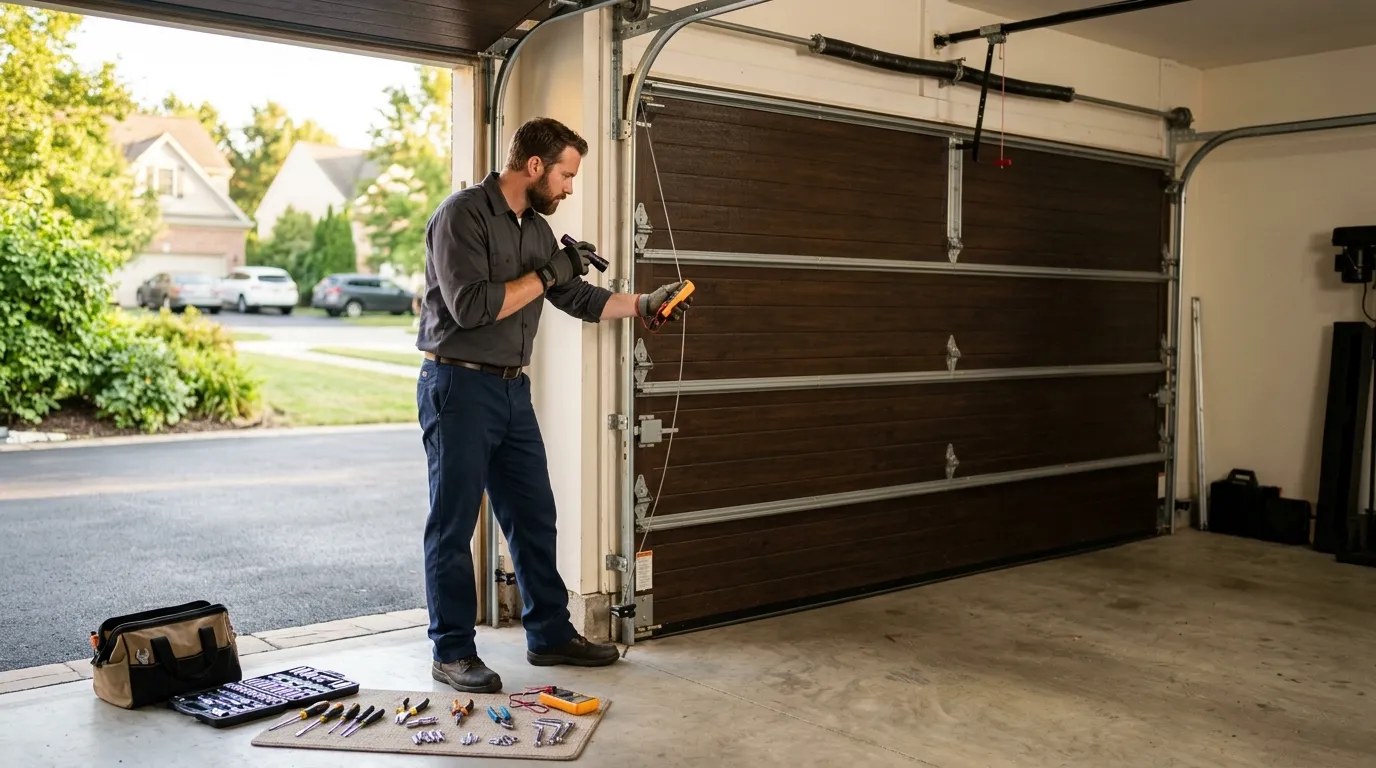
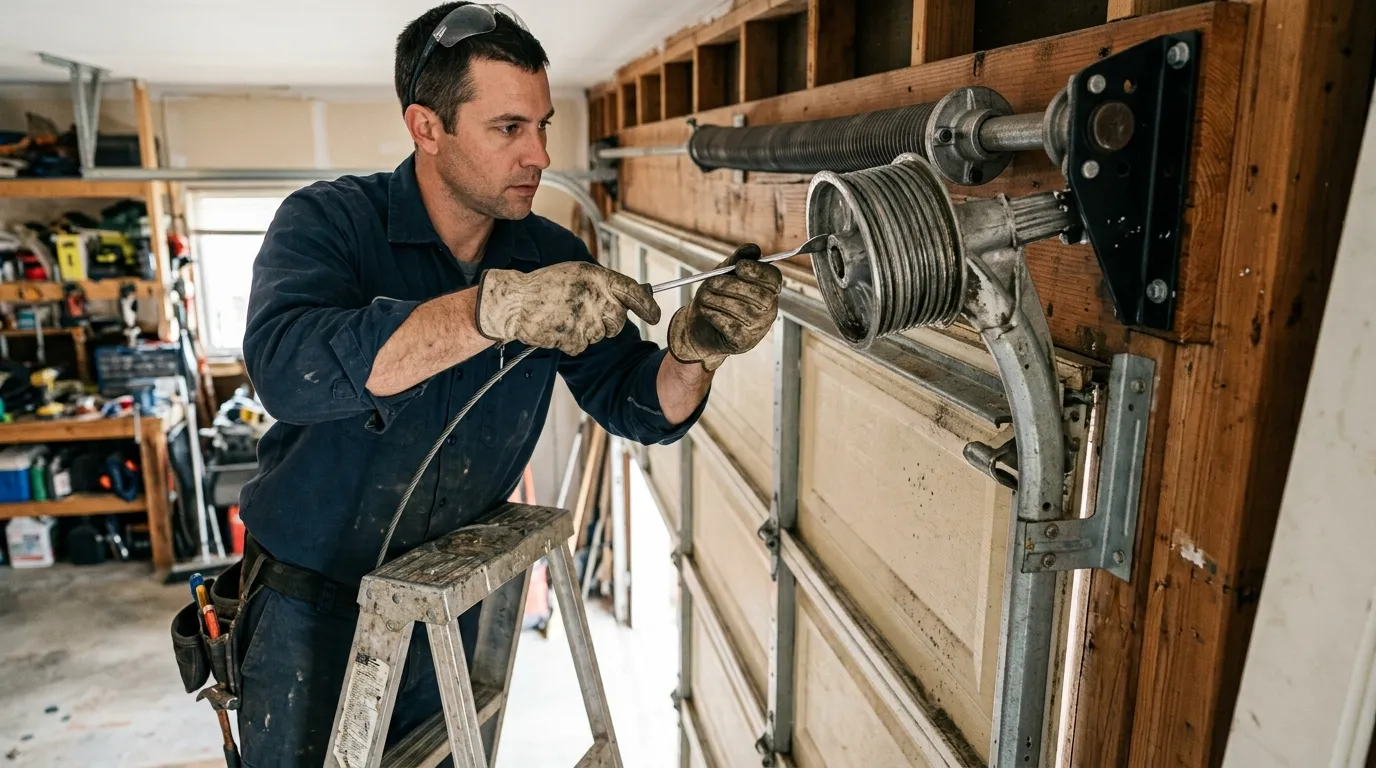
The call we get most from Lakeside is a door that won't lift, or one that lifts a few inches and stops. Nine times out of ten that's a broken torsion spring - the coiled steel bar above the door that does the actual lifting work, not the opener. On a double door you'll usually find two springs working together, and when one snaps, the other is often close behind it since they were wound and installed the same day.
Cables fray for the same reason springs go bad: age and cycle count. A cable riding on a worn drum will shred before it snaps clean, and you'll see the strands before the door drops. Center brackets on double doors take a beating too - years of a spring pulling unevenly on one side will bend the bracket or crack the bearing seat.
Extension springs, the kind that stretch along the horizontal tracks instead of coiling above the door, show up less in this area's stock but they're not rare. If your door has them, the failure looks different: the spring stretches out and loses tension gradually rather than snapping outright, so the door gets slower to lift over months before it quits.
What Causes It Around Here
Lakeside's houses went up around 1984, which lands right inside the metro's broader 1973-2007 building window and close to the 1985 median for the whole service area. That means the springs in a lot of these garages aren't from a remodel - they're original, or close to it, and they've been through roughly forty years of daily lift-and-lower cycles.
A torsion spring is rated for a number of cycles, not a number of years, but in practice the two track together. A spring installed in 1984 has usually seen well past its working life by now, and steel that's fatigued doesn't give much warning before it lets go.
Climate isn't the main driver here the way it is farther north. This area sits in a mild temperate band, so we're not dealing with hard freeze-thaw cycles snapping brittle steel in January. The wear here is closer to simple mileage - same as the 1980s-90s housing stock across the other named areas near Lakeside, where the hardware sized for that era's lighter steel doors is what we see fail first.
Parts We Carry
For a door built around the mid-1980s, the torsion springs are almost always standard residential sizes - we carry a working stock of these on the truck rather than special-ordering for every job. Extension springs and the safety cables that should run through them are also standard stock, along with the lift cables and drums that tend to go along with an aging spring.
Where we run into a wait is older or non-standard drums and end bearing plates on doors that have had prior repairs with mismatched parts - those sometimes need to be sourced rather than pulled off the truck, and we'll tell you that up front instead of promising same-visit work we can't deliver.
We don't stock every torsion spring wire gauge and length combination that's ever existed; for a door this age across Lakeside's 1980s stock, the common sizes cover the great majority of jobs, but a door that's had a non-matching replacement spring installed years ago can throw that off. That's the one honest limitation worth naming before the truck rolls: most jobs are same-visit, but not every one is.