What Can Go Wrong
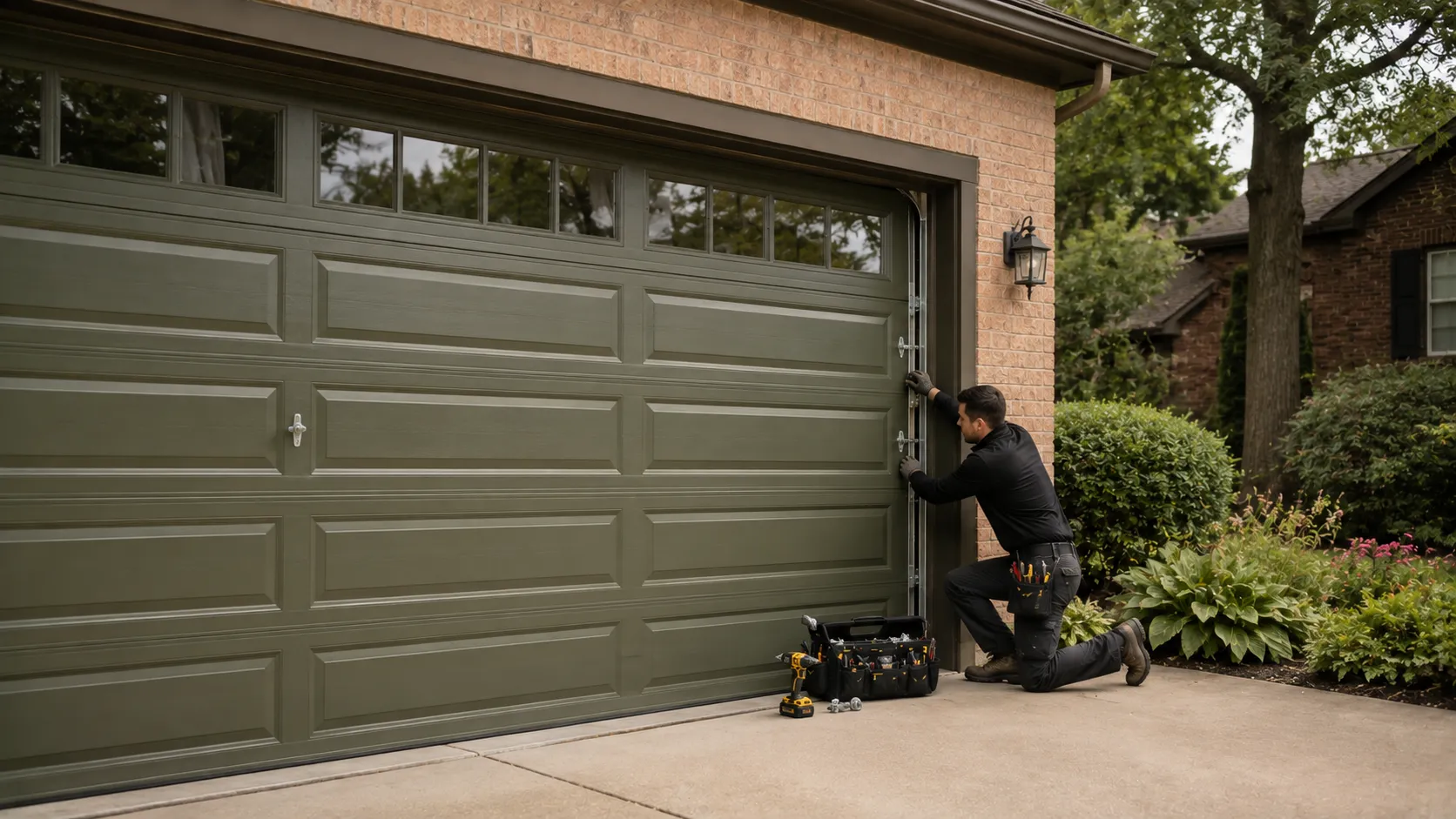
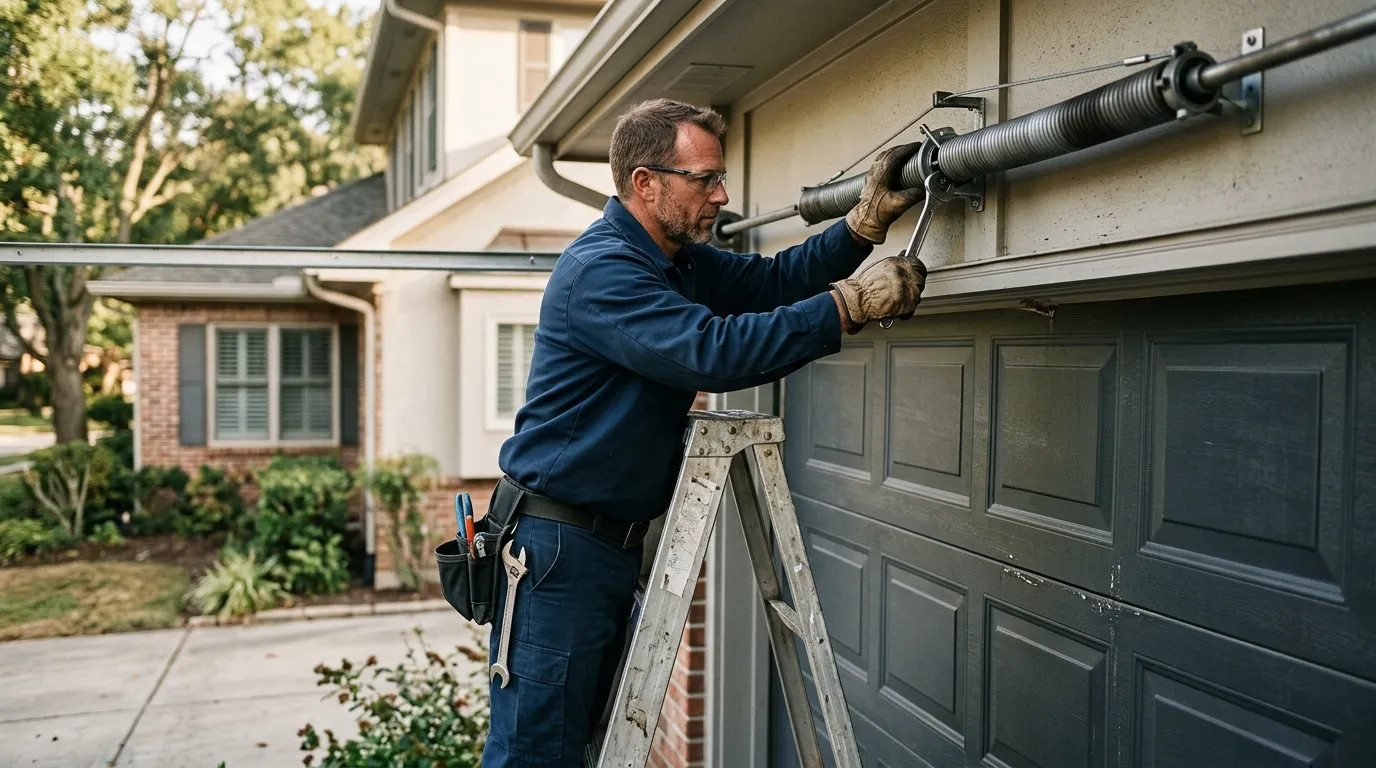
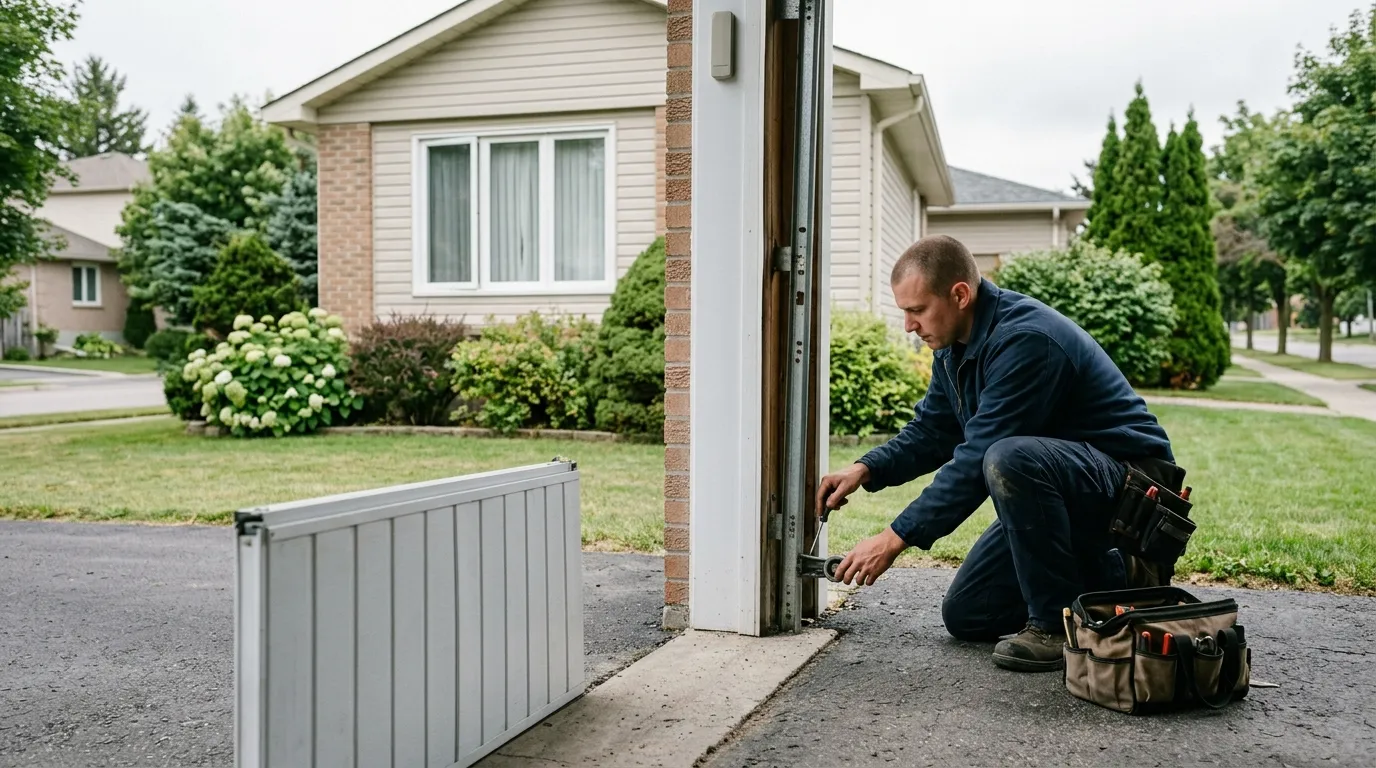
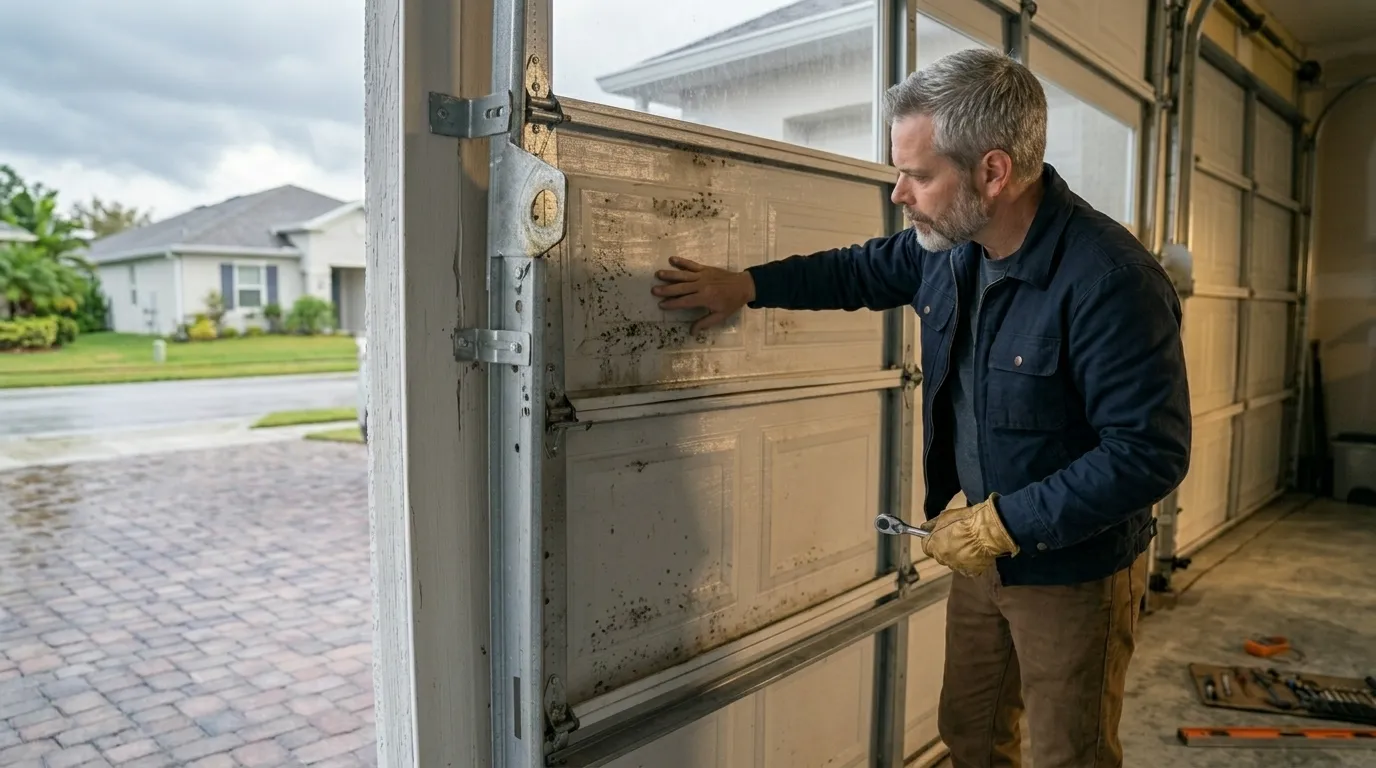
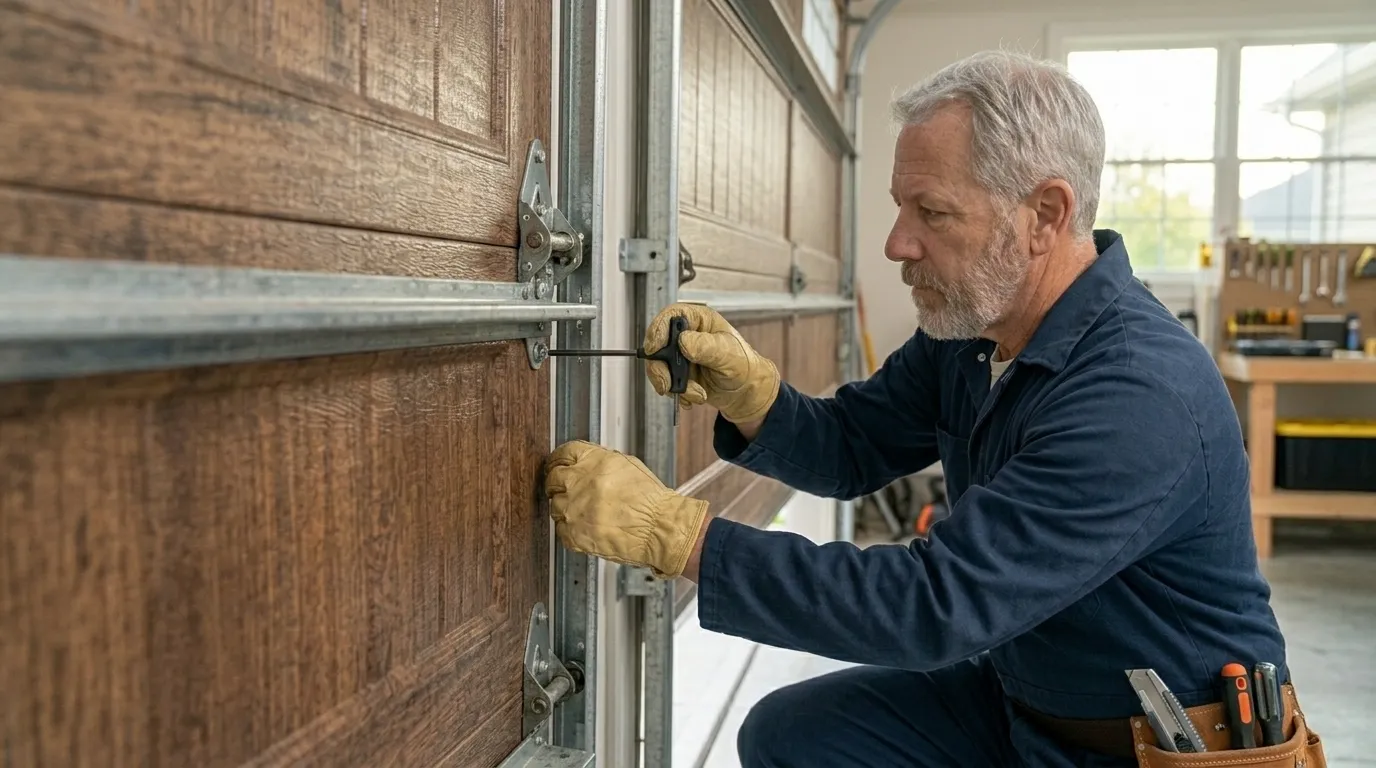
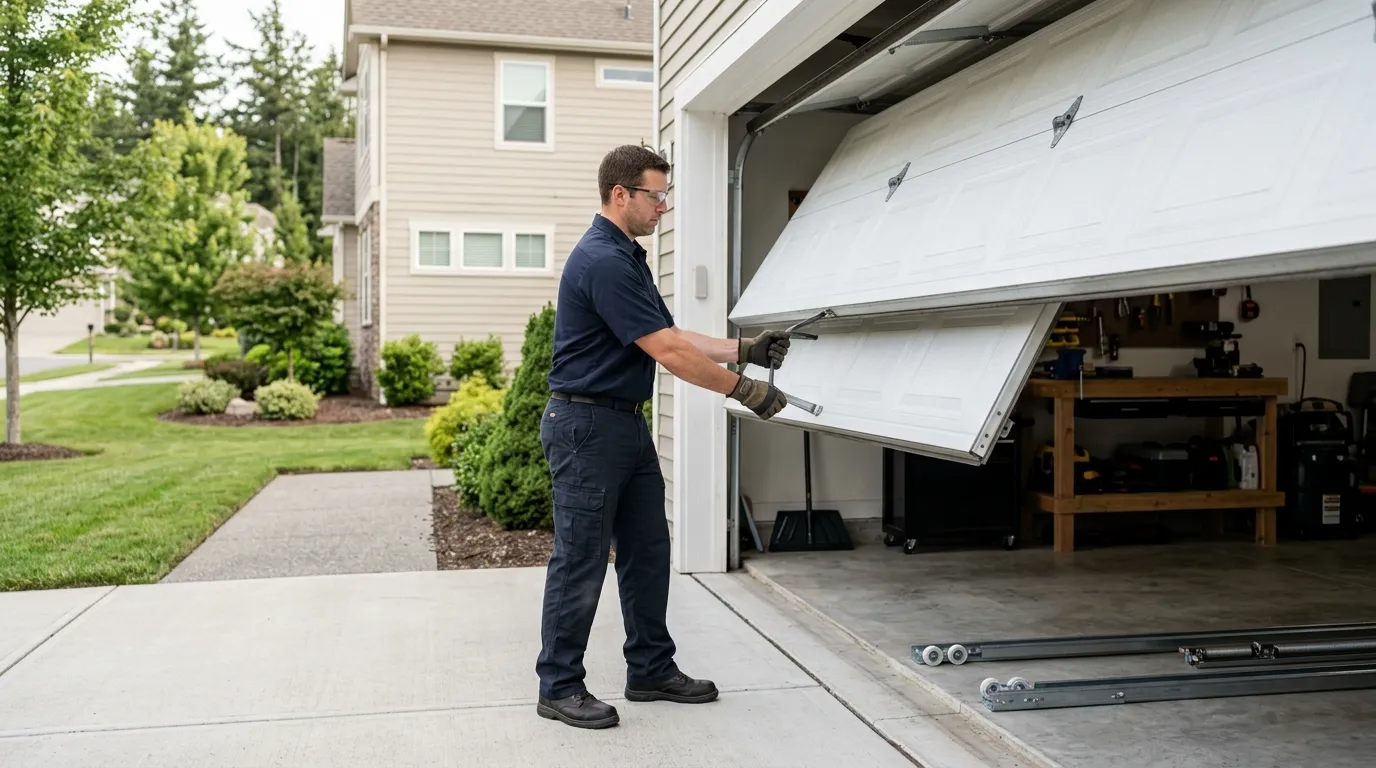
Most garage doors in Lakeside went up around 1984, which puts them squarely in the era of single-layer steel panels, 16x7 double doors, and extension springs mounted along the horizontal track instead of a torsion shaft over the header. That construction wasn't bad for its time, but forty-plus years of Florida humidity and daily cycling wears through it. Panels rust from the bottom up where they meet the slab. Extension springs stretch out and lose tension unevenly, so the door racks sideways instead of lifting square. Rollers that were steel with no bearing wear grooves into the track and start binding. None of this is exotic - it's what happens to any door built to that spec after this many years of use. When a homeowner calls about a door that's suddenly heavy to lift by hand, or one that opens tilted, this is almost always why. Replacement at this point usually makes more sense than another repair, since parts for that generation of hardware are getting harder to source and a new door comes with a torsion spring system and better panel insulation from the start.
What Causes It Around Here
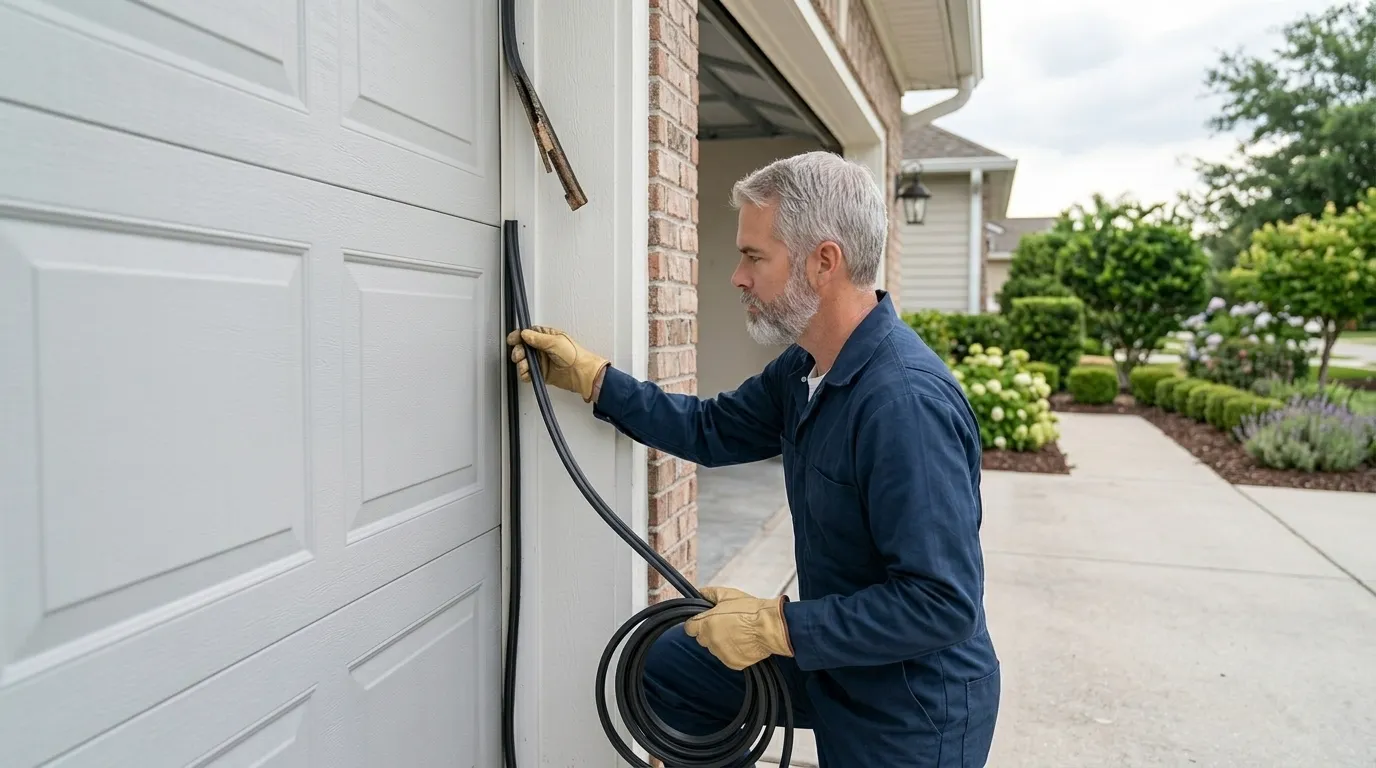
The housing stock across this part of the service area was mostly built between 1973 and 2007, with a median year of 1985, and Lakeside sits right at the older end of that at 1984. That matters because a door installed in the mid-80s has had roughly four decades of Northeast Florida's mild, humid climate working on it - not brutal cold, but steady moisture and heat cycling that corrodes steel fasteners and dries out old weatherstripping faster than owners expect. It's not one bad storm that does it. It's forty years of daily use on hardware that was standard for its decade but isn't built the way doors are built now. Extension spring setups also don't age gracefully compared to modern torsion systems - they don't fail all at once, they sag a little more each year until the door is noticeably harder to lift. That slow decline is why so many service calls in this age bracket turn into installation quotes rather than quick fixes.
Parts We Carry
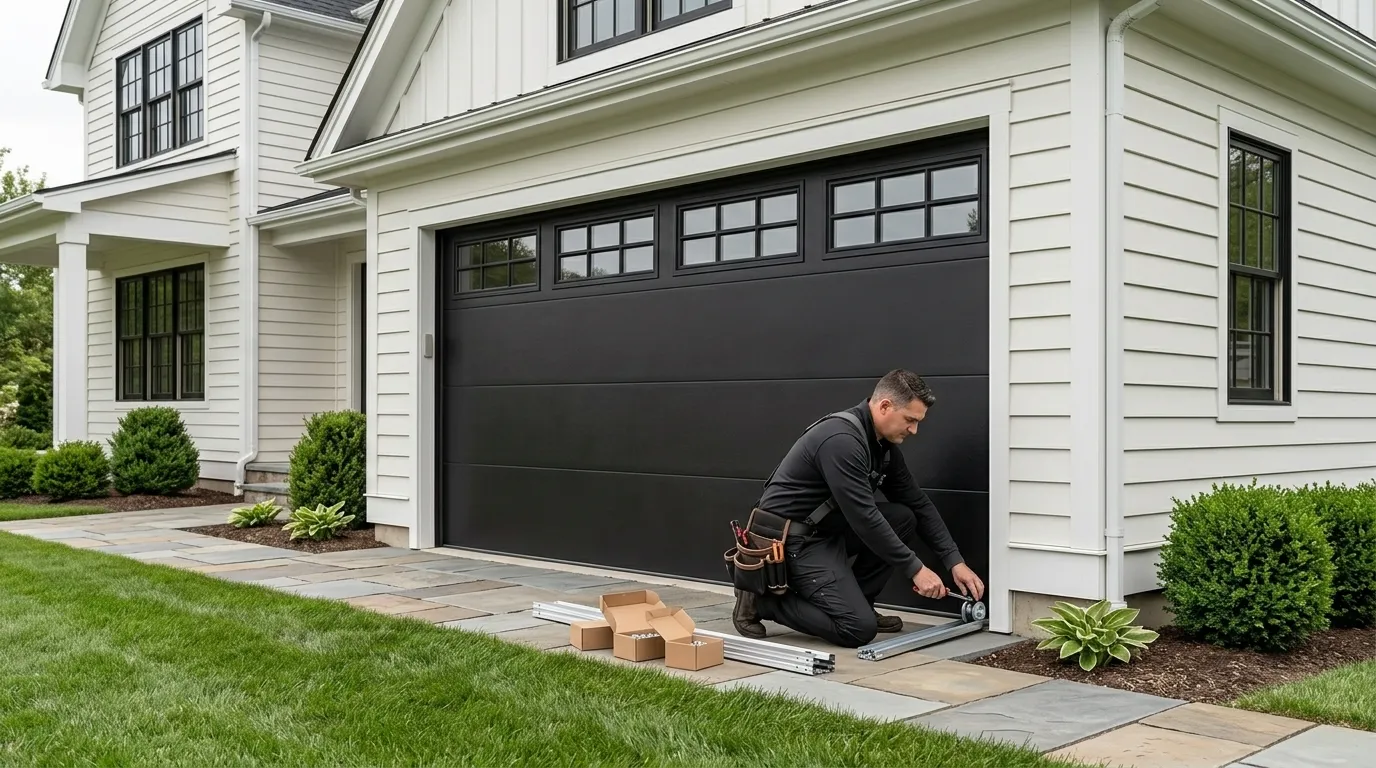
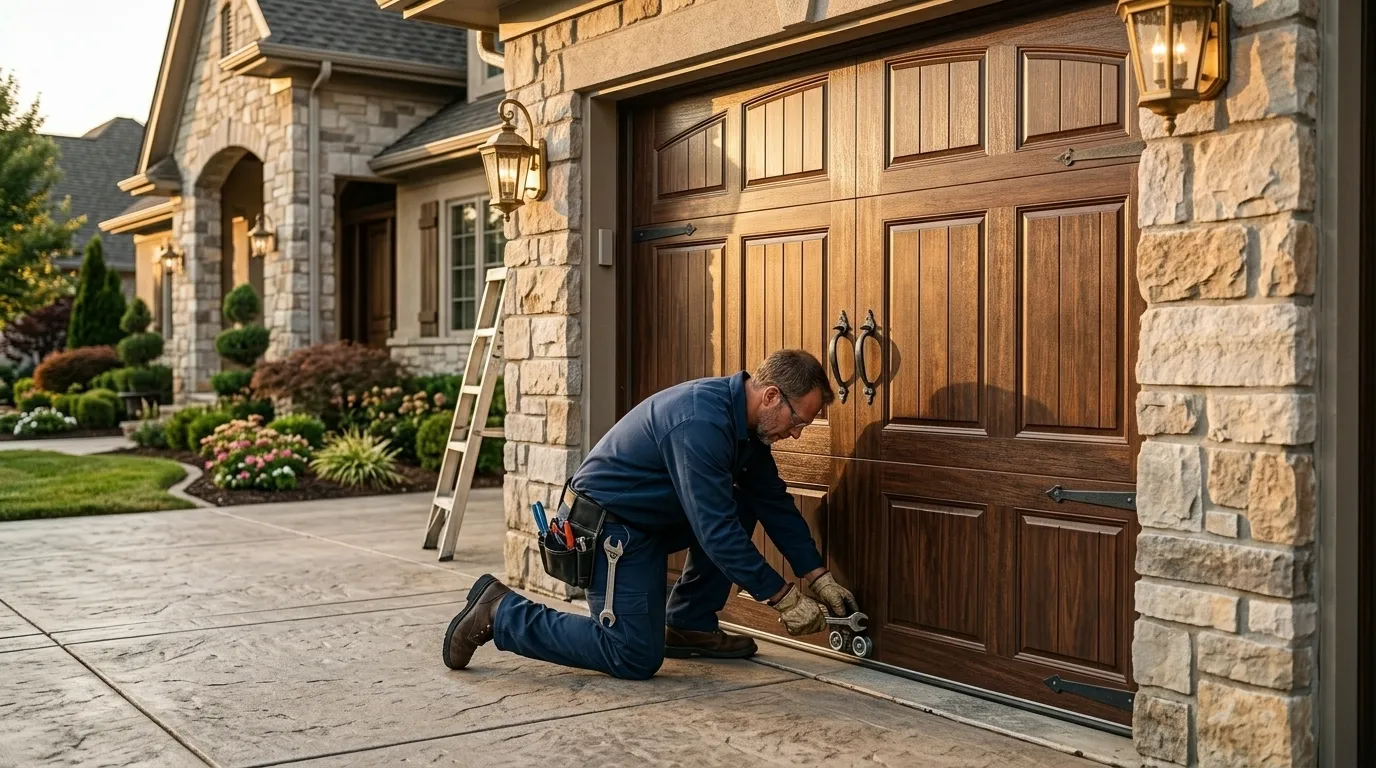
For installs in a neighborhood built out mostly in the 1984 range, we stock the hardware that actually replaces what's failing: torsion spring conversion kits for houses still running on old extension springs, standard 16x7 and 9x7 steel door panels, insulated and non-insulated options, new galvanized track, and ball-bearing rollers to replace the plain steel ones that came standard decades ago. We also carry openers rated for heavier insulated doors, since a lot of the original openers on these houses were sized for a lighter single-layer panel and won't handle a heavier replacement door well. We don't stock every specialty wood-composite finish on the truck - those get special-ordered - but the core hardware for a straightforward steel door swap is something we usually have on hand without a special order.