What Can Go Wrong
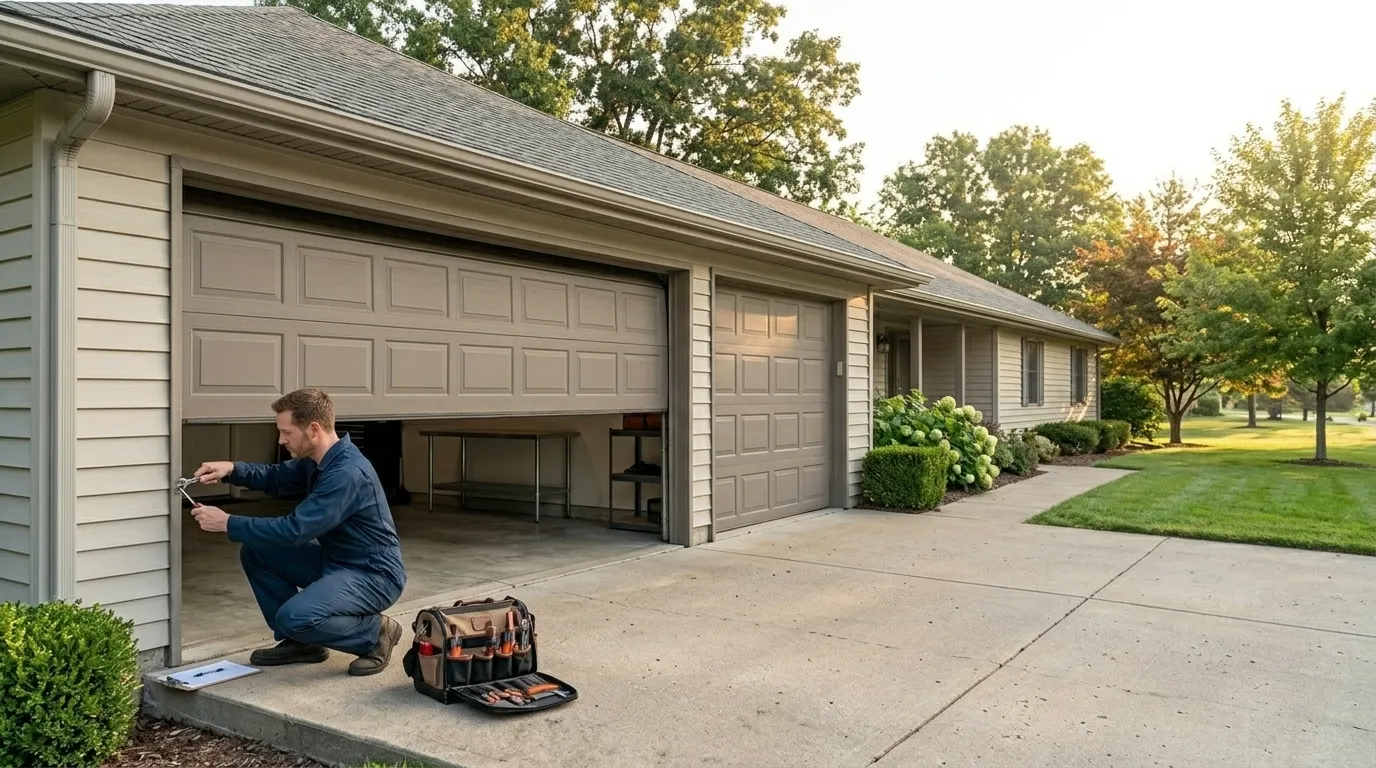
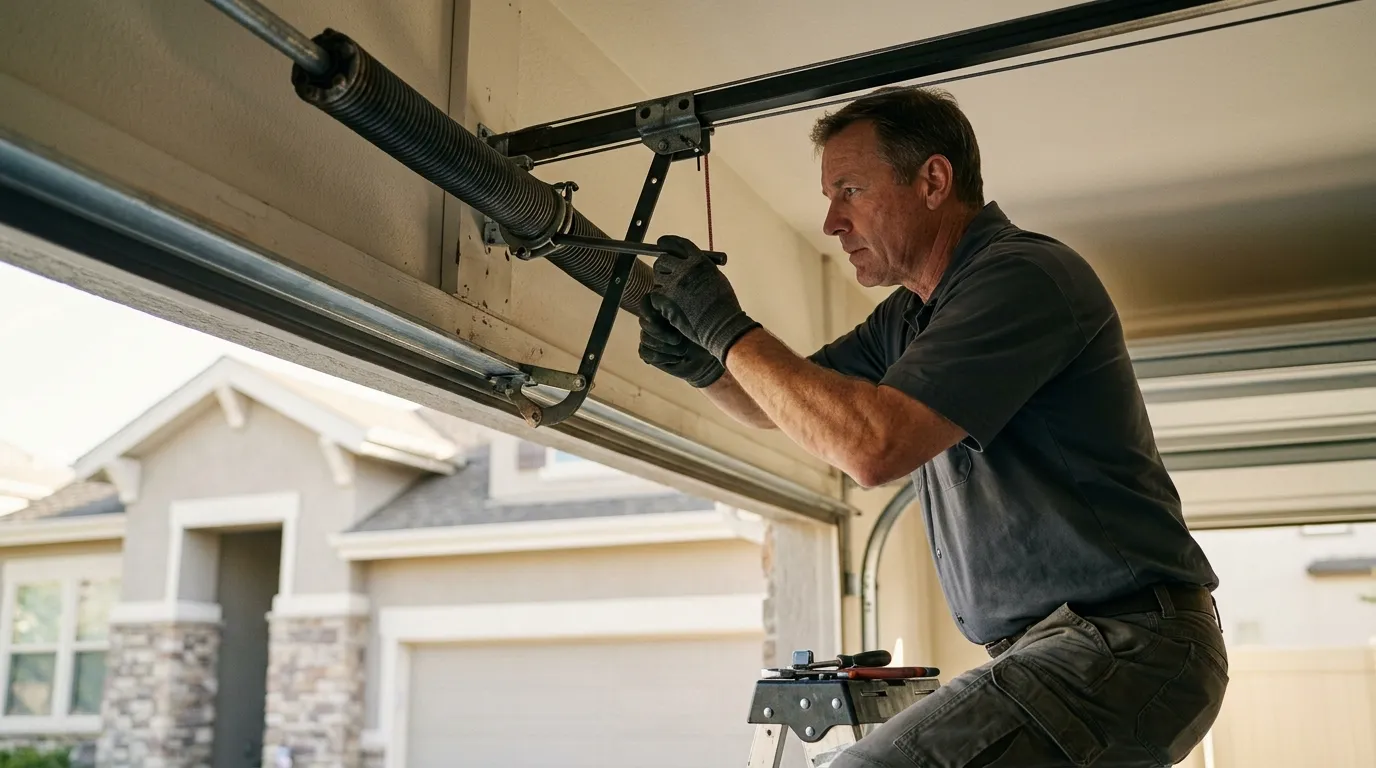
Lakeside's median home dates to 1984, and a lot of what went into those garages at the time never got swapped out. The torsion spring holding up a double door is rated for a certain number of cycles - usually somewhere around 10,000 - and a door that age has almost certainly used up its budget more than once without anyone knowing it, because springs don't announce themselves until they let go. Same story with openers from that era: chain-drive units with no rolling code, no auto-reverse sensors, sometimes no photo-eye at all if it was never retrofitted.
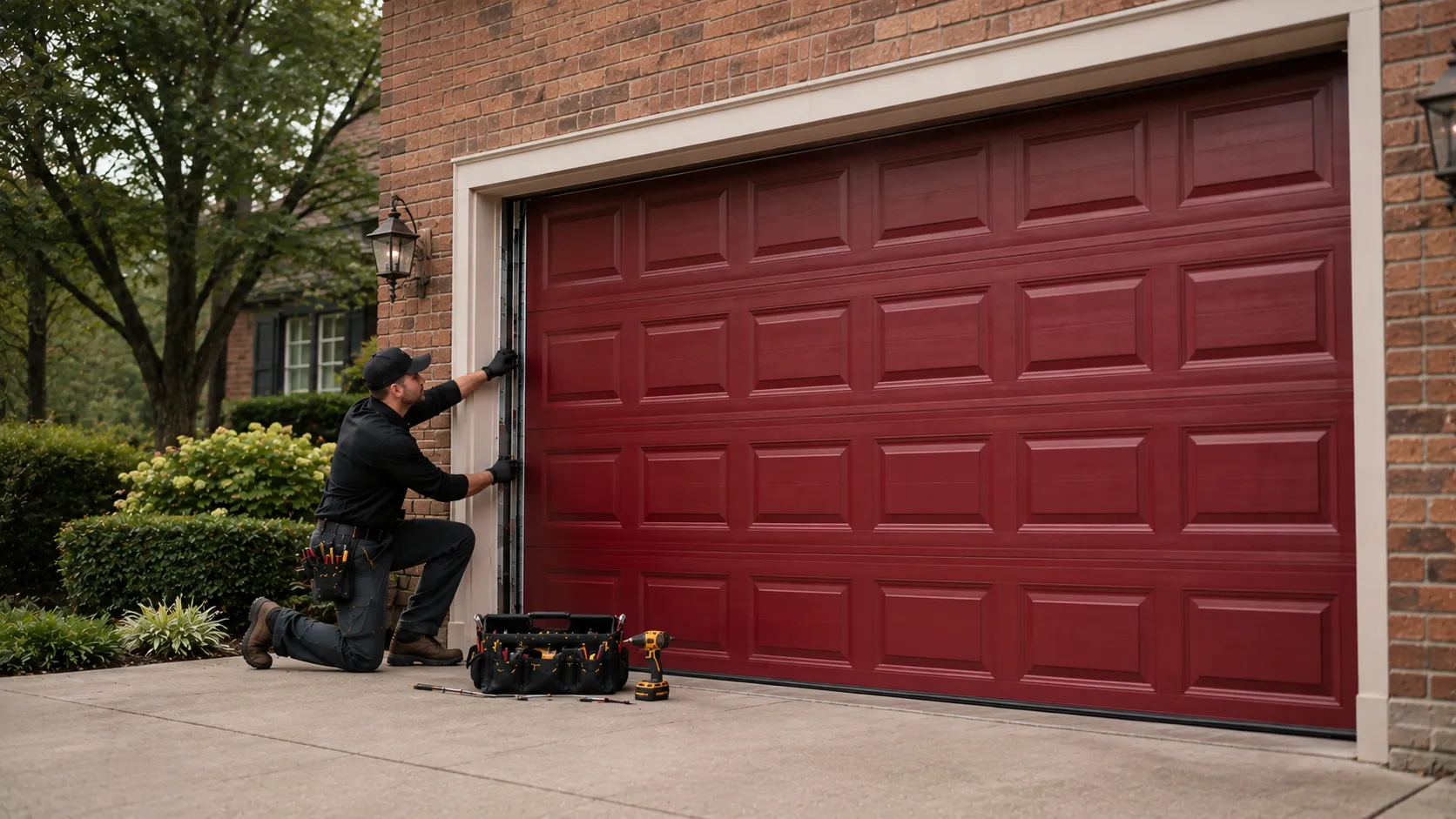
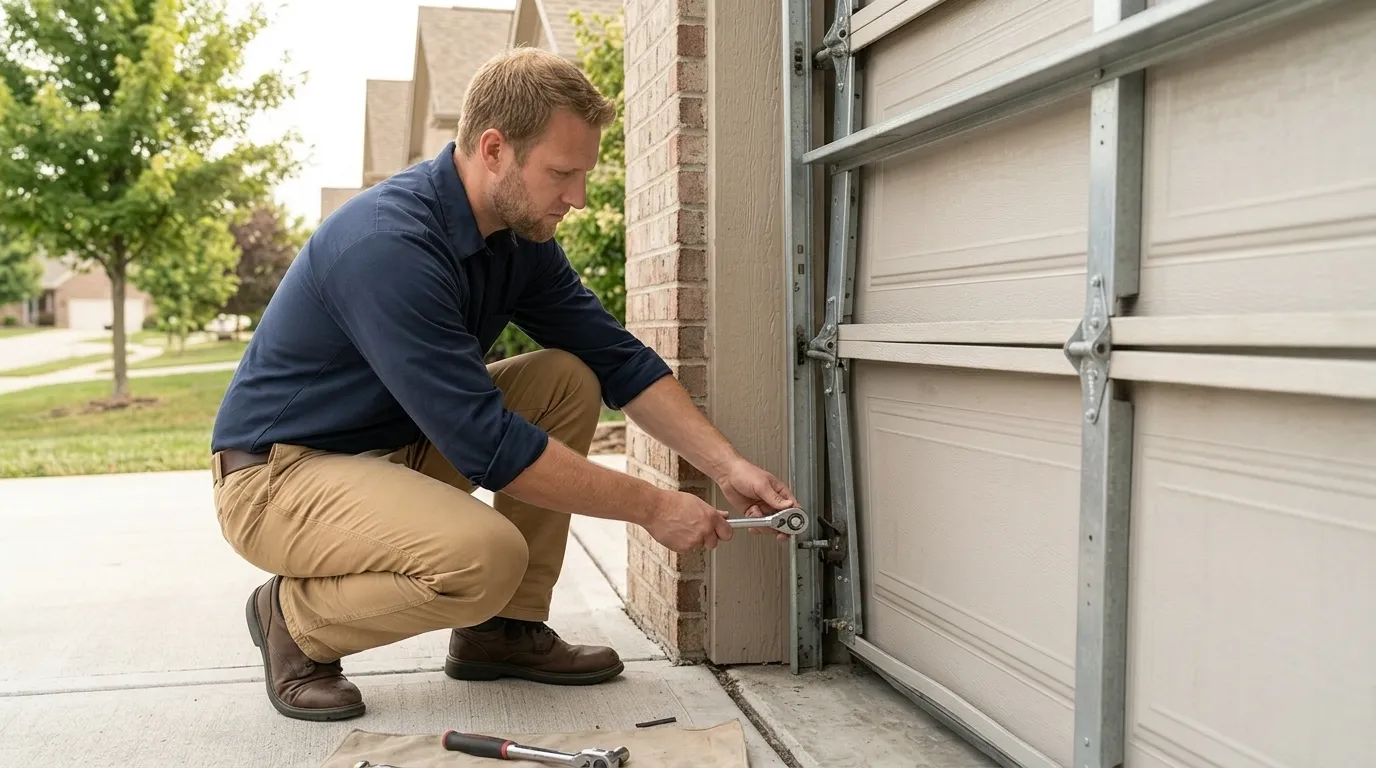
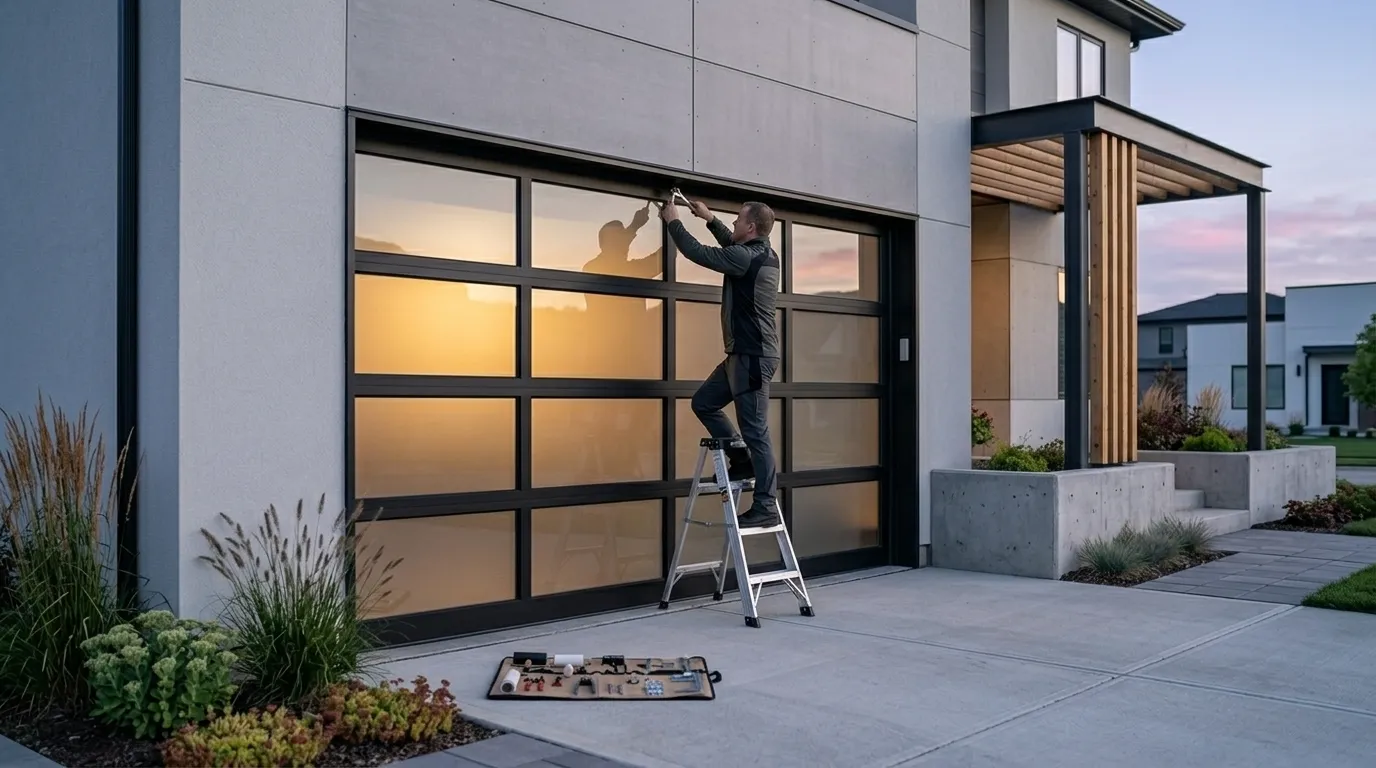
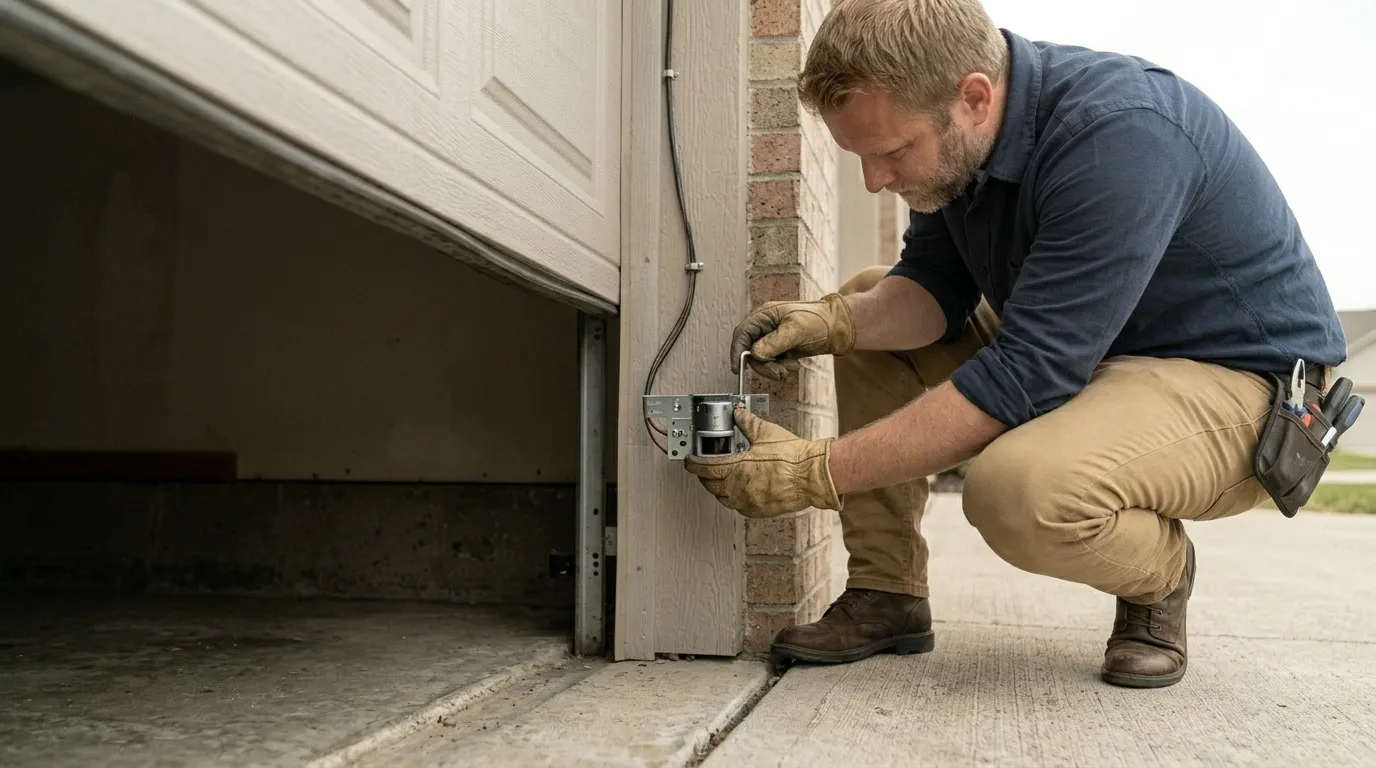
What we see on Lakeside calls is less "door won't open" and more "door is straining to close, and then one day it doesn't." Cables fraying at the bottom bracket. Rollers that were steel from day one, never upgraded to nylon, grinding in the track. Bottom brackets rusted at the weld from thirty-plus years of the same hardware doing the same job. None of that is dramatic until the spring goes under load, and then it's a call that can't wait. If your door still has the original panel and the original opener, the question isn't if something fails - it's which part goes first.
What Causes It Around Here
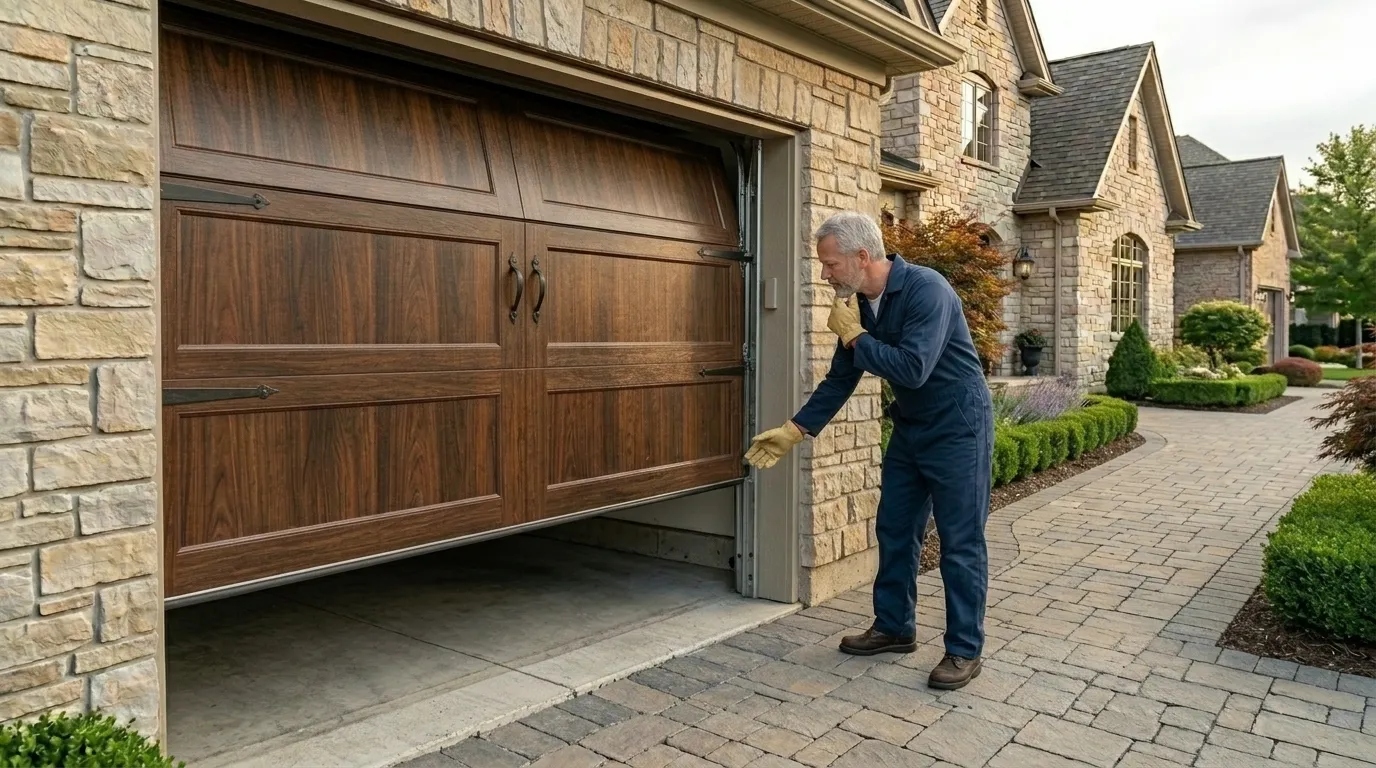
The mild temperate climate here isn't hard on doors the way freeze-thaw cycles are further north, but it isn't nothing either. Steady humidity swings the wood on older panel doors - if a house from the early '80s still has its original composite or wood-look steel panel, expect some warping at the bottom rail where moisture sits longest. Steel hardware that's never been lubricated corrodes slower here than in a wet-freeze climate, but it still corrodes, and thirty-plus years is enough time for surface rust to become pitting on a spring coil or a hinge pin.
Heat cycling matters more than most owners think. A garage that sits closed all day gets hot, then cools at night, and that expansion and contraction works on the same bolts and brackets year after year without anyone touching them. Combine that with hardware that was sized for a lighter, uninsulated door - the standard in the mid-'80s - and you get springs that were already borderline for the door's actual weight if it was ever replaced with a heavier insulated panel down the line. That mismatch is one of the more common reasons a door in this age bracket feels harder to lift than it should.
Parts We Carry
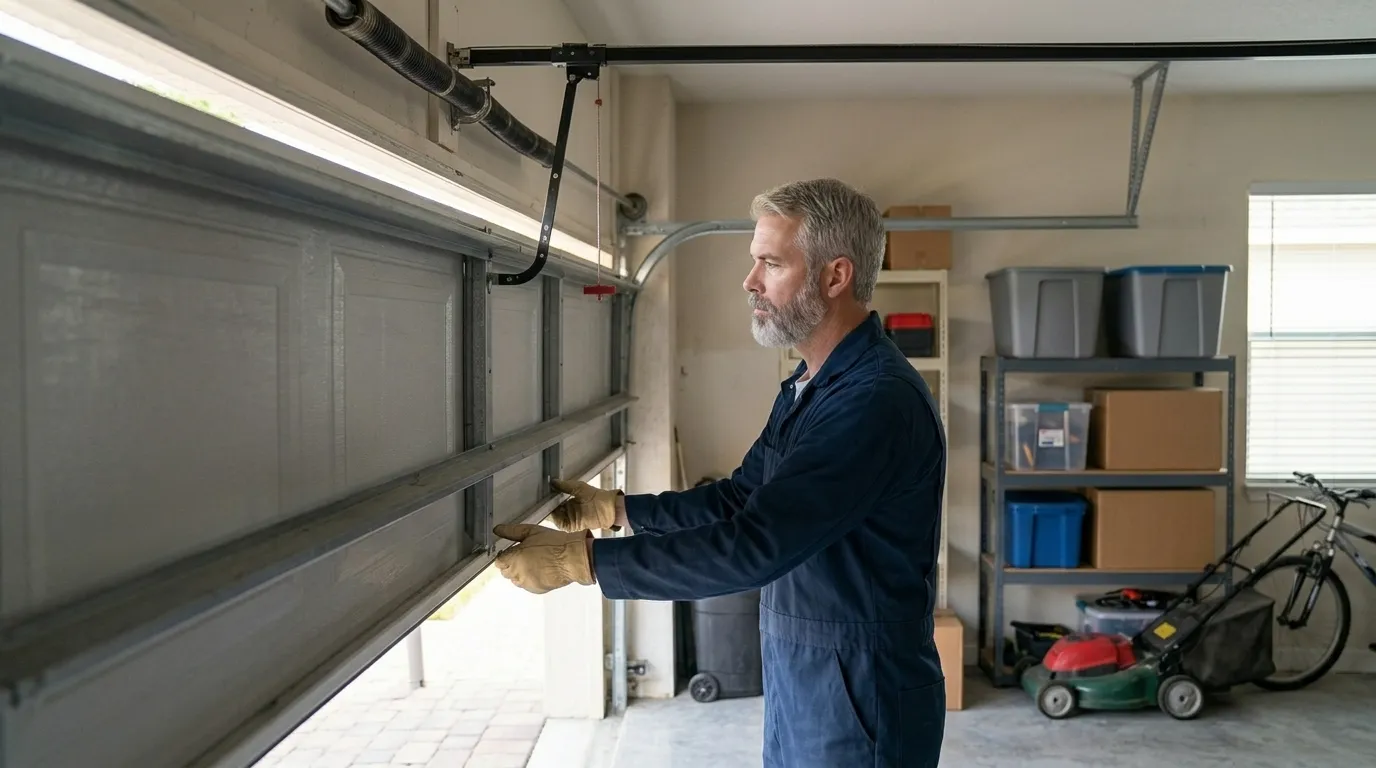
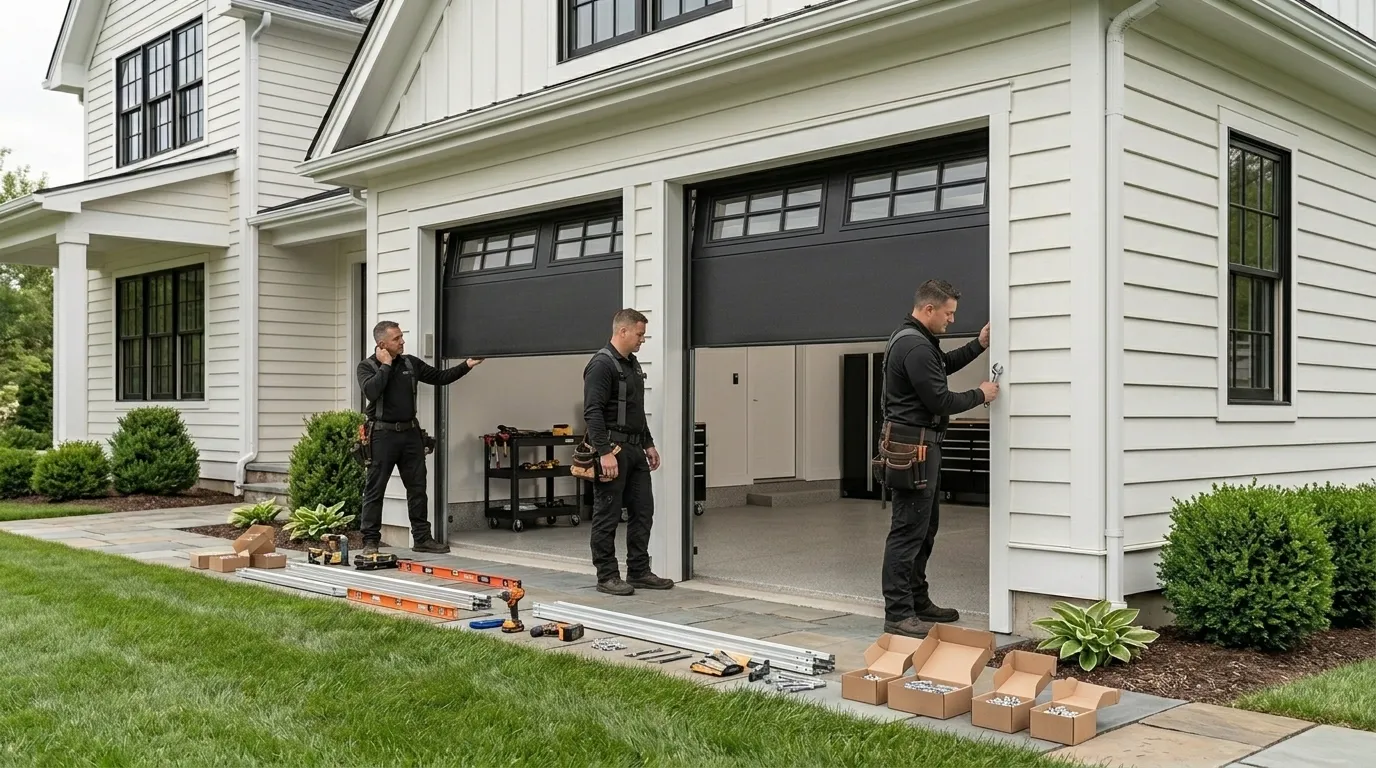
For a Lakeside door built anywhere near that 1984 median, the truck stock leans toward torsion and extension springs sized for lighter, uninsulated steel panels rather than today's thicker insulated doors. We also carry steel rollers and nylon replacements, bottom brackets, and the cable and drum hardware that wears out on doors that have never had it touched.
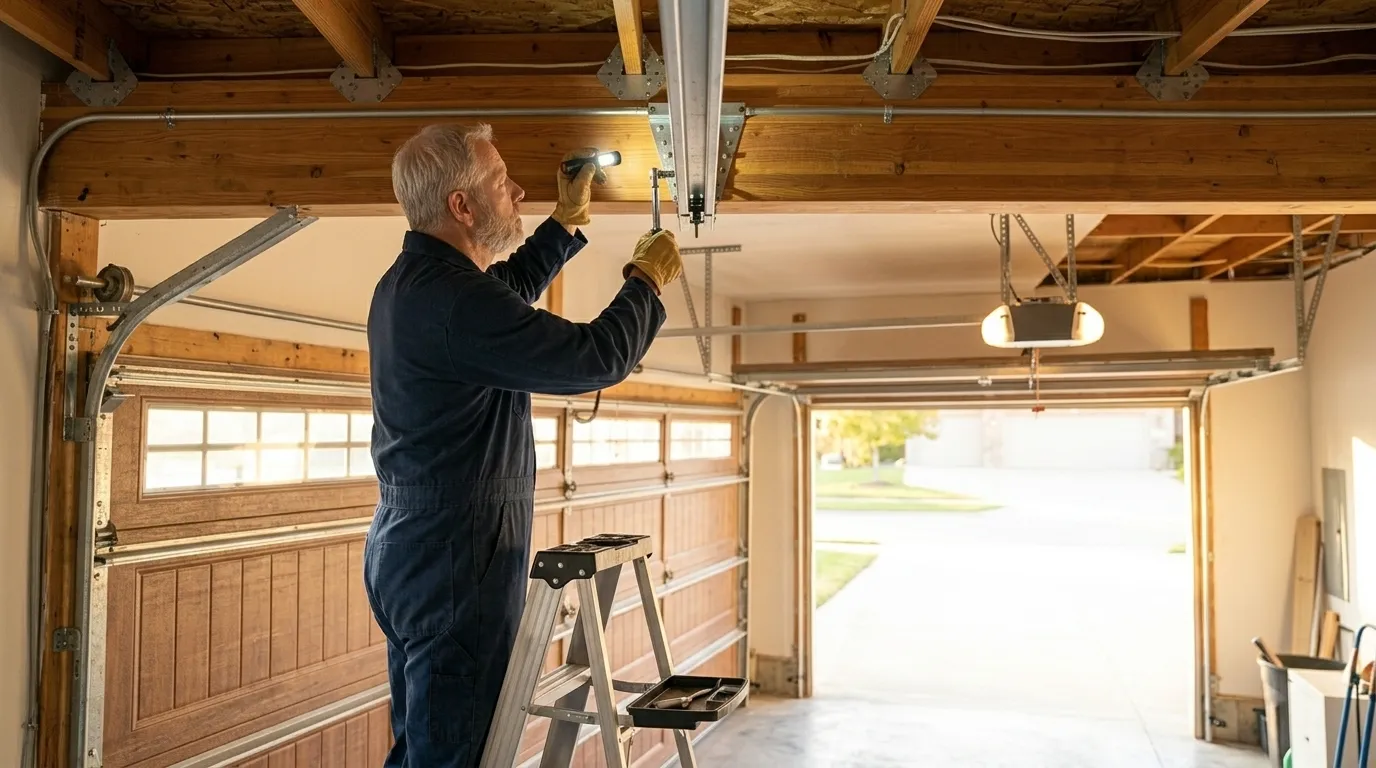
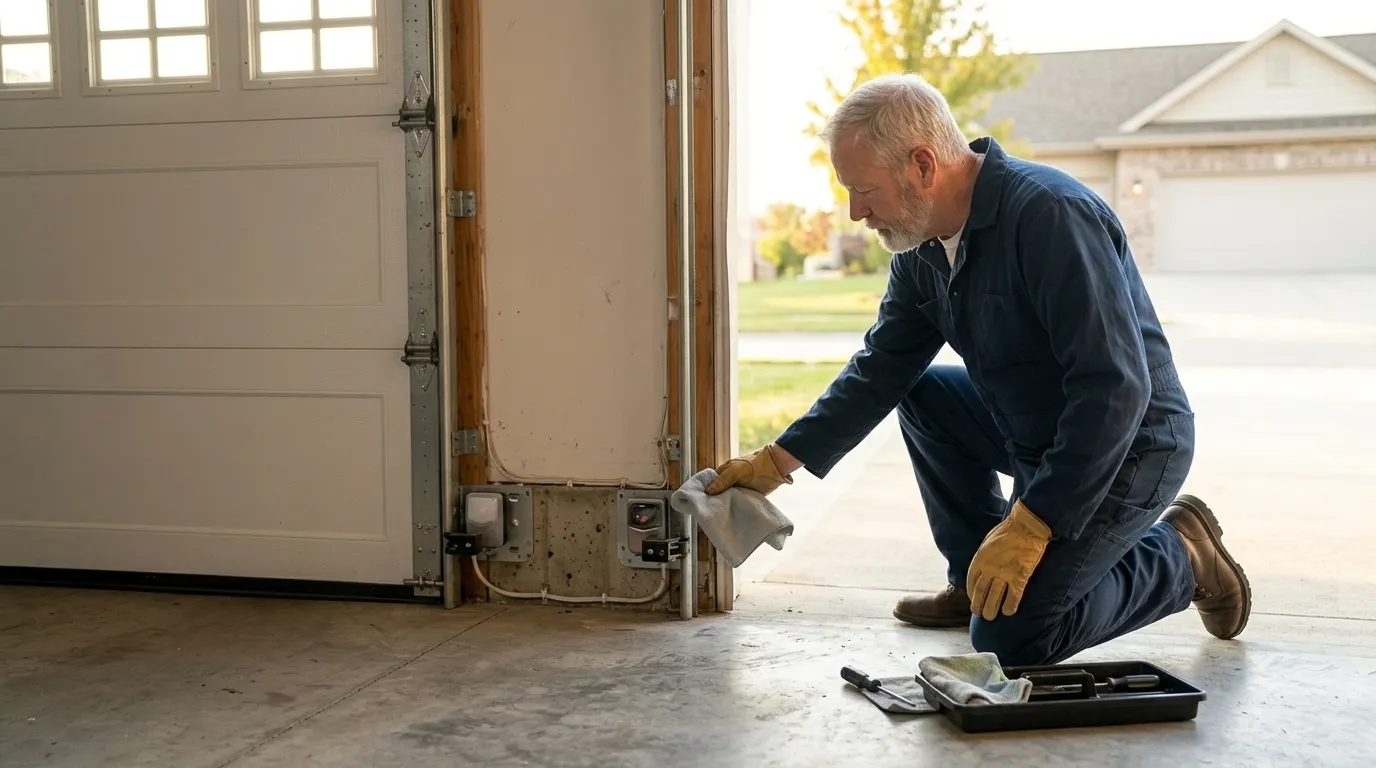
On openers, we stock the parts that keep an older chain-drive unit running - sprockets, chains, drive gears - but we're honest about the limit here: if your opener predates safety-reversal sensors and there's no way to retrofit them properly, replacement is the responsible call, not a repair. We won't patch a unit that can't meet basic safety standards just to avoid selling you a new one. Panel-wise, we can match steel sections for most doors from this era, but original wood-composite panels from the early '80s are harder to source exactly - sometimes the better fix is a new steel or insulated panel rather than chasing a discontinued match.