How It Shows Up
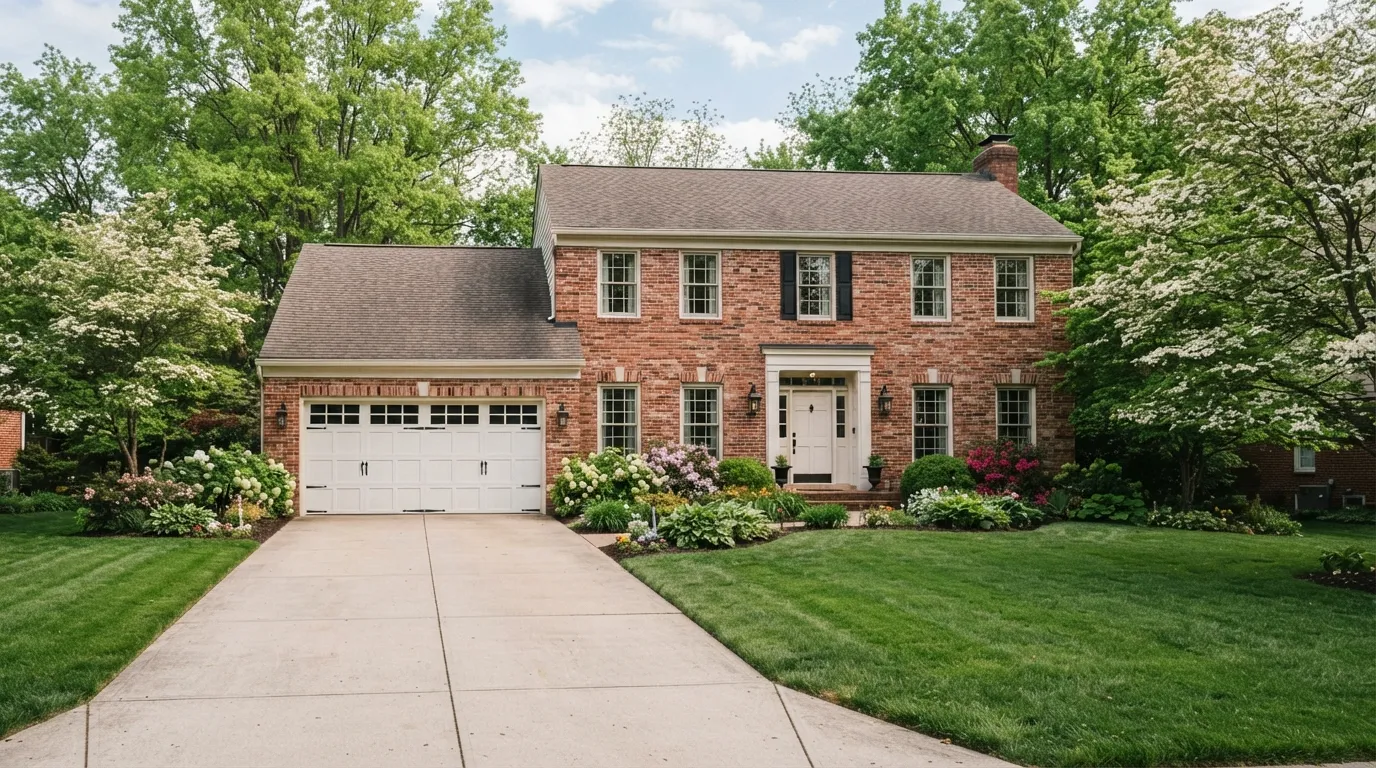
Most of Jacksonville Beach was built around 1983, just ahead of the 1985 median for the rest of the service area we cover out of Jacksonville. That two-year gap doesn't sound like much, but it means a lot of these houses got their openers in that first wave of chain-drive units from the early-to-mid 80s, and those motors are past their expected life span now.
What you notice first is usually small. The door hesitates before it moves. The remote works from the driveway but not from the street. The chain rattles louder than it used to, or the light doesn't come on when it should. Sometimes the door reverses for no reason halfway down, which on an old unit usually means the force settings have drifted, not that anything dramatic broke.
A few owners here have already swapped in newer belt-drive or smart openers, especially in houses that have changed hands recently. But plenty of original units are still running on borrowed time, and when they finally quit, they tend to quit all at once rather than giving much warning.
What Can Go Wrong
On a unit this old, the most common failure is a stripped gear inside the motor head. It's plastic on almost every consumer-grade opener from that era, and after enough cycles it wears down until the chain or belt just spins without lifting the door. You'll hear the motor running with nothing happening.
Circuit boards are the other weak point. Capacitors dry out, relays stick, and the board either stops responding to the remote or starts opening and closing on its own. There's no fixing a board like that - it gets replaced along with the rest of the head unit.
Older openers also carry security codes that don't rotate, which means a code grabber can capture your remote's signal and use it later. That's not a defect exactly, it's just the technology of the time, and it's one of the real reasons people upgrade rather than patch an old unit.
Less common but worth mentioning: safety sensor brackets that have bent or shifted over the years, which will stop a door from closing at all until they're realigned or replaced.
What You Pay
We don't have a set number to put on this page, and we're not going to guess one. Opener cost depends on horsepower, drive type - chain, belt, or direct drive - whether you want battery backup, and whether the existing rail and wiring can be reused or need replacing along with the motor head.
What we can tell you is what drives the price up or down. A straight swap onto existing rail and wiring, where the old bracket and sensors are still in good shape, costs less than a full teardown where the track, sensors, and wiring all need replacing too. Smart openers with camera and app control cost more than a basic chain unit, and that's true everywhere, not just here.
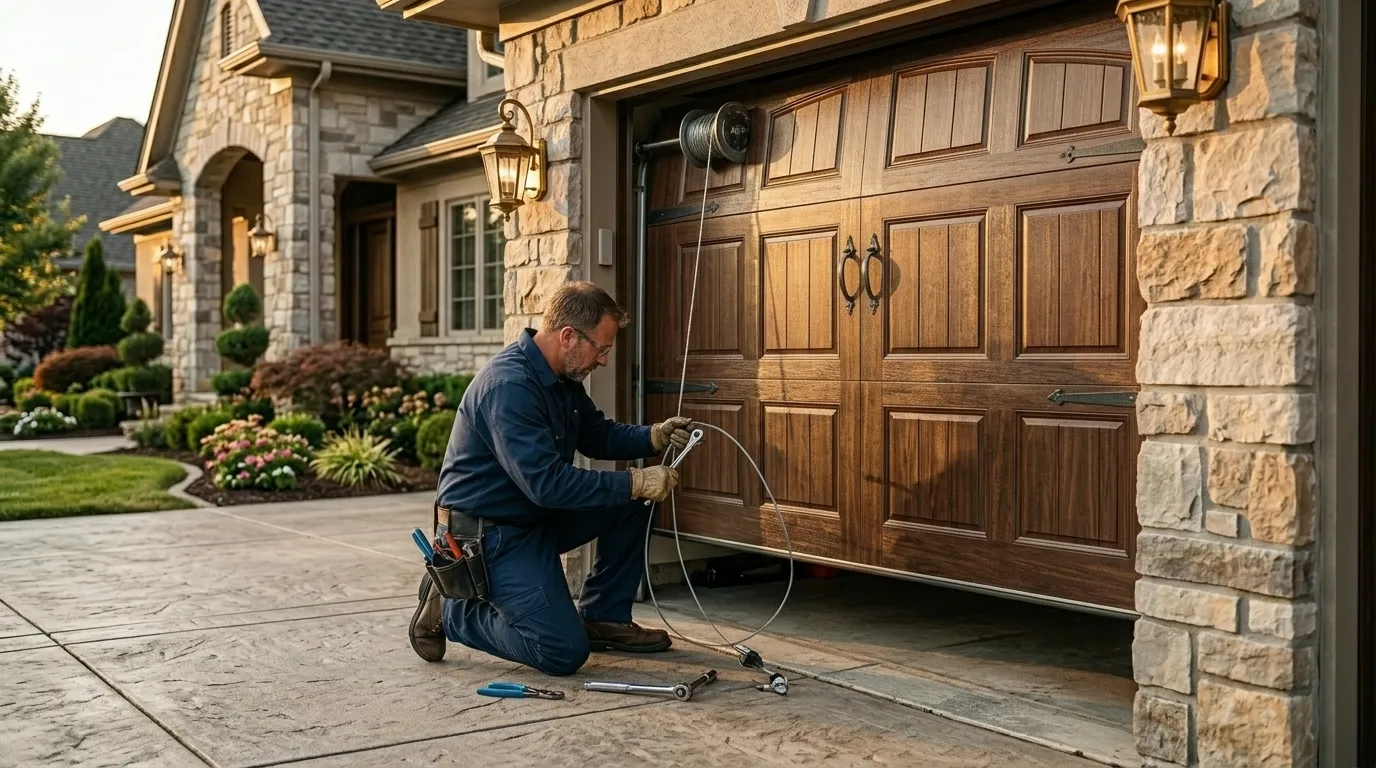
We quote the job after we've seen the door and the opener in place, not before. On a house from the early 80s, we're also checking whether the door's springs and hardware are original, because installing a new motor on a poorly balanced door is a quick way to burn out the new unit early.
What the Fix Involves
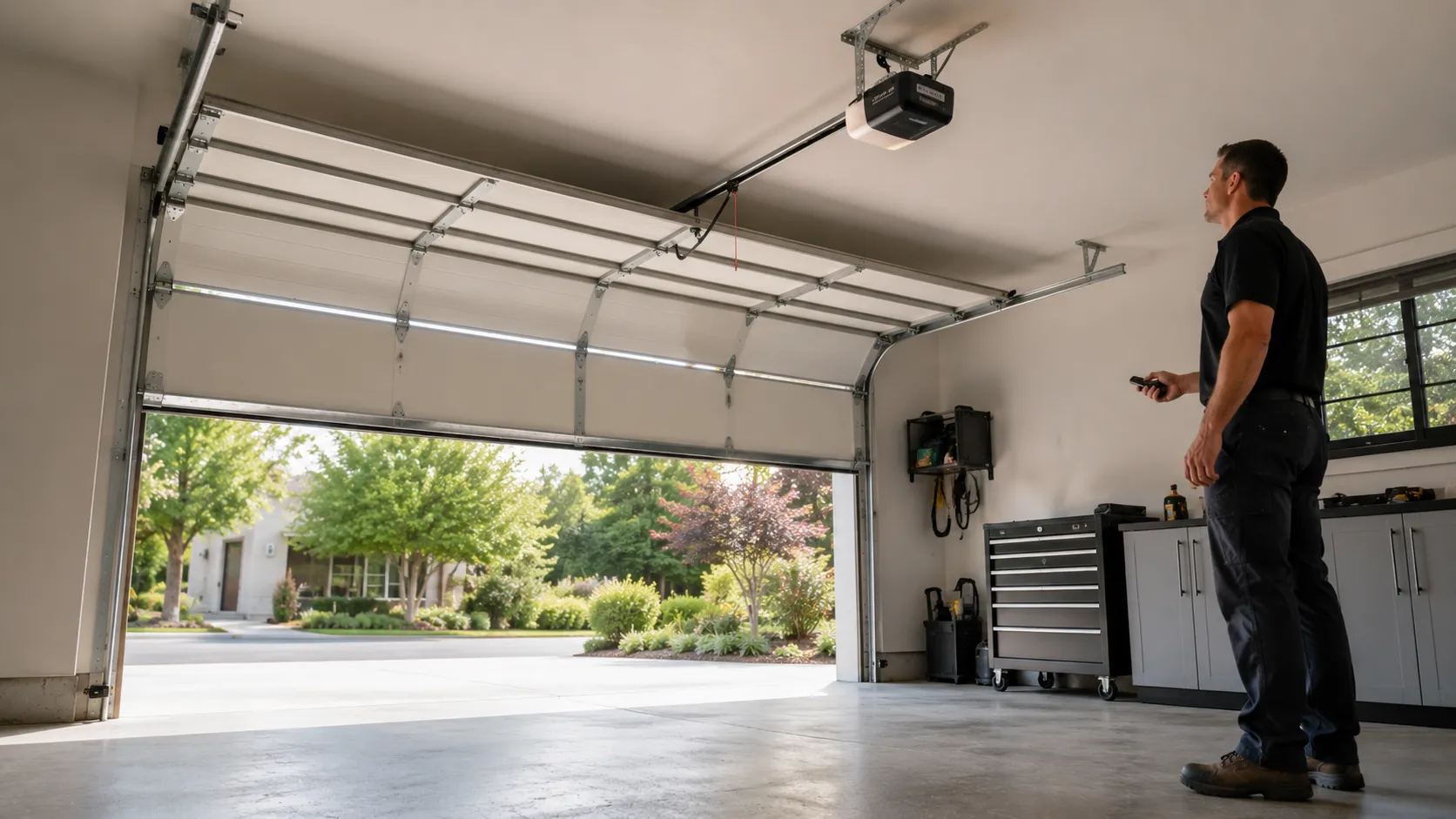
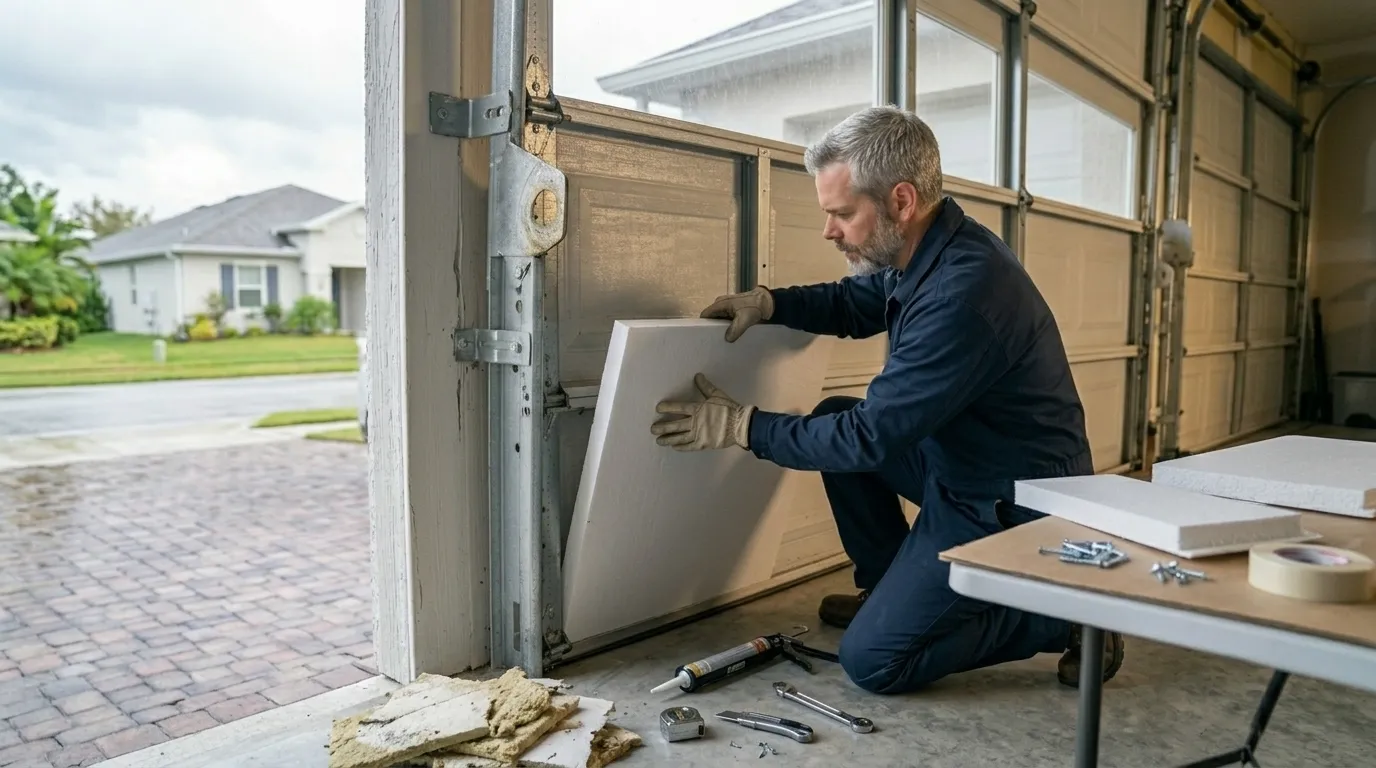
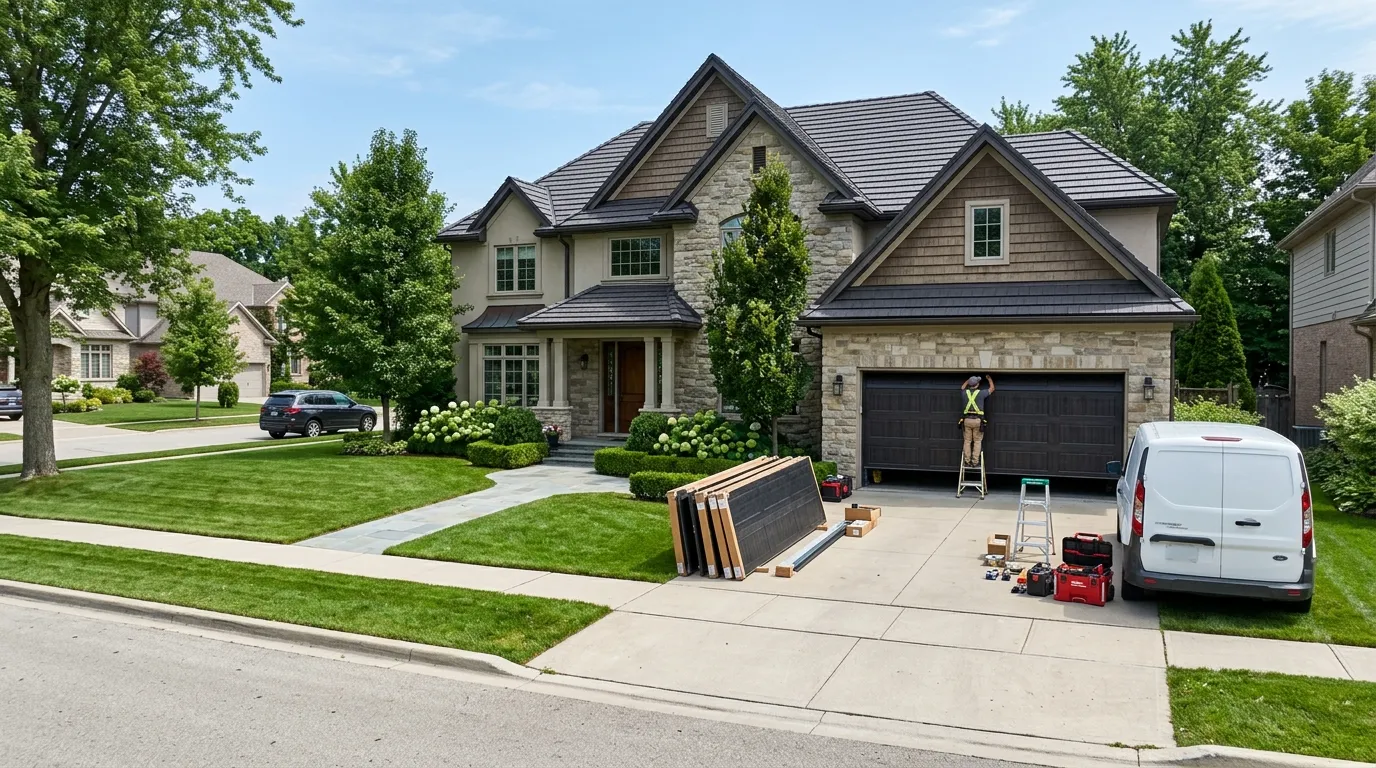
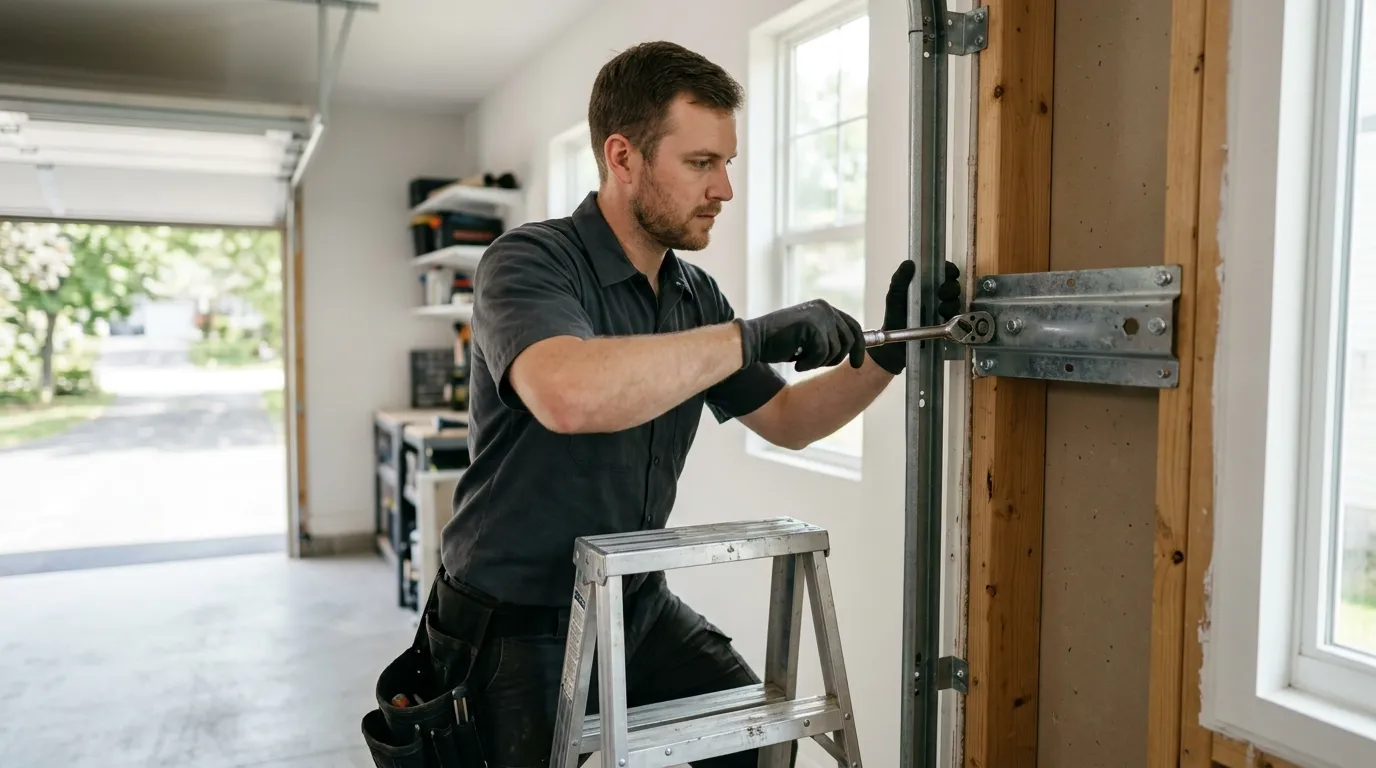
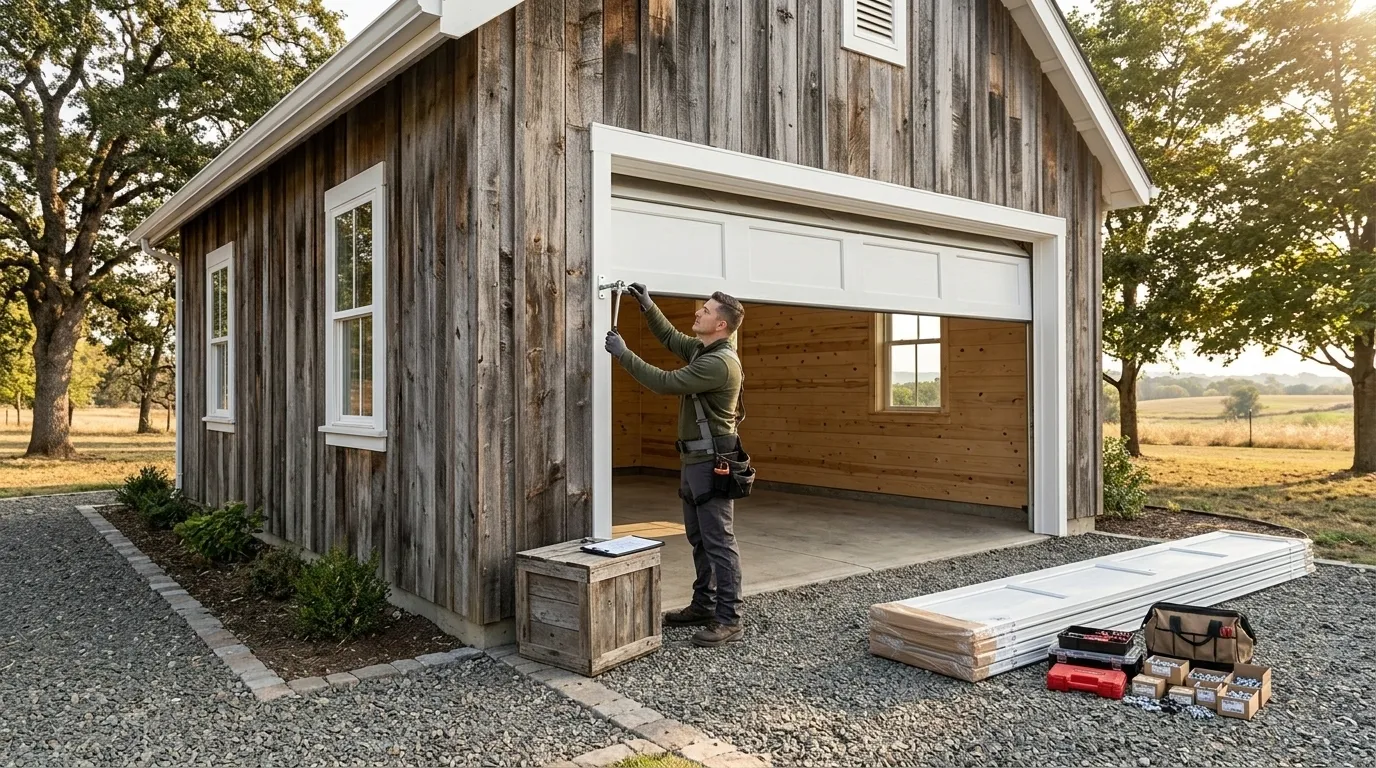
The old motor head comes down first, along with the rail if it's being replaced. We check the door itself before mounting anything new - spring tension, roller condition, track alignment - because a new opener fighting an unbalanced door will fail early no matter how good the motor is.
Once the new head is mounted and the rail is run, we set the travel limits so the door opens and closes fully without straining at the top or slamming at the bottom. Then we test the safety reversal: the door has to stop and back up the moment it meets resistance, every time, before we call the job done.
Last comes the remotes and keypad, and if it's a smart opener, pairing it to the household Wi-Fi and the app. We walk through the controls with you before we leave - where the manual release is, how to reset a remote, what the warning lights mean if something trips later.