Serving Jacksonville, FL & nearby
(904) 920-0032
Jacksonville, FL

Garage Door Maintenance for Jacksonville Beach Homes

Jacksonville Beach homes average income $115,825 and mostly date to 1983 - here's what maintenance actually costs and when a fix isn't worth it.

Garage Door Maintenance for Jacksonville Beach Homes
Jacksonville, FL
8 services
5 service areas
Diagnosis first, then the fix

How It Shows Up

Start with the money, because it changes the conversation. Jacksonville Beach households run a median income of $115,825, well above what you'll see in a lot of the service area. That matters here because at this income level, a $250 tune-up that keeps a door running another five years is an easy yes - but it also means homeowners here are quicker to call for a full opener swap when a repair would have done the job just as well. We see both mistakes: people who let a noisy door run for years past the point of cheap fixes, and people who replace a door that needed nothing but a spring adjustment and some lube.

With 10,837 households in Jacksonville Beach and a median year built of 1983, most of the doors we see here are on their second or third opener but often still running original track and hinges from the build. That mix - newer opener, old hardware - is where maintenance problems start. The opener masks a stiff track by working harder, until it doesn't.

What Can Go Wrong

A door built out of a 1983 median means 40-plus years on hinges and rollers that were never meant to last that long without service. The most common thing we find on a maintenance call here is a track that's walked out of alignment from decades of small settling in the slab, paired with rollers that have worn oval instead of round. Neither one stops the door on its own. Together, they make the opener strain, and that's what finally brings the service call.

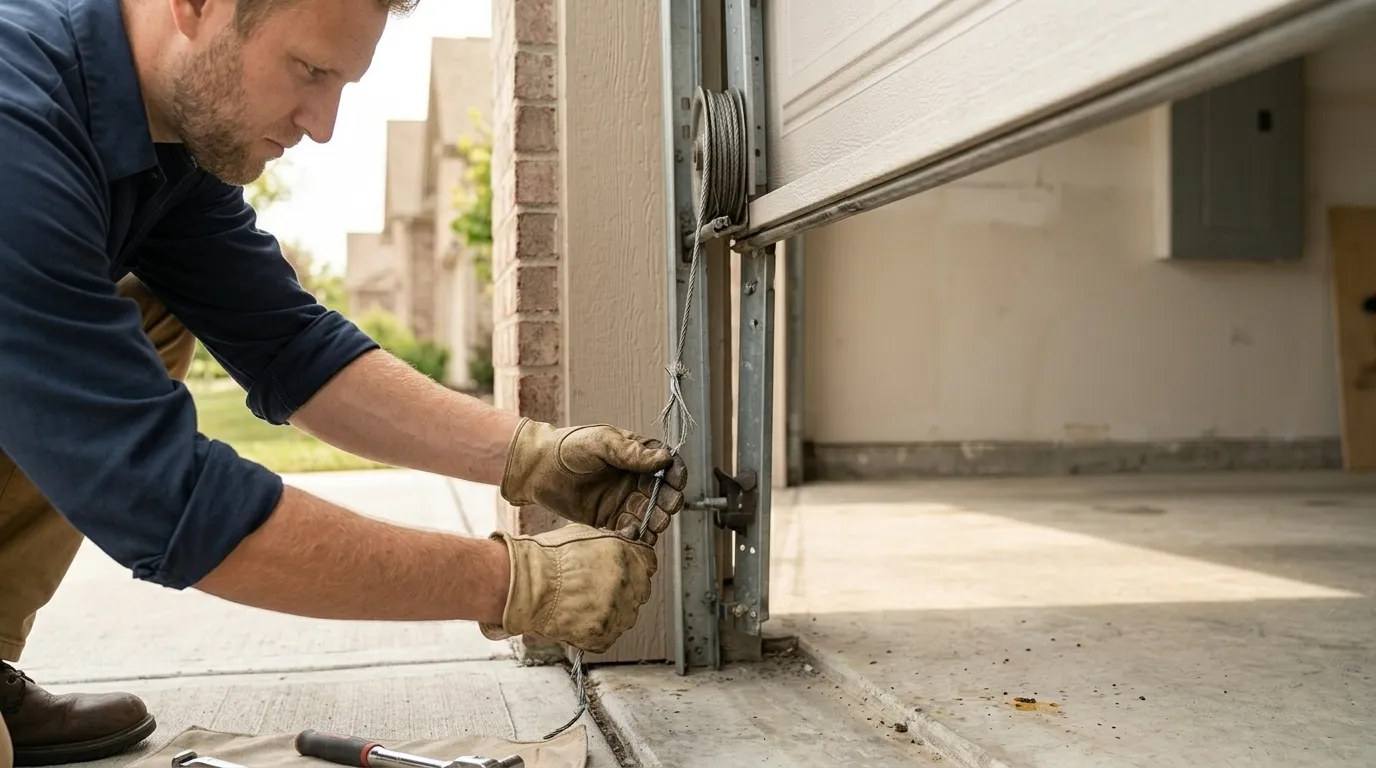
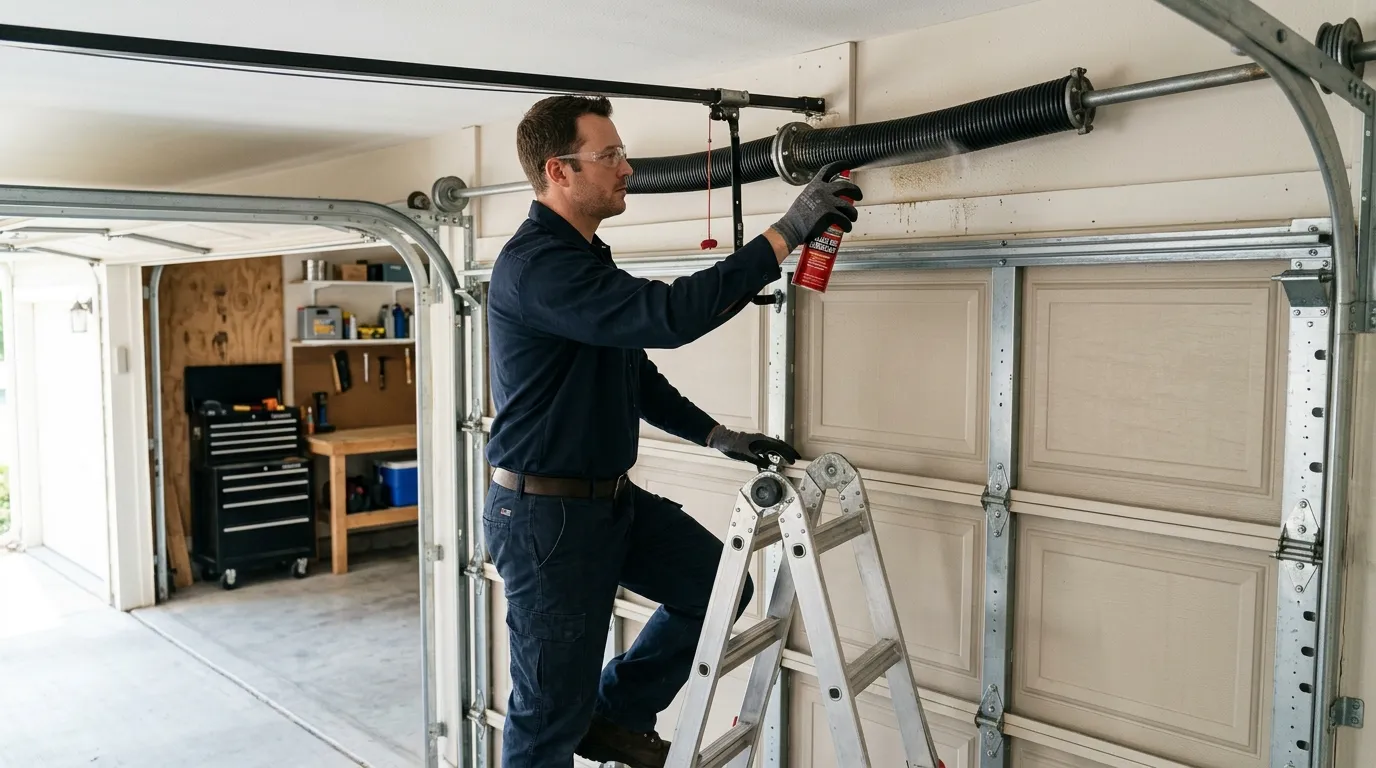
Springs are the other piece. A torsion spring rated for a certain door weight loses tension slowly, cycle by cycle, and on a house from the early-to-mid 1980s that spring has had four decades to give. Nobody notices gradual spring wear until the opener starts groaning or the door won't lift past halfway. That's not an opener problem - it's a spring that should have been checked ten years earlier.

What Causes It Around Here

The housing stock across this part of the service area was built between 1973 and 2007, with a median around 1985 - Jacksonville Beach sits close to that, at 1983. Doors from that build era were sized for lighter, single-layer panels. A lot of owners have since swapped in heavier insulated doors without upgrading the spring or reinforcing the track brackets, which puts more load on hardware that was never rated for it.

The area's climate band is mild temperate, so we're not dealing with the freeze-thaw cycling that tears up hardware in colder regions. That's a point in your favor - metal fatigue happens slower here. But humidity and salt air near the coast still do their own quiet work on springs and fasteners, which is a different kind of wear than what inland parts of the service area see, and it's the reason corrosion on exposed hardware shows up here before it does on a door of the same age fifteen miles inland.

What You Pay

We don't have a fixed price to publish for a full maintenance visit, so I won't invent one. What I can tell you is how the decision usually breaks down: at Jacksonville Beach income levels, most homeowners land on the side of paying for a proper tune-up rather than letting small wear turn into a spring failure or a track replacement. A tune-up run - lubrication, hardware tightening, spring tension check, track alignment - costs a fraction of a spring replacement, and a fraction of a fraction of a full door swap.

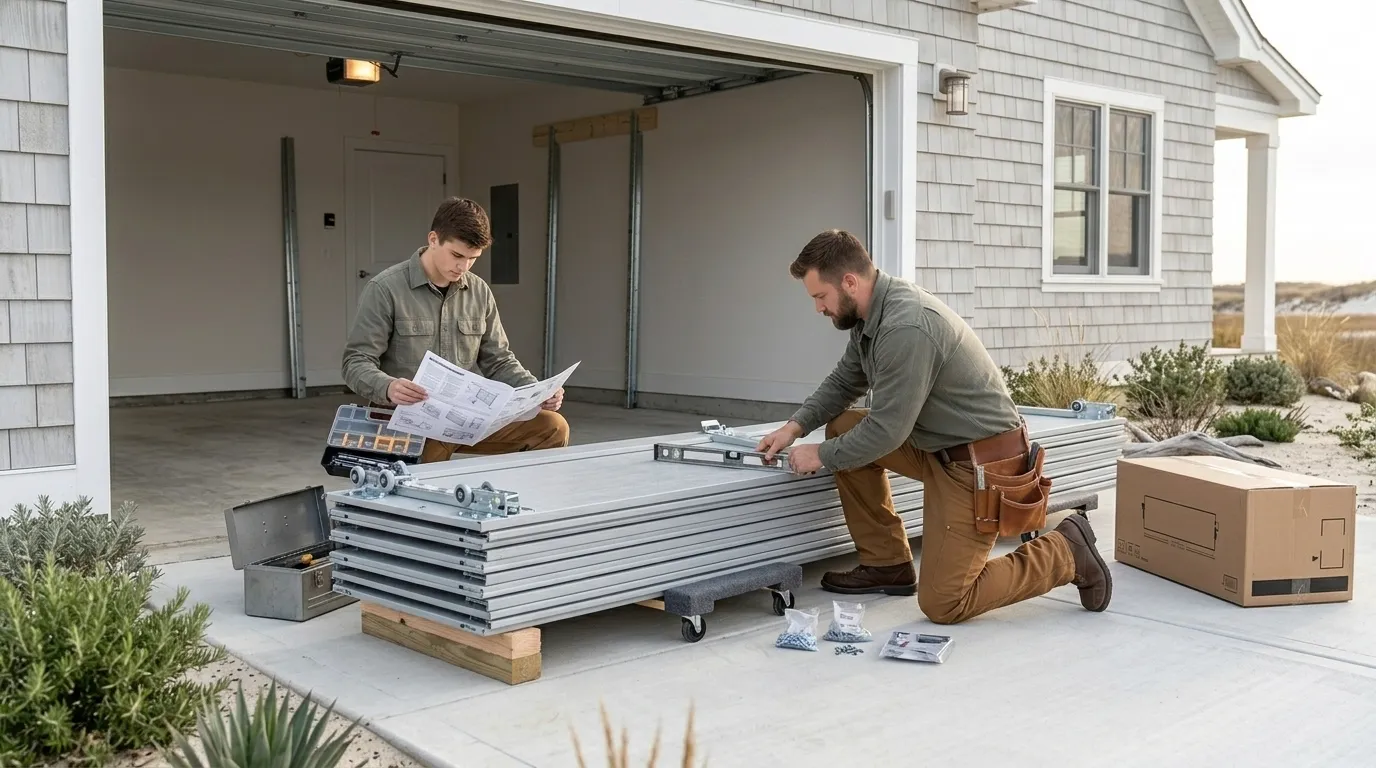
The repair-or-replace line for a 1983-era door usually comes down to the springs and the opener, not the panels themselves. If the springs are original and the opener is past its expected life, replacing both at once often costs less than doing them separately across two service calls, and it resets the clock on the parts most likely to fail next.

What the Fix Involves

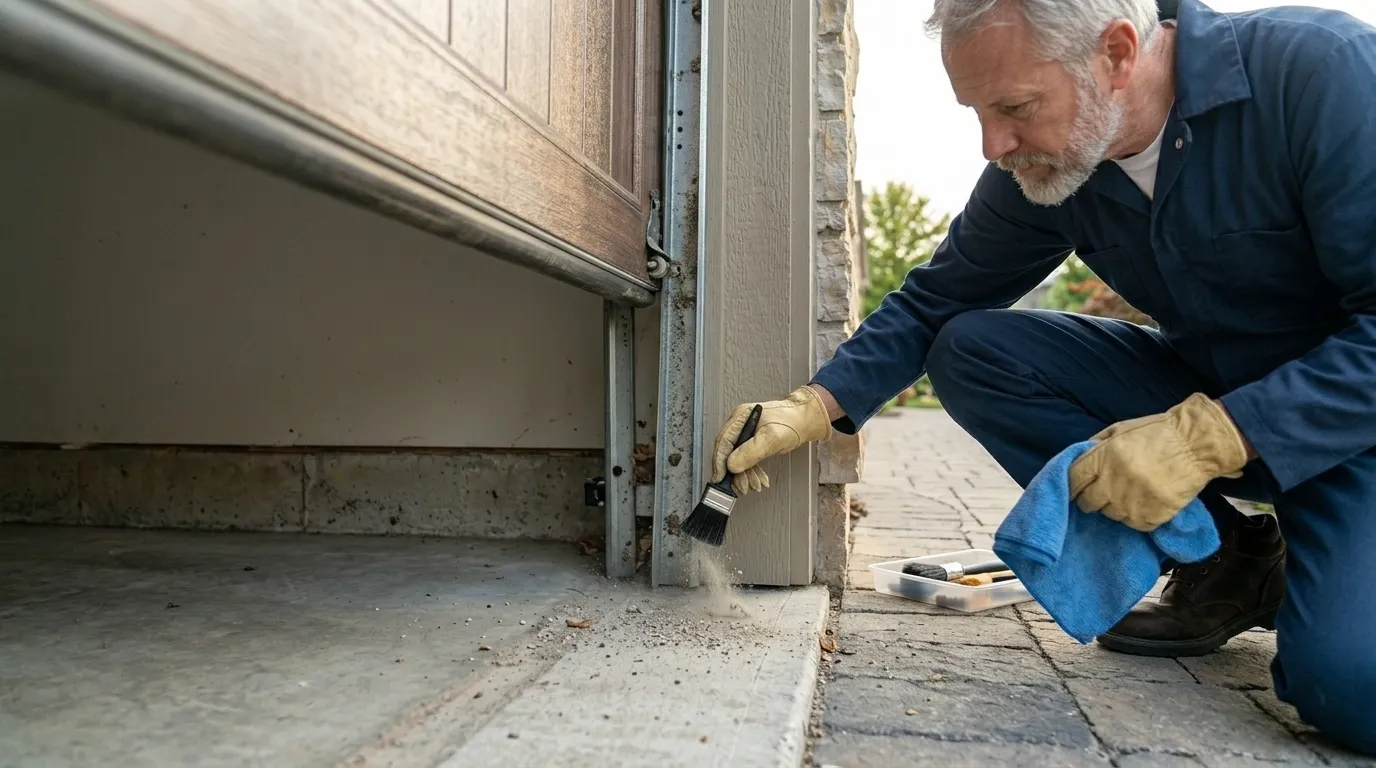
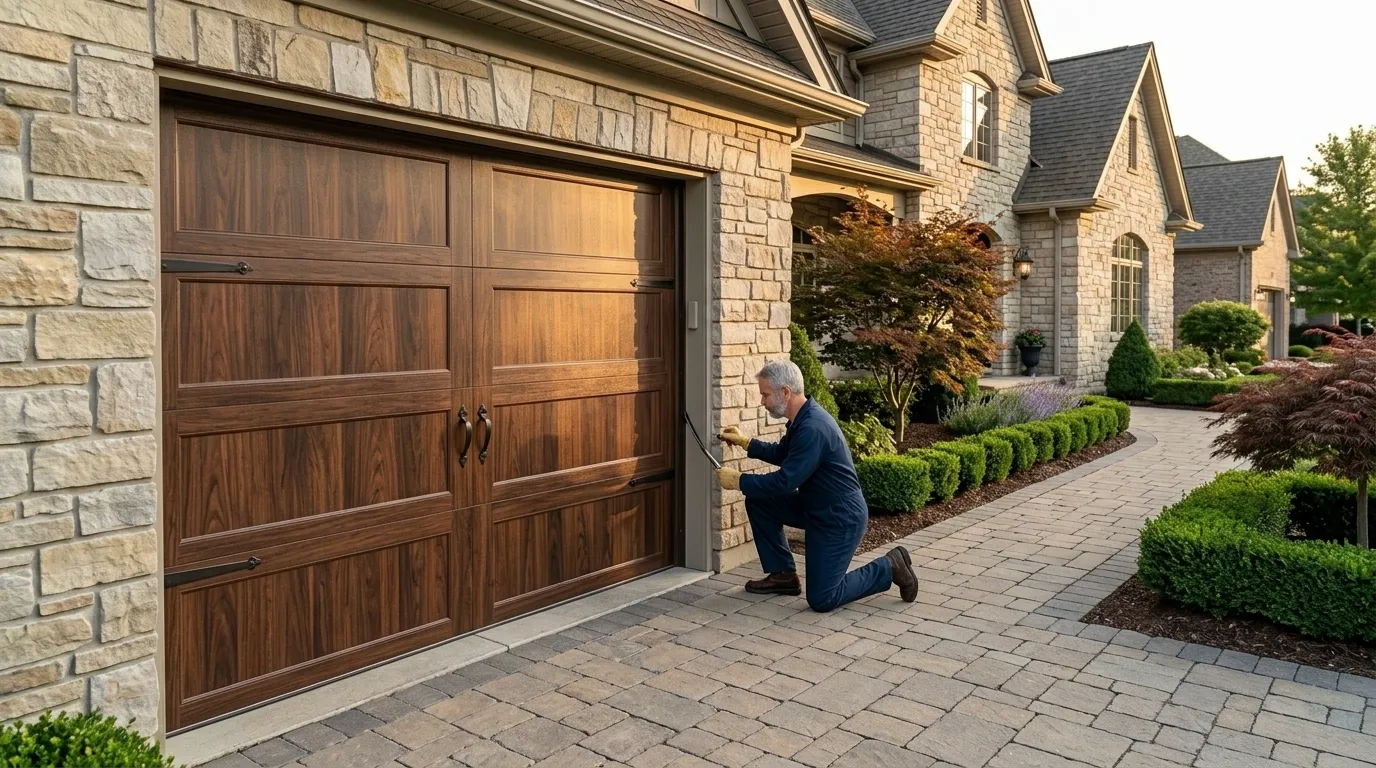
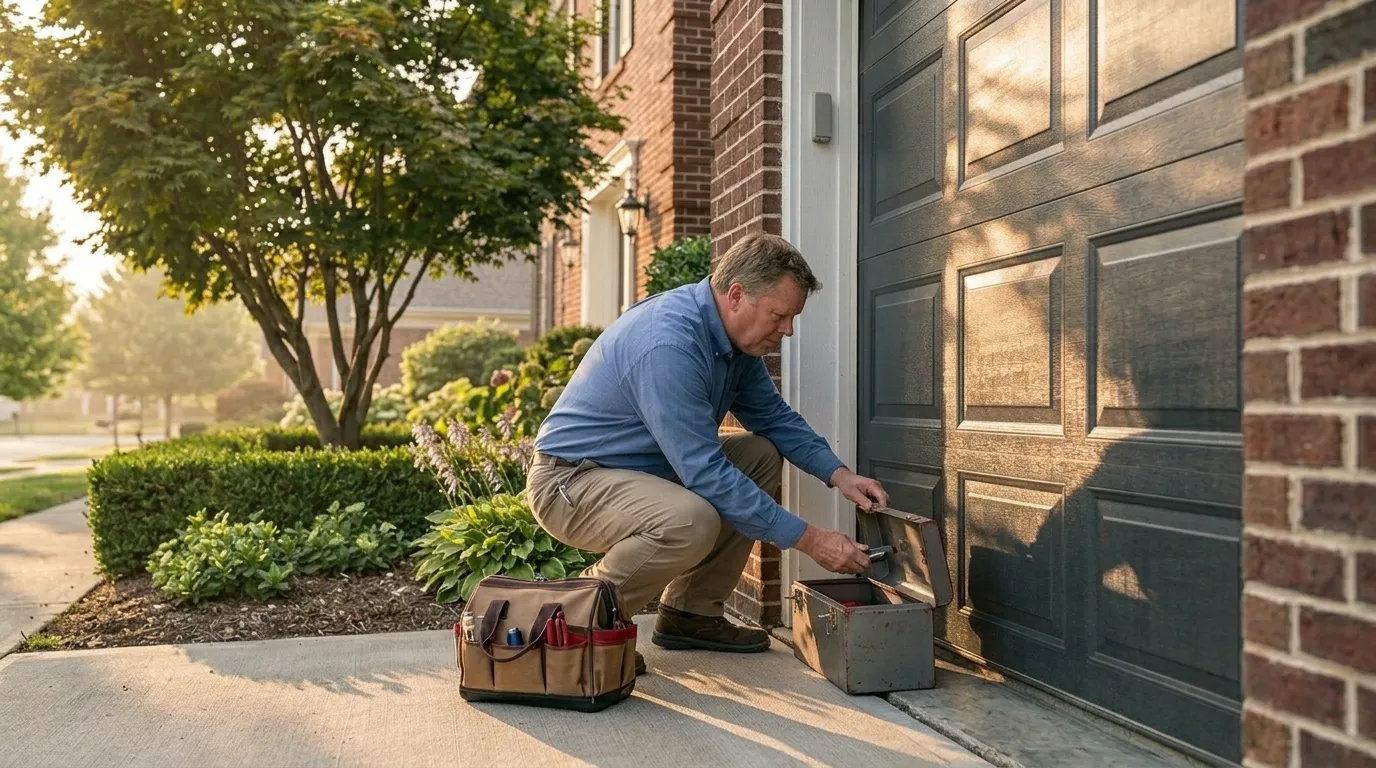
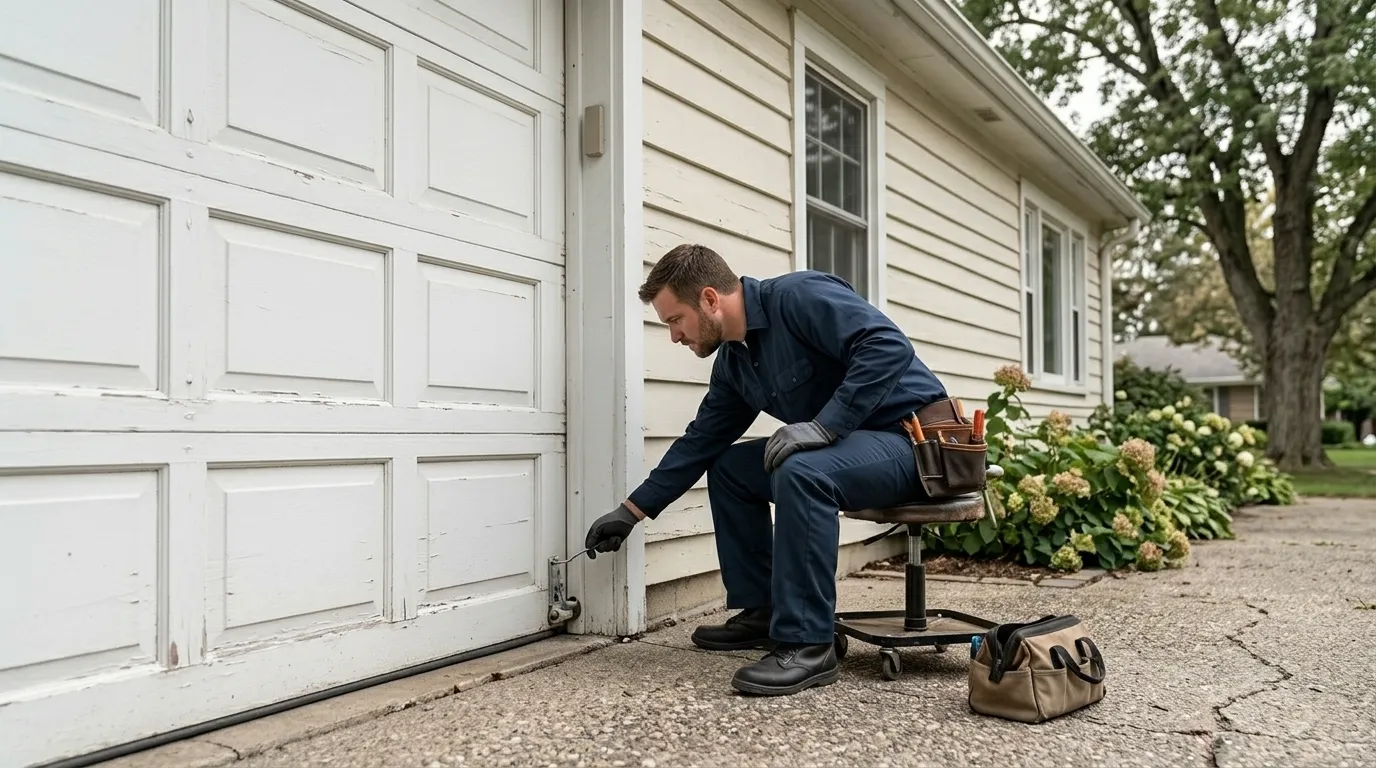
A real maintenance visit starts with the springs - checking tension, looking for gaps or rust on the coils - then moves to the track, checking for bends, gaps at the brackets, and alignment top to bottom. Rollers get inspected for wear and lubricated or swapped if they're worn oval. Cables get checked for fraying, which on a door this age is common even if nothing looks obviously wrong from the ground.

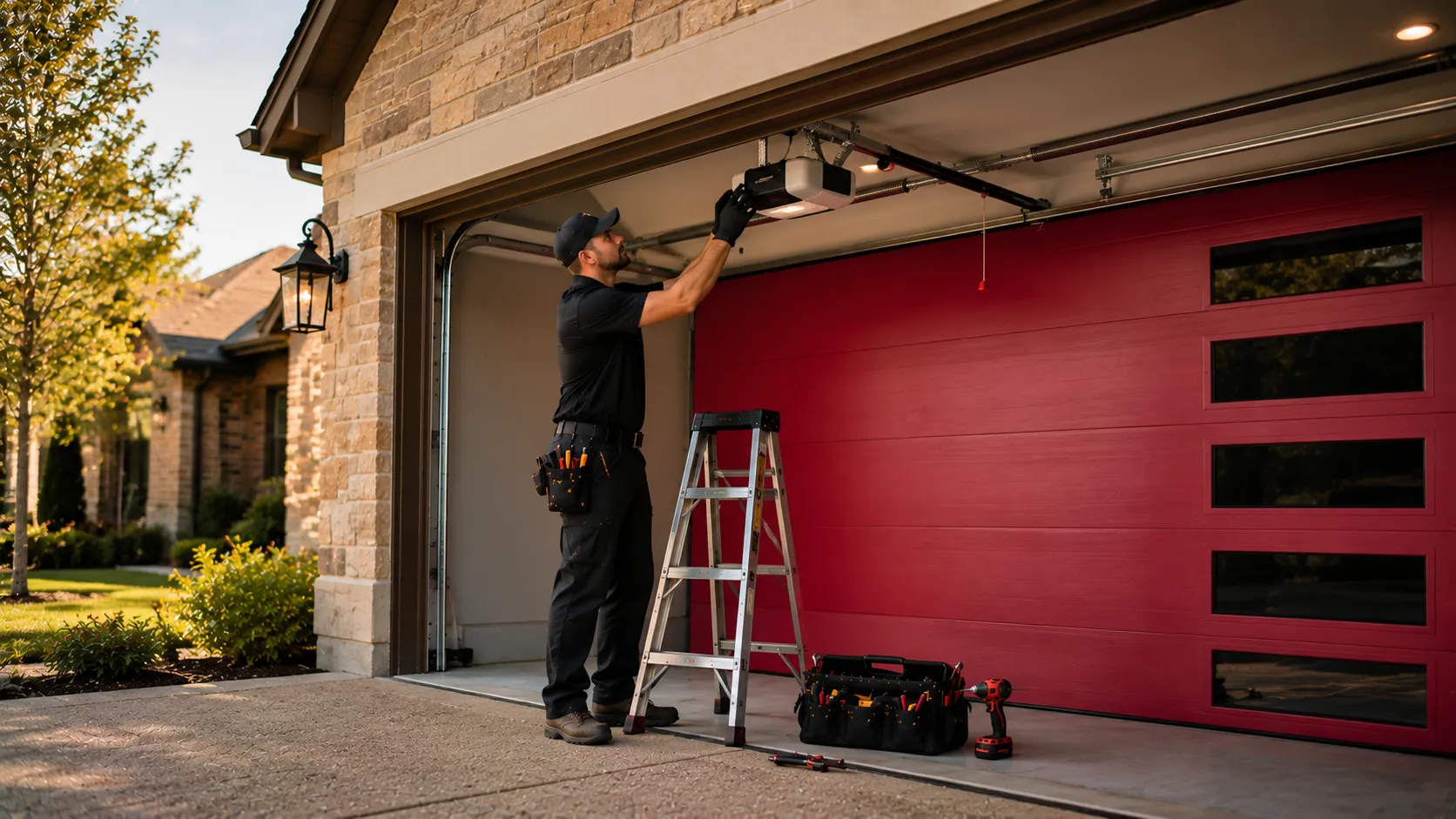
Last, we test the opener's force settings and safety reverse. An opener that's been compensating for stiff hardware for years is often set too aggressively, which is a safety issue as much as a mechanical one. Fixing the hardware and then re-testing the force settings together is the part people skip when they only fix the symptom.
The DIY Question

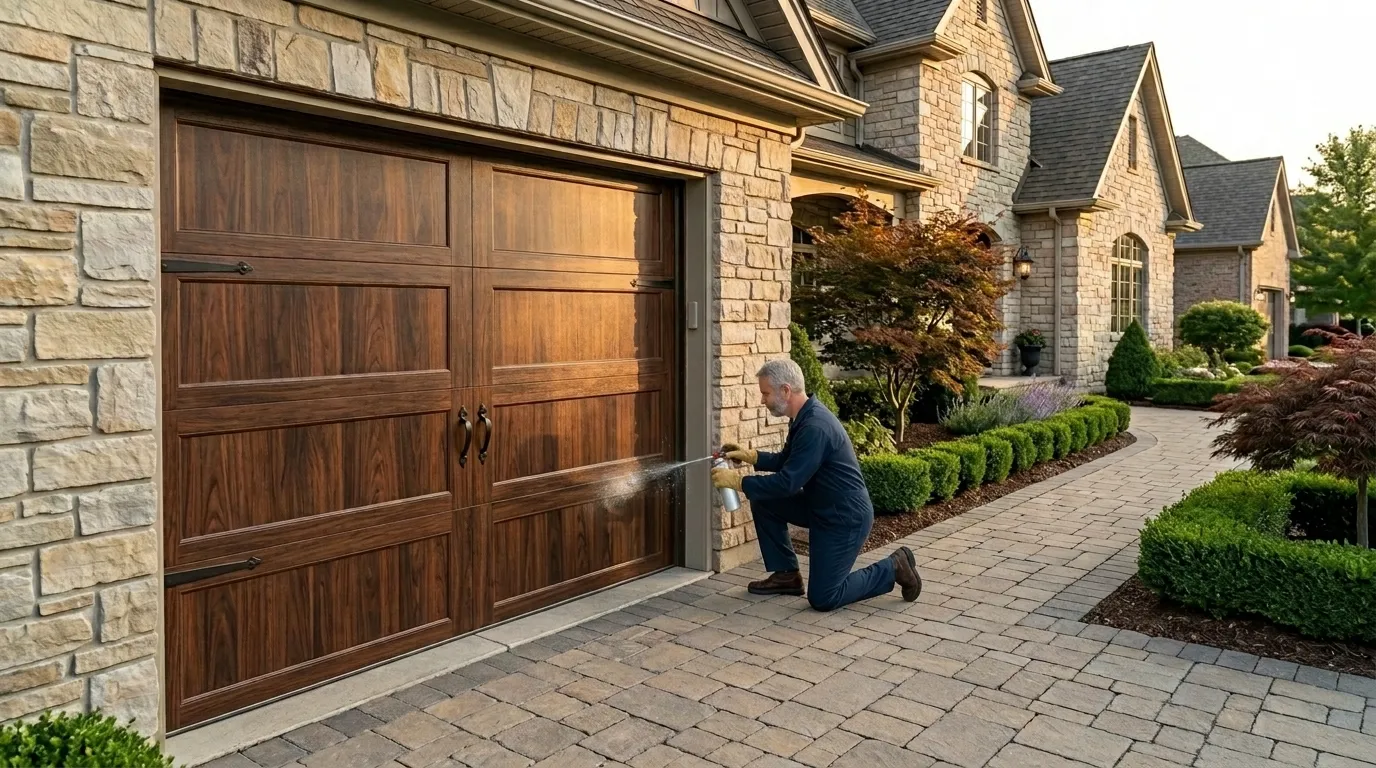
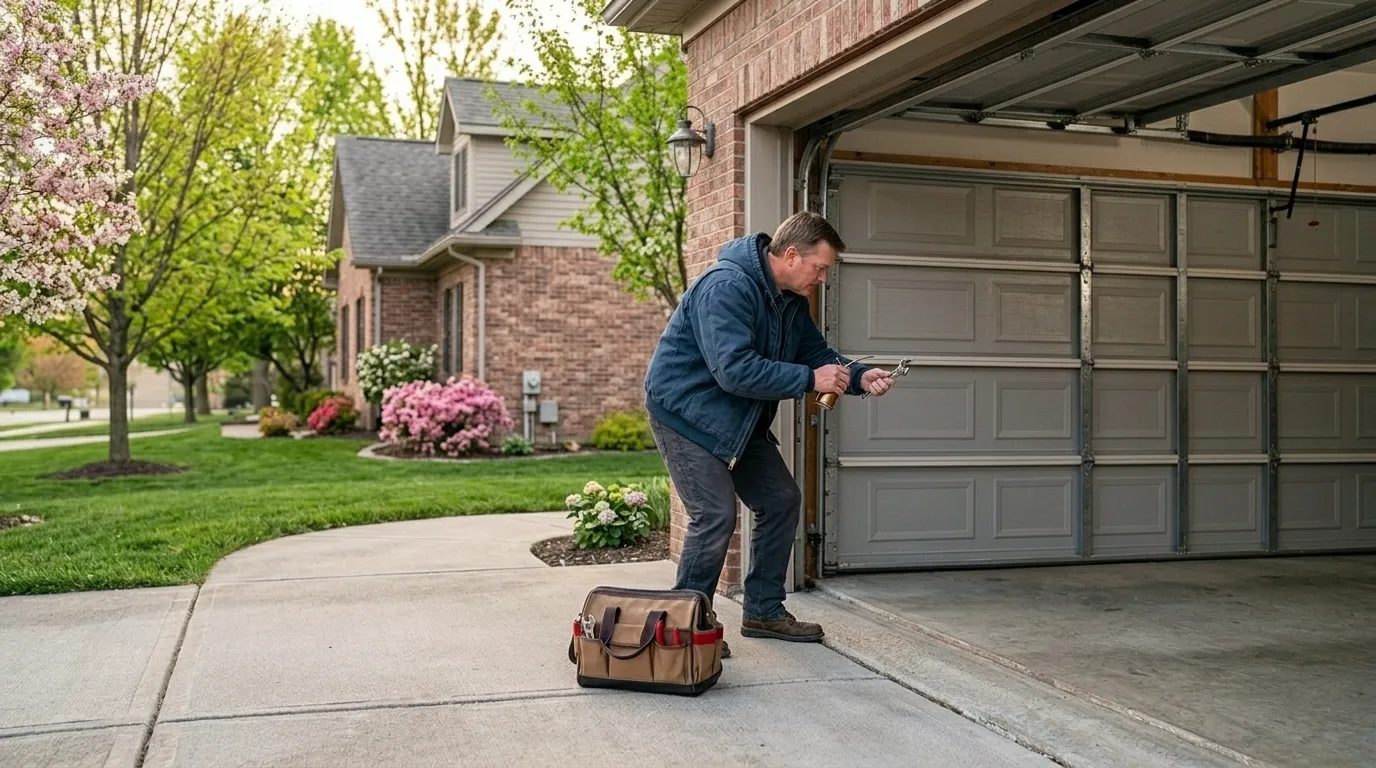
Lubricating hinges and rollers with the right garage-door lubricant, and visually checking cables for fraying, is reasonable for an owner to do twice a year. Springs are not. A torsion spring under tension can do real damage if it's handled wrong, and on a door built to 1983-era specs, you often can't tell how much tension is left in a spring just by looking at it.

The honest limitation here: we can't tell you over the phone whether your door needs a $60 lube job or a spring replacement. Coastal salt air corrodes hardware in ways that aren't always visible from the ground, so a visit is the only way to know for sure - not because we want to upsell you, but because guessing wrong with a torsion spring is how people get hurt.

How it works

From “it’s stuck” to “it’s fixed”

Tell us what’s wrong - Jacksonville garage door service

Tell us what’s wrong

Describe the symptom - won’t open, loud bang, opener runs but the door won’t move.

On-site diagnosis - Jacksonville garage door service

On-site diagnosis

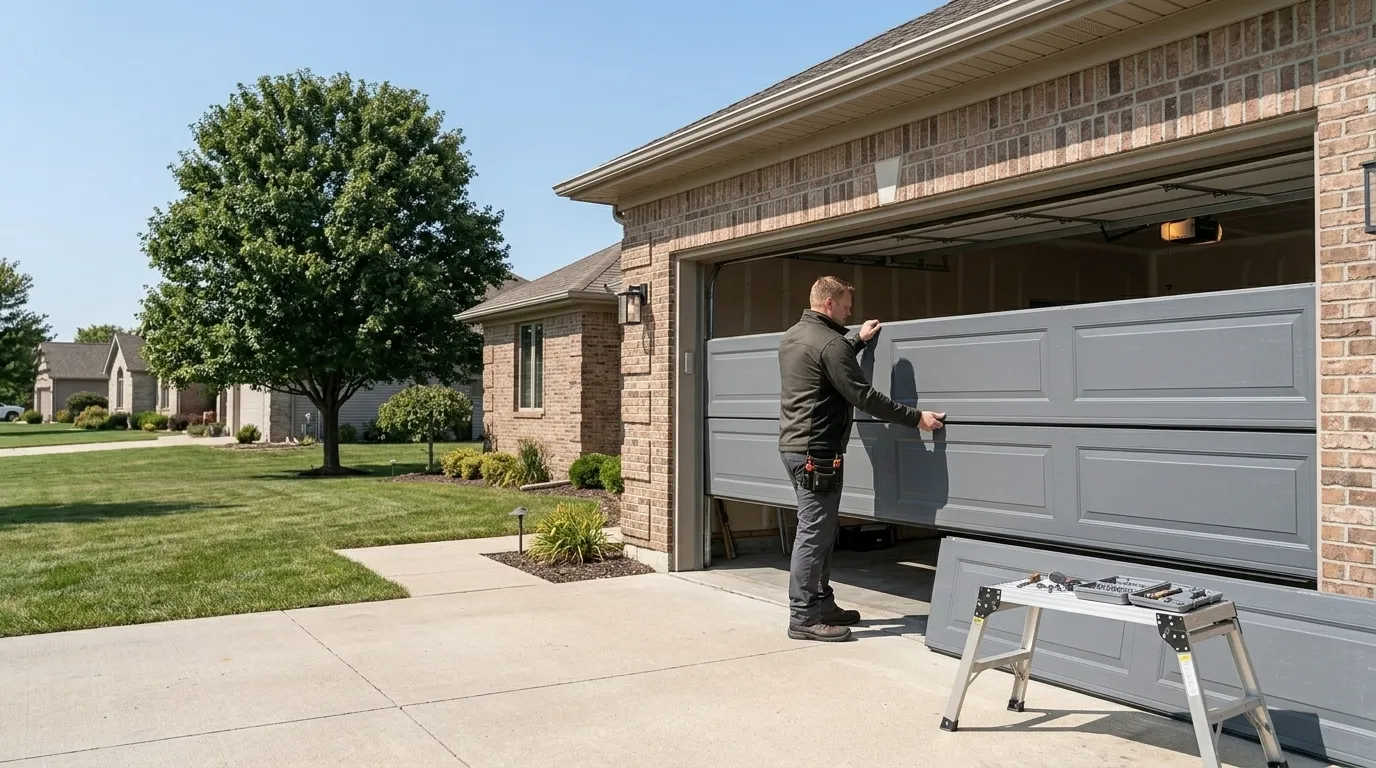
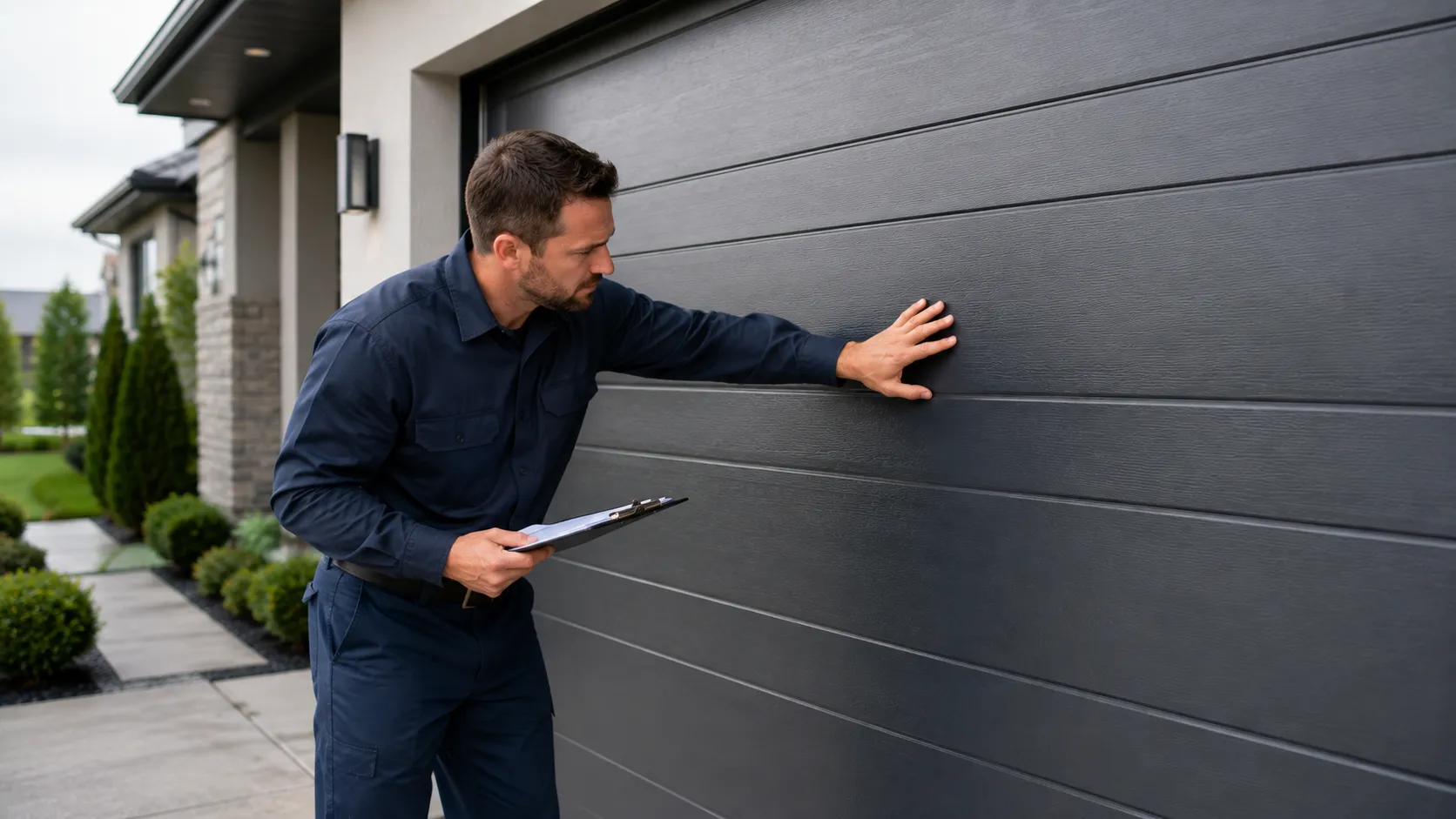
A technician tests the door under power and by hand and finds what actually failed.

Clear, up-front plan - Jacksonville garage door service

Clear, up-front plan

You get the fix that’s needed and what drives the cost - before any work starts.

Repaired & tested - Jacksonville garage door service

Repaired & tested

The repair is done, the door is set true and tested, and the work area left clean.

Serving Jacksonville, FL - tell us what your door’s doing and we’ll take it from there.

How we work

What to expect

A straight, honest approach on every Jacksonville job - diagnosis first, the right parts, and clean work.

01

Diagnosis first

Every visit starts by finding what actually failed - not a pre-written parts list.

02

The right part for the door

Springs and openers matched to the door’s weight and age, so the fix holds up.

03

Straight answers

When a repair makes more sense than a replacement - or the reverse - you hear it plainly.

04

Clean, careful work

Tension released safely, hardware set true, the door tested under power before we leave.

1,009,833Residents in Jacksonville
8Garage door services
5Neighborhoods & suburbs
FLServing Jacksonville, FL
Questions

Frequently asked

Straight answers about garage door repair in Jacksonville. Still unsure? Ask us directly.

How often should a garage door in Jacksonville Beach get maintenance?

Twice a year is reasonable given the mild coastal climate here - once in spring, once in fall. Salt air speeds up corrosion on exposed hardware compared to inland parts of the service area, so hinges, springs, and cables are worth a closer look each visit than you might give them fifteen miles inland.

My door is from the 1980s - is it worth maintaining or should I just replace it?

Depends on what's original. If the panels are sound but the springs and rollers are original to an early-1980s build, a tune-up plus a spring swap usually costs far less than a full replacement and buys years of life. If the opener is also original, replacing opener and springs together in one visit is often the better value.

Does the coastal air really affect maintenance needs?

Yes. The area's climate is mild temperate, so metal fatigue from freeze-thaw isn't a factor, but salt air corrodes exposed fasteners, springs, and unprotected hinges faster near the coast than it does further inland. That's a maintenance schedule difference, not a dramatic one - just worth checking more often.

Can I do garage door maintenance myself?

Lubrication and visual inspection of cables and rollers, yes. Spring tension and adjustment, no - a torsion spring holds real force and misjudging it on a decades-old door can cause injury. We can't tell you which one you need without seeing the door.

Ready to get your garage door sorted?

Tell us what it’s doing and where you are in Jacksonville - we’ll take it from there.

8Services offered
5Areas covered
Diagnosisfirst, then the fix
Request a QuoteCall