
How It Shows Up
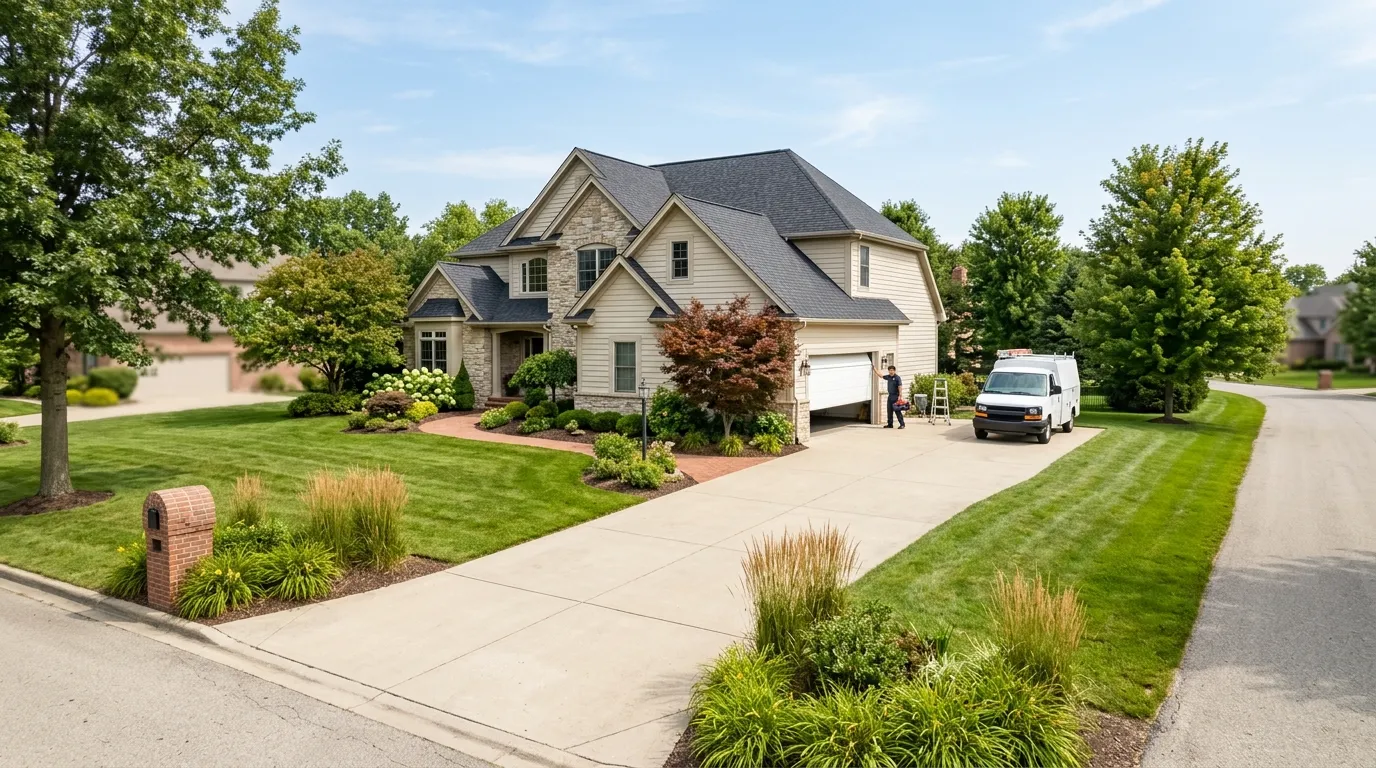
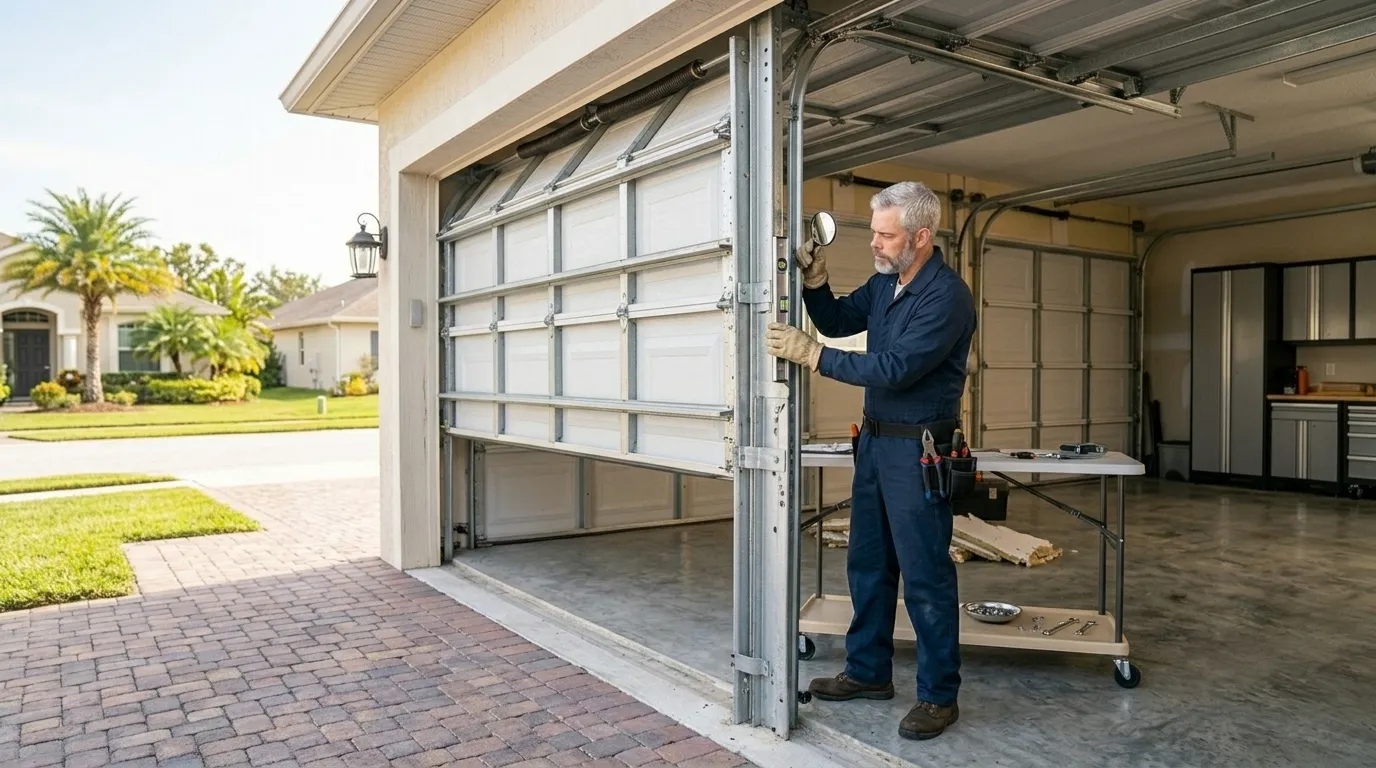
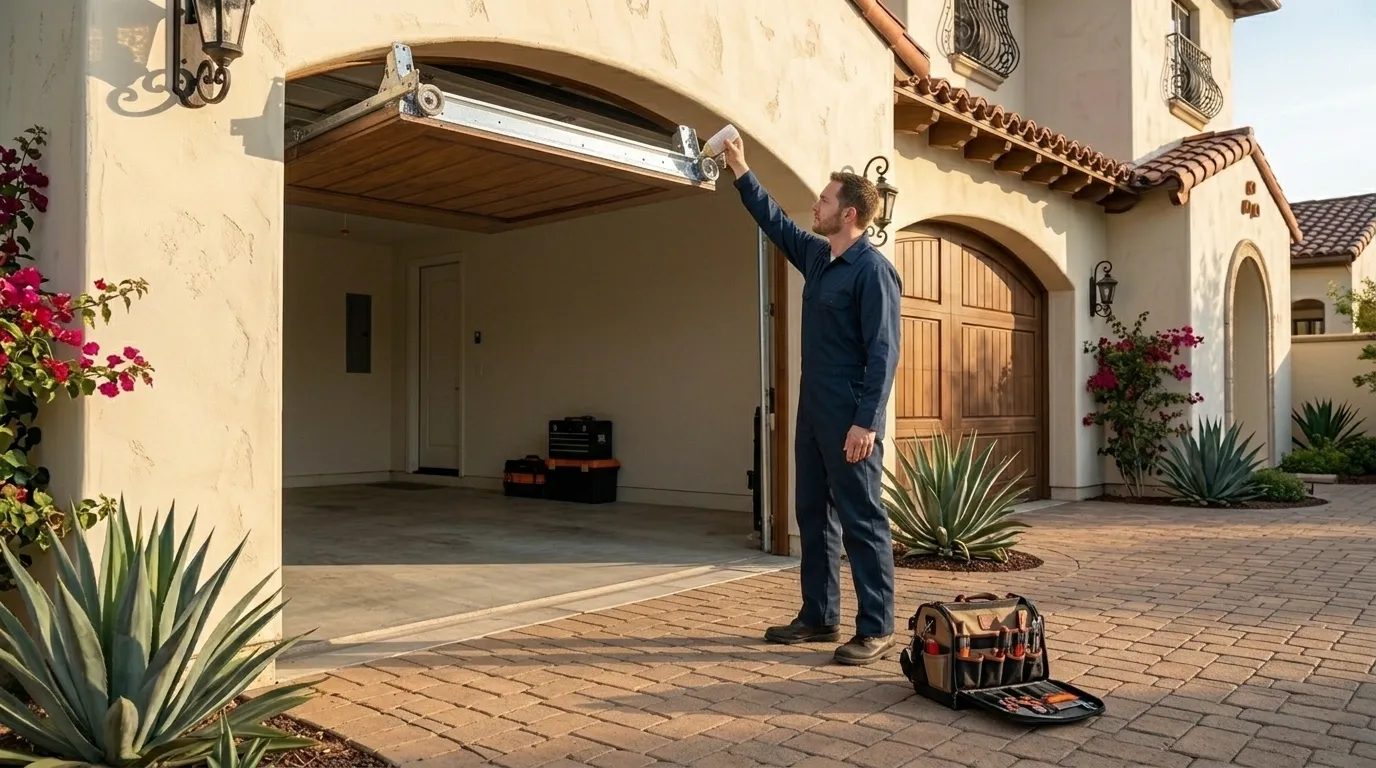
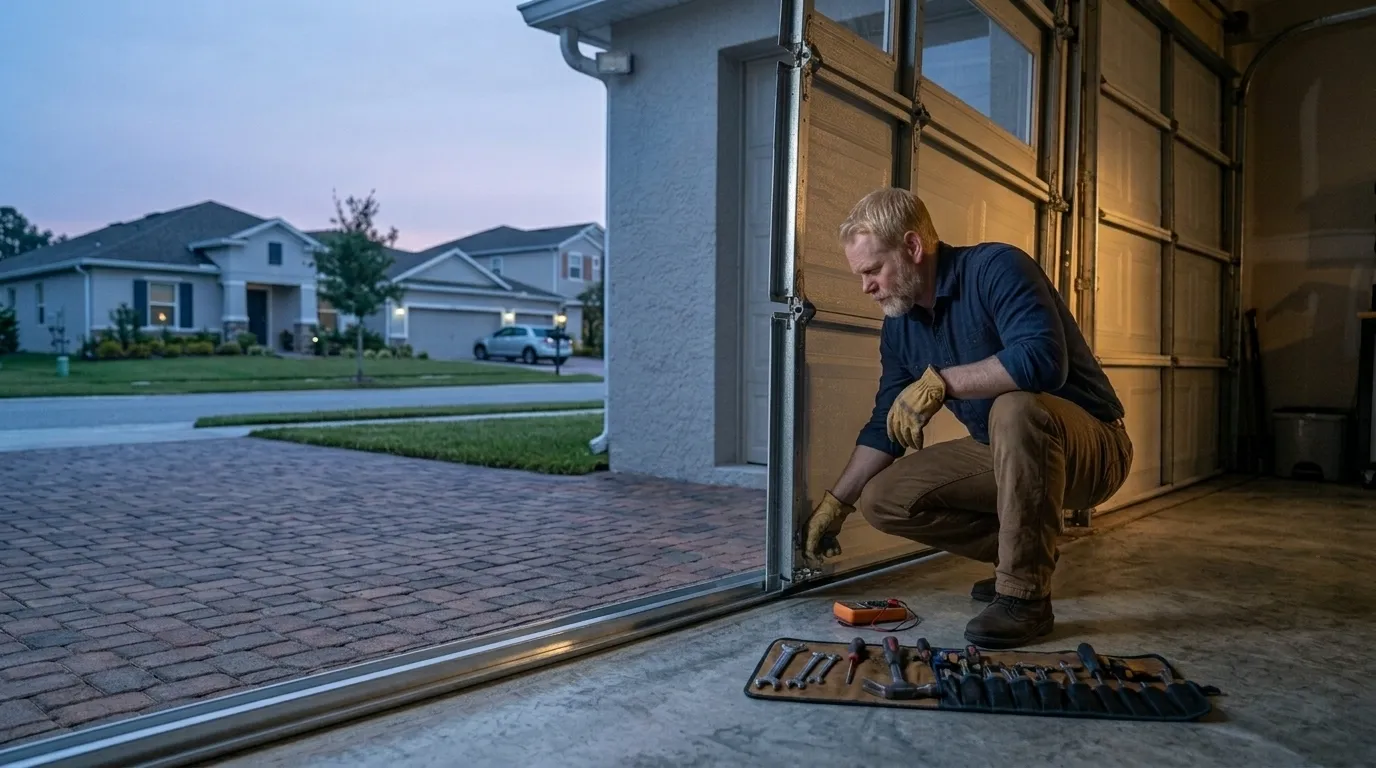
Walk the driveways of Jacksonville Beach and most of what you see are steel sectional doors that went up around 1983 - the median build year here. That's newer than a lot of the older Jacksonville neighborhoods, which means fewer wood-panel doors and more early galvanized steel sections on standard torsion springs. The fault pattern follows the age: a door that's 40-plus years old starts showing it in the corners first. Sections separate slightly at the seams where the steel has fatigued. The bottom roller track shows wear grooves you can feel with a finger. Openers from a later retrofit - because a 1983 door rarely still has its original opener - start grinding on the up-cycle before they fail outright. Homeowners usually notice a shudder partway through the open, or a door that reverses for no reason right at the top. On a house this age, that's not random. It's 40 years of hardware finally telling you something.
What Can Go Wrong
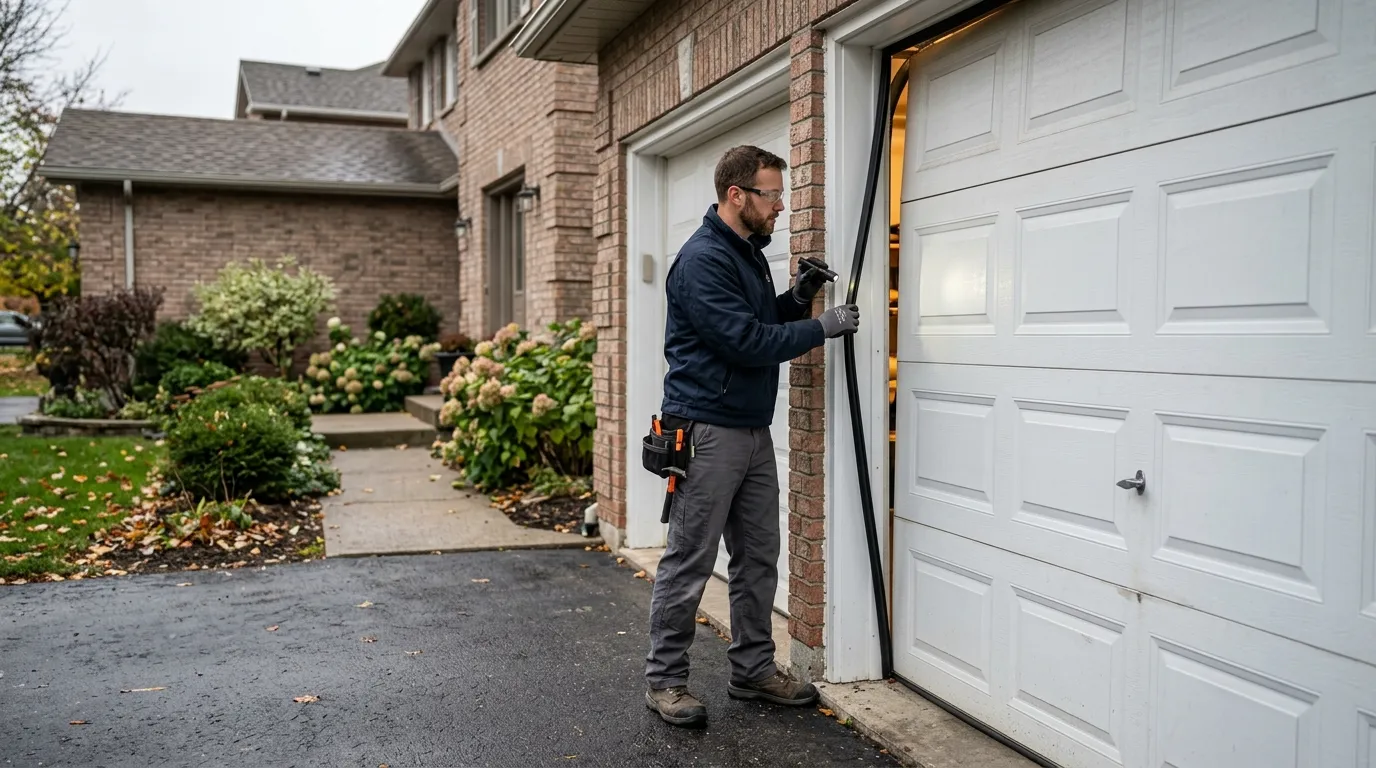
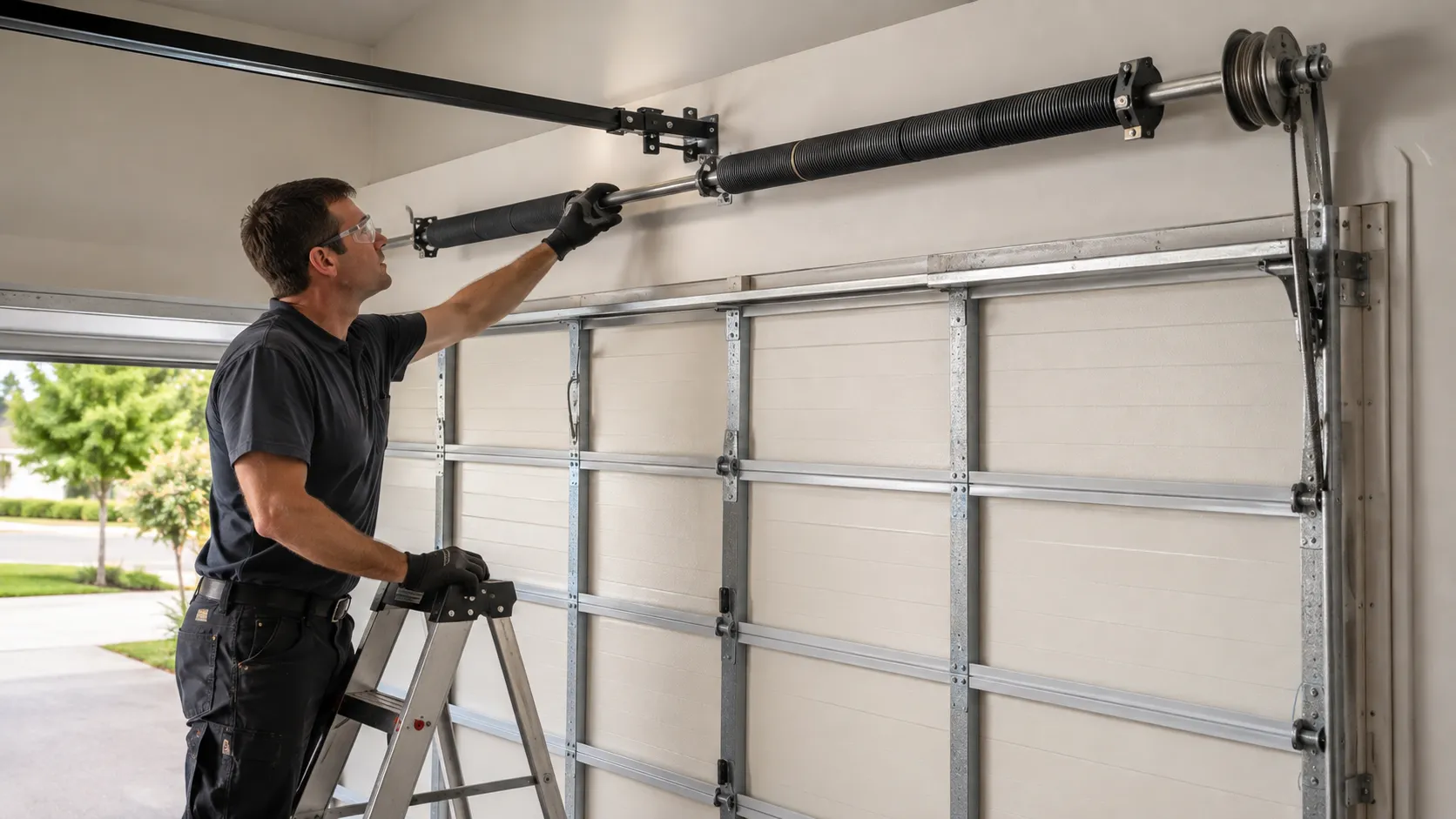
On a torsion-spring door from this era, the spring itself is the part most likely to go first, and it goes without much warning - a bang, then a door that won't lift past knee height. Cables fray at the drum end and can whip if they let go under tension. Rollers seize in tracks that have never been lubricated, and the door starts binding on one side before it comes off the track entirely. Panels on the older end of the 1973-2007 range crack at the hinge bolts if the door's been forced through a bind more than once. None of this is exotic - it's what happens to steel and springs after four decades of daily cycling in a house built when Reagan was in his first term.
What You Pay
I don't have a fixed price list to hand you here - what a job costs depends on whether it's a spring, a cable, an opener board, or a full door, and I'm not going to quote a number I can't back up. What I can tell you is that Jacksonville Beach households run a median income of $115,825, well above the $103,288 median across the rest of the service area, and that tends to show up in the choice homeowners make once they're quoted: more of them here opt to replace an aging opener outright rather than patch it a third time. That's a decision every homeowner gets to make for themselves - it isn't one I make for them.
What the Fix Involves
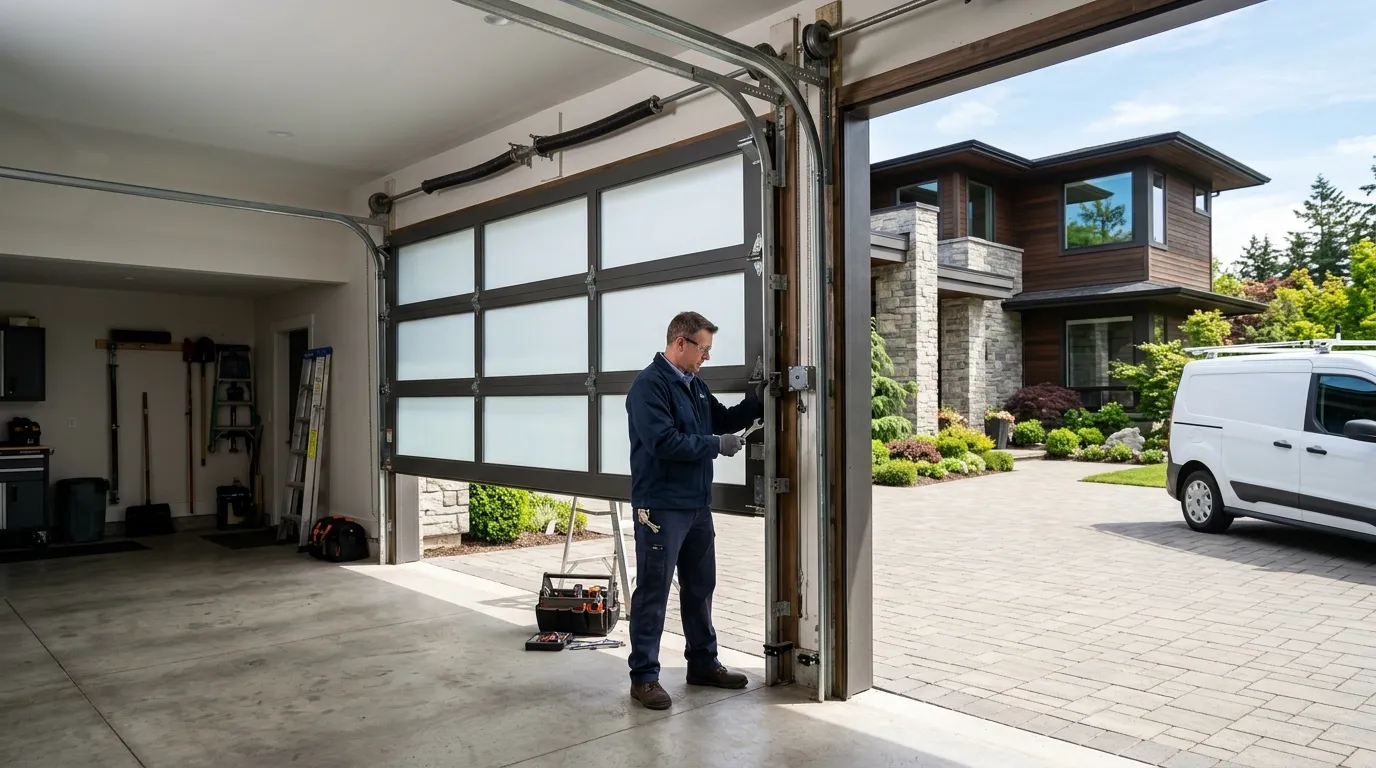
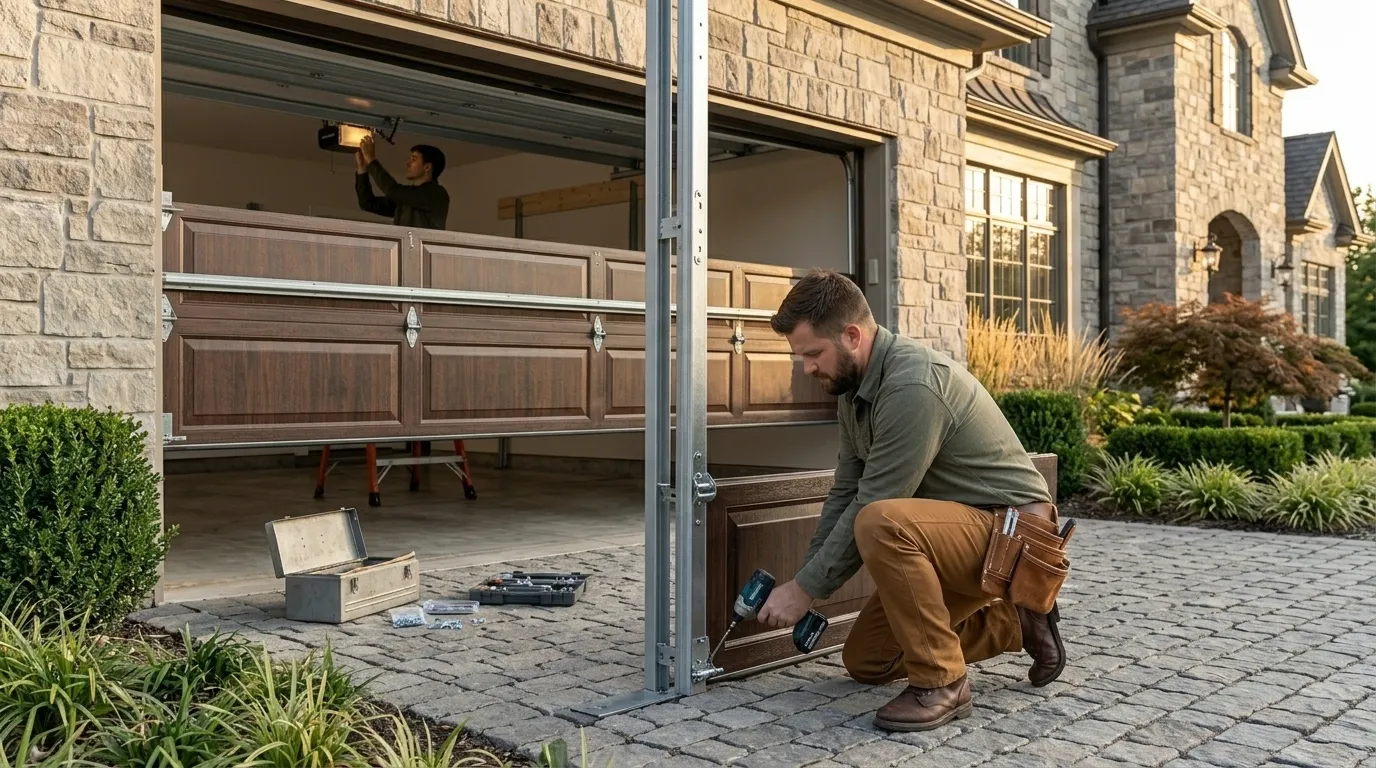
A torsion spring replacement on a door this age means matching the wire gauge to the door's actual weight, not guessing - a 1983 steel sectional door is heavier than the foam-insulated doors sold today, so an undersized spring will burn out an opener trying to compensate. Cable swaps happen in pairs, never one side alone, because a mismatched cable throws the door off level on the next cycle. Roller and track work on a door this age usually means replacing the whole run rather than a section, since the wear is even across the length. If the opener's original to a mid-80s retrofit, the drive gear is usually the first thing to go, and it's often cheaper to replace the unit than chase parts for it.